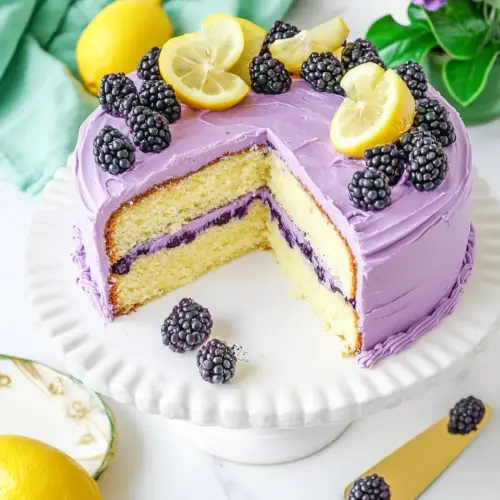
Lavender Lemon Blackberry Cake
Lavender Lemon Blackberry Cake is a tender, floral infused layer cake with bright lemon zest, juicy blackberries, and silky French buttercream. The light crumb from folded egg whites contrasts with pockets of fruit, while the lavender scented frosting adds a delicate springtime note. Perfect for a weekend bake or special gathering, this cake feels elegant yet approachable, a reason to make it soon.
Equipment
- Stand mixer or hand mixer
- Mixing Bowls
- 8 inch cake pans
- Parchment Paper
- Candy thermometer
- Wire Rack
- Spatula
Ingredients
- 3/4 cup unsalted butter, softened Creamy and pale, provides structure and richness while helping to aerate the batter when creamed with sugar; contributes tender crumb and moistness to the cake.
- 1 cup granulated sugar Sweet and granular, helps to tenderize and stabilize the cake by dissolving into the butter and eggs; also assists with browning and balancing tart or floral flavors.
- 1 tsp vanilla extract Fragrant and sweet, enhances overall flavor profile by adding warm vanilla notes that complement lemon and lavender without overpowering the cake.
- 4 large eggs, separated Separated and versatile, egg whites whip to incorporate air for lightness while yolks add fat and emulsification for richness and stability in both cake and custard.
- 1 zest from lemon Bright and aromatic, lemon zest adds concentrated citrus oils that uplift flavor and cut through sweetness while enhancing the cake's fragrance.
- 1 cup milk, lukewarm Warm and neutral, lukewarm milk helps dissolve dry ingredients and sugar, promotes even mixing, and contributes moisture and tenderness to the crumb.
- 1 1/2 cups all-purpose flour Basic and binding, all-purpose flour provides the primary structure through gluten formation that supports rise and gives the cake body.
- 3/4 cup almond flour Nutty and tenderizing, almond flour adds moistness, a delicate crumb, and subtle almond flavor while reducing gluten intensity for a softer texture.
- 4 tsp baking powder Leavening and lift, baking powder produces gas bubbles during baking to create a light, airy crumb and ensure proper rise.
- 1/4 tsp salt Flavor-balancing mineral, salt enhances overall taste by amplifying sweetness and other flavors and strengthens dough structure slightly.
- 1 cup fresh blackberries Fresh and juicy, blackberries provide bursts of tart-sweet fruit, moisture pockets, and visual interest while contributing flavor contrast to floral and citrus notes.
- 1 tbsp corn starch Thickening agent, corn starch stabilizes blackberry juices when cooked to prevent sogginess and helps create a jam-like consistency for folding or topping.
- 1/3 cup water Hydrating liquid, water dissolves corn starch to form a slurry and helps extract fruit juices and flavors when heating for a compote or filling.
- 1 cup granulated sugar Sweet and crystalline, granulated sugar here likely functions in a custard or frosting to provide sweetness, structure, and gloss when cooked with egg yolks.
- 5 egg yolks Rich and emulsifying, egg yolks add body, color, and stability to custards or frostings while enriching mouthfeel and aiding emulsification with butter.
- 2 cups unsalted butter, softened Soft and creamy, softened unsalted butter in larger quantity creates a rich, smooth frosting or filling, contributing flavor, spreadability, and structure.
- 1/4 tsp lavender oil Concentrated floral flavor, lavender oil imparts delicate aromatic lavender notes that complement lemon and blackberries; use sparingly to avoid bitterness.
- purple food coloring, optional Optional visual enhancer, purple food coloring adds a vivid hue to frosting or batter for an appealing presentation without affecting flavor.
Instructions
- Preheat oven to 350 F (177 C). Line three, 8-inch (20 cm) cake rounds with parchment paper and grease the sides.: The kitchen should warm with a faint toasty aroma as the oven reaches 350 F , signaling the environment your batter needs to rise properly; prepping pans with parchment and greasing creates clean edges and prevents sticking so the layers release neatly. You will hear a quiet hum from the oven as it stabilizes, and the parchment will sit snugly, waiting for batter. A common mistake is skipping parchment or using too little grease, causing torn layers when unmolding, so take time to line and grease thoroughly.
- In a large mixing bowl, cream together the butter and sugar with a hand mixer for 2 to 3 minutes, until light and fluffy. Add the egg yolks, vanilla extract and lemon zest. Mix again until cream and smooth, then pour in the milk but do not mix.: As you cream butter and sugar , you'll notice the texture lighten and the color pale, producing a soft sweet aroma that hints at caramelized butter; this trapped air lends lift to the cake. When you add the yolks, the mixture becomes glossy, and the lemon zest releases bright oils that perfume the bowl. Pouring in lukewarm milk hydrates the batter and helps dissolve sugar, but leaving it unmixed briefly avoids overworking the batter. Watch for curdling if ingredients are too cold, and avoid beating aggressively once the milk is added so the emulsion stays intact.
- In a separate bowl, combine all the dry ingredients: flour, almond flour, baking powder and salt. Sift the dry ingredients into the cake batter. Use a whisk or hand mixer to combine the dry ingredients, milk and batter, mixing just until the flour is incorporated.: flour, almond flour, baking powder and salt. Sift the dry ingredients into the cake batter. Use a whisk or hand mixer to combine the dry ingredients, milk and batter, mixing just until the flour is incorporated. : The dry mix carries a powdery, nutty scent from the almond flour , and sifting aerates the mixture so it blends smoothly into the wet base. Mixing until just combined preserves that lightness, keeping the crumb tender; overmixing develops gluten and yields a denser cake. If you see streaks of flour, stop mixing and fold gently to finish; a frequent error is vigorous beating after adding flour, which tightens the texture.
- In a separate bowl, whisk the egg whites on high speed for 2 to 3 minutes, until medium peaks form. Add the egg whites to the cake batter and fold in using a spatula, folding gently but thoroughly until well combined.: Whipping egg whites introduces a glossy, billowy foam that smells clean and faintly sweet. Folding these into the batter by hand preserves the air; you will notice ribbons of foam folding in, and the mixture will lighten in color. The technique is about patience, turning the bowl and sweeping the spatula so you do not deflate the peaks. Rushing this step or stirring vigorously will flatten the whites and make the cake heavy, so take a gentle, steady approach.
- Divide the cake batter evenly between the three cake pans, using a kitchen scale for accuracy. Toss the fresh blackberries in the cornstarch, coating the berries well. Drop 6 to 8 berries into each pan, spacing them equally apart. Bake the cakes in preheated oven for 25 minutes, or until a toothpick inserted into the center comes out clean. Remove from oven and cool completely on a wire rack.: Portioning batter by scale ensures uniform layers that stack with balance and even baking, and the kitchen fills with a warm, slightly sweet scent as the tops turn pale gold. Coating blackberries in cornstarch keeps them suspended and prevents bleeding, producing distinct jewel like pockets in each slice. While baking you may hear a soft quiet from the oven and see the edges pull back slightly from the pans, visual cues that they are nearly done. A common mistake is underbaking or opening the oven too early, which causes collapse; wait for a clean toothpick and let layers cool fully so they set before assembly.
- While the cake layers are cooling, prepare the French buttercream. Place the egg yolks into a stand mixer bowl and whisk on high speed for 2 to 3 minutes, until thick and pale.: The yolks will transform into a luminous, ribbon like batter, and the color will shift to a softer yellow as air incorporates. This stage builds body and volume for the buttercream base, giving it a pillowy texture that lifts the frosting. The whisking will produce a steady sound and the bowl will feel warm from friction; avoid under beating, as the yolks need that aeration to properly accept the hot syrup later. Overbeating is less common here but can make the yolks grainy, so aim for a smooth, pale consistency.
- Meanwhile, combine the water and sugar in a small saucepan. Stir once to combine the ingredients and attach a candy thermometer to the side. Cook the syrup over medium heat until it reaches 238 F (114 C), about 7 to 8 minutes.: As the syrup heats, you will watch it go from clear to glossy and hear a gentle simmer; the smell is clean and sugary, almost neutral. Hitting 238 F is crucial, because this temperature yields the right concentration to cook the yolks without scrambling them and creates the structure needed for a stable French buttercream. Keep the thermometer steady and avoid stirring once it begins to boil, as stirring can encourage crystallization. A common slip is overheating, which darkens the syrup and alters texture, so remove from heat at the correct temperature.
- Once syrup is ready, remove from heat and with mixer on medium speed, pour the hot syrup into the egg yolks. Take care to pour the syrup away from the whisk attachment to prevent crystallized sugar bits. Once all the syrup is added, turn mixer up to high speed and whisk until the egg yolks are doubled in size and reach medium peak stage; it should be cooled and just lukewarm to touch.: Pouring hot syrup into aerated yolks is where chemistry happens, producing a pale, glossy sabayon with a warm, custardy aroma. As you whip, the bowl will cool and the mixture will swell and hold soft peaks, a visual sign the emulsion is stable. Pour slowly and carefully to avoid hot sugar hitting metal and forming crystals, and if it gets too hot, pause whisking so it cools. A common problem is adding syrup too fast, which can cook the yolks into stringy bits; patience keeps the texture silky.
- Begin adding the butter, about 1 tablespoon (15 g) at a time, mixing well after each addition. Add the butter slowly to prevent the cream from separating; this process takes about 8 to 10 minutes. As more butter is added, the cream will thicken and hold its shape. Add the lavender oil and purple food color last.: When you start incorporating softened butter , the mixture will go from glossy to thick and almost like soft whipped cream, and you will feel a satisfying resistance under the whisk. Adding slowly ensures the emulsion remains stable and prevents breaking; the aroma becomes rich and buttery, and the texture becomes silkier with each addition. Once the buttercream holds shapes, fold in lavender oil sparingly so the floral note is balanced, and add any purple food coloring for a visual accent. If the buttercream splits, chilling briefly and then whipping again usually brings it back; avoid adding warm butter all at once, which is the most common cause of separation.
- Once cake layers have cooled, spread a generous amount of buttercream between each layer. Smooth the frosting over the top and sides. Garnish the top as desired, with blackberries, lavender and greens.: As you build the cake, the assembly will look increasingly festive, and smoothing the buttercream creates clean lines and a professional finish; the buttercream feels soft under the spatula and holds peaks where you shape it. The garnish of fresh blackberries and optional lavender ties flavor back to the core theme, adding color and fragrance on the plate. A common misstep is trimming or stacking warm layers, which leads to slipping; always ensure layers are completely cool and the crumb is firm to the touch before frosting.
Notes
- Bring ingredients to room temperature before starting, especially the butter and eggs, to ensure even creaming and a smooth batter.
- Weigh or level ingredients for consistent results; using a scale to portion batter into pans gives uniform layers that stack neatly.
- Monitor syrup temperature closely with a candy thermometer when making the buttercream to avoid overheating and ensure proper emulsion.
- Toss berries in cornstarch so they do not sink or bleed, preserving bright pockets of fruit and preventing soggy spots in the cake.
- Add lavender oil last to the buttercream, and start with a small amount, tasting as you go to achieve a subtle floral note that complements the lemon.
- Chill briefly to fix split buttercream if the buttercream becomes too soft; a short rest in the refrigerator and a quick rewhip can restore texture.