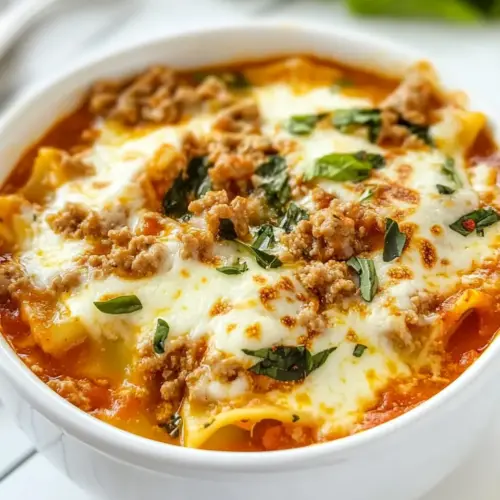
Lasagna Soup
Lasagna Soup brings creamy ricotta, savory ground beef, and robust crushed tomatoes into a spoonable, comfort packed bowl. This easy weeknight dinner offers the classic lasagna flavor with a faster, fuss free prep, and reheats beautifully for leftovers. It is hearty, flavorful, and perfect when you want warm comforting food without the casserole assembly.
Equipment
- Large Pot
- Wooden Spoon
- Ladle
Ingredients
- 1 tbsp olive oil Sauté in a hot skillet to develop flavor and create the oil base that prevents sticking while blooming aromatics for the soup.
- 1 lb ground beef Brown over medium-high heat to render fat and create a savory, meaty foundation that adds depth and protein to the soup.
- 1/2 lb italian sausage Cook until browned to provide a slightly spiced, fatty component that layers with the beef for richer umami and texture.
- 1 small onion diced, about 1 cup Sweat gently until translucent to add sweet, aromatic complexity and body while balancing the acidity of tomatoes in the broth.
- 1/4 tsp red pepper flakes optional Sprinkle sparingly to introduce a subtle heat that brightens the overall flavor profile without overpowering the dish.
- 5 cloves garlic minced Mince finely and add near the beginning to release fragrant oils that build savory, garlicky depth throughout the soup.
- 3 tbsp tomato paste Cook briefly to concentrate tomato flavor and deepen the base with a rich, slightly caramelized umami that enhances the broth.
- 1 tsp salt Season gradually to control salinity and enhance all other flavors, ensuring the soup tastes balanced from start to finish.
- 28 oz crushed tomatoes Pour in to supply body, acidity, and classic tomato character that forms the core of the lasagna-like broth.
- 32 oz chicken broth Add to provide an umami-rich liquid base that thins the tomatoes slightly and contributes savory complexity to the soup.
- 1 cup water or until desired consistency is achieved Stir in as needed to adjust consistency so the soup reaches the desired thickness similar to saucy lasagna filling.
- 1 tsp granulated sugar Dissolve into the broth to tame acidity and round out flavors, creating a smoother, more balanced tomato profile.
- 2 tsp italian seasoning Sprinkle in to contribute aromatic herbaceous notes and Italian flavor that complement the meat and tomato base.
- 1 cup spinach fresh Fold in at the end to wilt gently, adding fresh green color and a mild, slightly sweet leafy flavor and nutrients.
- 8 oz lasagna noodles broken in pieces, or Mafalda pasta Break and add to cook until tender to mimic lasagna layers, giving familiar pasta texture and sizable bites in the soup.
- 8 oz ricotta cheese Spoon in dollops to introduce creamy richness and a tangy, slightly sweet contrast that replicates traditional lasagna cheese layers.
- 1/2 cup parmesan cheese grated Grate and sprinkle to deliver salty, nutty umami that enhances overall savoriness and lends a classic Italian finish.
- salt & pepper to taste Season lightly at the end to adjust final taste, balancing flavors and ensuring the soup suits personal preference.
- drizzle olive oil for garnish Drizzle at serving to add a glossy finish and fruity, peppery notes while enhancing visual appeal and richness.
- 1/4 cup fresh basil chiffonade, for garnish Chiffonade and scatter over the bowl to provide bright herbal fragrance, fresh flavor contrast, and an attractive garnish.
Instructions
- In a large pot over medium heat, heat olive oil.: You will smell the olive oil warm and perhaps sense its faint fruitiness as it shimmers across the bottom of the pot. This step primes the pan so that when you add meat it browns instead of sticks. Listen for a quiet ripple of oil when the surface moves, a good sign you are at the right temperature. If the oil starts to smoke you have the heat too high, so lower it and let the pan cool slightly before continuing. Properly heated oil ensures even browning and prevents the meat from clinging to the pot.
- Add ground beef, italian sausage, onion, red pepper flakes and salt…and cook until meat is browned.: As the meat hits the pot you should hear a satisfying sizzle, and within minutes small browned bits will form on the bottom. The onion will soften and sweeten while the sausage releases its seasoning, creating a rich aroma. Stir occasionally to break up clumps and expose new surfaces for browning, this caramelization is key for depth. A common mistake is steaming the meat by crowding the pot, which prevents browning and yields a less flavorful broth, so keep the pan roomy and cook until there is visible color on the meat.
- Add garlic and tomato paste and cook for 2 minutes.: When you add the garlic and tomato paste you will smell a bright, toasty tomato fragrance as the paste caramelizes and the garlic softens. The aroma changes from raw to savory within those two minutes, signaling the sugars are cooking out and the paste is developing complexity. Stir constantly to prevent burning, because burnt garlic will turn bitter and ruin the dish. This quick cook enhances the umami base and ties the flavors of the meat and tomatoes together.
- Add tomatoes, chicken broth, water, italian seasoning, sugar, spinach and pasta noodles, stirring to combine.: Pouring in the crushed tomatoes and chicken broth creates a full, aromatic steam that fills the kitchen, and the liquid will soften the browned bits from the pot into the soup. Add the italian seasoning and granulated sugar to balance acidity and build herb notes. As you stir in the spinach and broken lasagna noodles , you will see the pasta sink and then reappear as it hydrates. Stir thoroughly so nothing sticks and so flavors disperse evenly. Avoid adding all the water at once if you prefer a thicker texture, measure by eye to reach the consistency you like.
- Reduce heat and simmer until pasta is tender, about 11-15 minutes. Do not overcook. Serve hot.: As the soup simmers, listen for a gentle, steady bubbling and notice how the aroma deepens into a warm, homey scent. The lasagna noodles will plump and ripple; check a piece at the lower end of the time window so you catch perfect al dente texture. Overcooked pasta becomes mushy and blurs the contrast with the creamy cheeses, so test early. If the surface gets too vigorous, lower the heat to maintain a gentle simmer which gives even cooking without breaking down the noodles.
- Combine all ingredients and dollop into individual serving bowls.: When you ladle the soup, the steam carries all the layered scents to the table, and the visual of ribbons of pasta, flecks of spinach , and specks of meat is deeply satisfying. Dolloping ricotta cheese into each bowl creates creamy pockets that melt slowly into the hot broth, adding richness with every spoonful. A common oversight is stirring the ricotta into the pot; keeping dollops intact preserves textural contrast and makes each serving feel freshly dressed.
- Garnish with a drizzle of good olive oil and fresh basil. Sprinkle with more Parmesan if desired.: The final drizzle of olive oil adds a silky sheen and the freshly cut basil leaves release a bright perfume the moment they hit the hot soup. A dusting of parmesan cheese brings a salty, nutty finish that ties everything together. Add these garnishes just before serving to preserve their color and aroma. Avoid adding delicate garnishes too early, or they will wilt and lose their character.
Notes
- Reduce spice: If you prefer milder flavors, omit the red pepper flakes and use mild italian sausage, or decrease the amount gradually so the heat complements rather than overpowers the cheeses.
- Adjust consistency: Add extra hot chicken broth or a splash of water while simmering to loosen the soup, and reserve a little liquid when serving in case it thickens upon standing.
- Pasta alternatives: Swap broken lasagna noodles for short pasta like penne or rigatoni if you prefer smaller bites; just watch cooking times as shapes vary.
- Make it ahead: Simmer fully, cool completely, then refrigerate. Reheat gently with additional chicken broth to refresh the texture and flavors before serving.
- Boost greens: Stir in extra fresh spinach toward the end for more color and nutrients, adding it in small batches so it wilts evenly without overcooking.