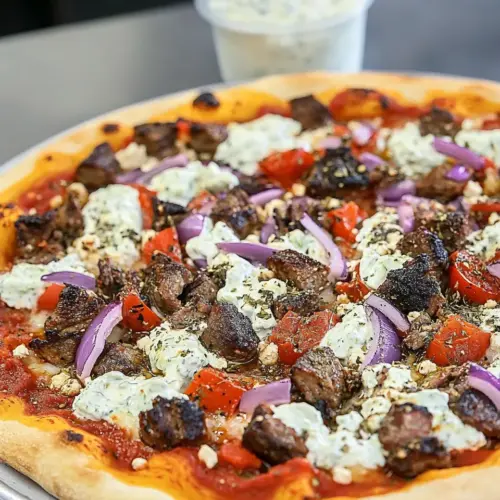
Lamb Souvlaki Pizza with Tzatziki Sauce
Lamb Souvlaki Pizza with Tzatziki Sauce brings savory roasted lamb, briny kalamata olives, and creamy, chilled tzatziki together on a crisp crust. This easy weeknight dinner combines crispy texture and bright cool sauce for a memorable slice, perfect for entertaining or a family meal. Try it for a flavorful twist on pizza that still feels comforting and familiar.
Equipment
- Oven
- Pizza stone or baking pan
- Strainer
- Mixing Bowls
Ingredients
- 1/2 pizza dough Stretch and shape into a thin base to provide structure and chewy texture for the pizza; allow to rest and proof briefly for better gluten development and easy handling when adding toppings.
- 1 cup pizza sauce Spread evenly over the dough to deliver bright tomato flavor and moisture balance; choose a sauce with Mediterranean herbs to complement the lamb and feta while preventing the crust from becoming soggy.
- 1 cup feta cheese (crumbled) Crumble over the sauced dough to lend tangy, creamy, and salty notes that contrast the meat; scatter mostly toward the center to melt slightly and retain crumbly texture after baking.
- 2 cups lamb souvlaki (roughly chopped) Roughly chop and distribute across the pizza to supply rich, savory, and spiced lamb flavor; pre-cook or reheat souvlaki pieces so they finish warmed through without overcooking the crust.
- 1/2 red onion (sliced) Slice thinly and layer sparingly to add sharp, sweet-onion bite and slight crunch; place either before baking for softened sweetness or after for pungent freshness, depending on preference.
- 1/2 cup kalamata olives (or black sun dried olives pitted and chopped) Pit and chop or use whole as a briny, fruity accent that enhances Mediterranean flavors; sprinkle intermittently to provide bursts of savory depth and balance the richness of lamb and cheese.
- 1 teaspoon oregano (dried) Sprinkle dried over the assembled pizza to impart aromatic, earthy Mediterranean notes; use moderately to avoid overpowering delicate flavors while reinforcing the classic Greek profile.
- 1 medium cucumber (peeled, sliced in half and seeded, and finely chopped) Peel, halve, seed, and finely chop to incorporate fresh, cool cucumber bits into the tzatziki or as a fresh topping; finely chopped cucumber brings crispness and lightness that offsets the heavier toppings.
- 1/2 teaspoon salt Season the tzatziki or finishing toppings to enhance overall flavor and help draw out cucumber juices when needed; adjust slightly based on saltiness of feta and olives to maintain balance.
- 1 cup plain yogurt Combine into a creamy sauce base to create cooling tzatziki that complements the warm, spiced lamb; choose plain yogurt with appropriate thickness to achieve a spreadable consistency without thinning the pizza.
- 1 tablespoon olive oil Drizzle into the tzatziki or over finished pizza to add silky mouthfeel and subtle fruitiness; use extra virgin olive oil for best flavor and to help emulsify the yogurt sauce.
- 1 teaspoon lemon juice (freshly squeezed) Squeeze fresh to introduce bright acidity that lifts the yogurt and cuts through richness; incorporate into tzatziki to balance flavors and keep the sauce vibrant and refreshing.
- 1 teaspoon fresh dill (minced) Mince and fold into the tzatziki to contribute herbaceous, slightly grassy notes and a hint of anise-like aroma; use fresh dill sparingly so it complements rather than overwhelms the creamy sauce.
- 1 clove garlic (minced) Mince finely and mix into the yogurt sauce to provide sharp, pungent heat and classic garlicky flavor; allow to rest briefly with salt and lemon so the garlic mellows and infuses the tzatziki.
Instructions
- Preheat oven to 500 F degrees.: As the oven flames to a high temperature, you should feel a slight warmth in the kitchen and smell the residual heat from the racks. A very hot oven ensures a crisp, blistered pizza dough surface, promoting rapid steam lift that yields a light interior and crunchy exterior. One key visual cue is once the oven reaches temperature the walls will look uniformly hot and the racks will radiate heat. Avoid placing the pizza in a cooler oven, otherwise the crust will bake slowly and become dry rather than crisp. If your oven runs hot or cold, use an oven thermometer to confirm accuracy.
- Roll out the pizza dough and place on a pizza baking pan, or a pizza stone.: When you roll the dough, feel for elasticity and small bubbles under the skin, which indicate good gas retention. A pizza stone gives a crisp bottom, and a pan offers more forgiveness. Dust lightly with flour to prevent sticking, and press the dough gently outward from the center to preserve edge air pockets. You will hear a soft tearing whisper if you overwork the dough. Common mistake: rolling too thin at the edges leads to over crisping; keep a slightly thicker rim for structure.
- Spread pizza sauce mixture over the crust. Top with feta cheese. Top with the lamb evenly over the entire pizza. Top with red onions and olives and sprinkle the oregano over the entire pizza.: The sound here is gentle, a soft spreading against the dough, while the aroma of cooked tomato brightens the air. Use the back of a spoon to thinly and evenly coat, leaving a border for the crust to puff. This thin layer prevents a soggy center and allows the toppings to meld without drowning. If you pile sauce, the moisture will soak into the crust quickly during baking.
- Bake for 10 to 15 minutes or until crust is golden brown.: Scatter the crumbled feta cheese so that each bite has a salty pop. You'll notice flecks of white across the red sauce, and as it bakes feta softens and warms, releasing a creamy, savory note. Distribute it evenly to avoid clumps that can dominate pockets of the pizza. A common error is using oversized chunks which melt unevenly rather than integrating with the toppings.
- Put the cucumber in a strainer set over a bowl. Sprinkle with 1/2 teaspoon salt and drain for 1 hour. Put the yogurt in another strainer set over a bowl and drain for 1 hour. Combine the cucumber and yogurt in a bowl with the remaining ingredients and stir well. Cover and chill for at least 1 hour before serving.: The chopped lamb souvlaki should be spread so every slice gets meaty flavor. As the lamb heats, you'll smell roasted herbs and spices seeping into the sauce, an inviting savory perfume. This even distribution prevents bites that are all lamb or none, keeping balance across the pie. Avoid crowding too much meat in one area, which can cause uneven cooking and a dense bite.
- Top with red onions and olives and sprinkle the oregano over the entire pizza: Layer the thinly sliced red onion and chopped kalamata olives , then dust with dried oregano . The onions begin to soften and sweeten at the edges when baking, and the olives release briny perfume that lifts the whole pizza. The oregano blooms under heat, releasing earthy aromatics. Don't overdo the oregano, because it can overpower delicate flavors and taste bitter if burnt.
- Bake for 10 to 15 minutes or until crust is golden brown: You want to watch for the visual cues, golden brown edges, small charred blisters on the crust, and bubbling sauce. The smell will be deeply toasty with herb notes, and the sound is a quiet crackle as the crust sets. Pull the pizza as soon as the bottom is crisp and the cheese shows gentle melting. Common trap: leaving it too long results in an overly hard crust and dried toppings; watch closely in the last few minutes.
- Put the cucumber in a strainer set over a bowl: When you salt the chopped cucumber and let it drain, you'll notice beads of moisture falling into the bowl. This step concentrates cucumber flavor and prevents the tzatziki from becoming watery. The scent is fresh and green, and the texture becomes firmer. A mistake is skipping this drain, which will make the sauce thin and can sog the finished pizza.
- Sprinkle with 1/2 teaspoon salt and drain for 1 hour: The salt draws out excess water, and after an hour you can press and squeeze any remaining liquid. The cucumber will smell brighter and feel crisp. This controlled dehydration is why the tzatziki stays creamy rather than runny. Do not shorten the drain time or the result will be diluted.
- Put the yogurt in another strainer set over a bowl and drain for 1 hour: Draining the plain yogurt concentrates its creaminess into a thicker base, almost like a labneh texture. You'll notice a silky, almost spreadable body after draining, which clings to the cucumber and herbs without sliding off the pizza. If you skip draining, the tzatziki will lack body and can make the pizza soggy.
- Combine the cucumber and yogurt in a bowl with the remaining ingredients and stir well: At this stage mix the drained yogurt , drained cucumber , minced garlic , chopped dill , lemon juice , olive oil , and the remaining salt. You'll see a creamy, flecked sauce forming, and the aroma will be bright lemon and herb. Stir until cohesive so each spoonful has balanced flavor. A common oversight is adding ingredients cold then serving immediately; chilling helps flavors marry.
- Cover and chill for at least 1 hour before serving: Chilling lets the flavors meld and the garlic mellow, resulting in a cool, tangy counterpoint to the hot pizza. The texture becomes set, and the scent mellows into a rounded, herb forward profile. Serve chilled on the slices so each bite flips between warm and cool. Serving the tzatziki too soon gives a raw garlic bite and a less integrated flavor.
Notes
- Preheat fully Always confirm your oven has reached 500 F degrees before baking to ensure a crisp, blistered crust and quick set of toppings.
- Drain for texture Straining the cucumber and yogurt for an hour prevents excess liquid in the tzatziki and preserves crust crispness.
- Even topping distribution Chop the lamb and scatter toppings uniformly to avoid dense pockets and ensure each slice tastes balanced.
- Finish chilled Chill the tzatziki at least an hour so flavors marry and the garlic softens for a rounded sauce.
- Use good olive oil A quality olive oil in the sauce and as a finish adds aroma and a glossy sheen to the pizza.