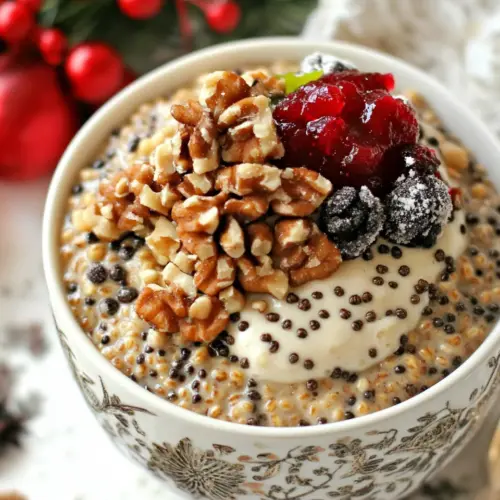
Kutia Wheat Berry Pudding with Compote
Kutia Wheat Berry Pudding with Compote is a creamy, textured winter pudding with chewy wheat berries, nutty poppy seeds, and a syrupy dried fruit compote. This easy make ahead dish blends toasted walnuts and plump raisins for a comforting holiday bowl, perfect as an easy weeknight dessert or special occasion treat. Make it for its warmth and deep flavor.
Equipment
- Saucepan
- Sieve
- Mortar or Grinder
- Dry pan
Ingredients
- 340 g wheat berries Soak and simmer until tender to provide the chewy, nutty base texture that absorbs sweet flavors; traditionally forms the bulk of kutia and carries spices and liquids. Rinse thoroughly before cooking and cook long enough for berries to split slightly, releasing starch that helps bind the pudding.
- 100 g poppy seeds Grind or steep to release aromatic oils and add a sweet, slightly bitter poppy flavor and milky texture; contributes a distinctive traditional taste and visual speckling throughout the pudding. Toasting briefly can enhance aroma before grinding to a paste or coarse meal for mixing with sweeteners.
- 100 g walnuts Toast or chop to provide crunchy contrast and rich, buttery flavor that balances sweetness; supplies healthy fats and a satisfying mouthfeel. Fold in towards the end to preserve texture, and reserve some larger pieces as garnish for visual appeal.
- 100 g raisins Soak plump or chop to contribute bursts of concentrated sweetness and chewiness; helps sweeten the mixture naturally and adds fruity complexity. Rehydrate if needed and fold into the cooked wheat for even distribution.
- 2 -3 tbsp honey Sweeten lightly to bind flavors and add gentle floral sweetness; can be adjusted to taste and incorporated after cooling to preserve delicate aromatics. Use local or mild honey varieties to complement the nutty and fruity components.
- 200 g dried apples and pears Rehydrate or simmer to contribute tender, tangy-sweet fruit pieces that add depth and variation to texture; often made from mixed dried apples and pears for both sweetness and slight acidity. Chop if large and simmer with spices to create a compote component for serving.
- 150 g prunes Soak and chop to provide deep, concentrated sweetness and a rich, slightly tart note; helps thicken the compote and complement the raisins and dried apples. Pit and simmer with a little water and sugar to make a thick fruit accompaniment if desired.
- 2 tbsp sugar Sweeten the compote during cooking to balance natural tartness and help create a glossy, syrupy texture; adjust amount to taste depending on fruit sweetness. Dissolve into simmering fruit to enhance preservation and mouthfeel.
- 1 tbsp honey Sweeten and finish the compote for an extra layer of floral sweetness and complexity; use sparingly to avoid overpowering the dried fruits and honey already present. Stir in toward the end of cooking or drizzle over portions when serving for added nuance.
- 1.5 l water Simmer to rehydrate and cook the dried fruits and wheat, creating the liquid base that transforms dry ingredients into a cohesive pudding and compote. Measure accurately and add gradually during cooking to control consistency and prevent sticking.
Instructions
- Soak the wheat: For best results, soak wheat berries overnight in cold water. For a quicker method, soak in hot water 1–2 hours before cooking. Drain, add fresh water, and simmer until tender but slightly chewy (about 40 minutes). Drain well.: The air will carry a faint earthy sweetness as the wheat berries rehydrate, and you will notice the grains soften at the edges while retaining a slight chew. This pre soak reduces cooking time and helps the kernels cook evenly. A common mistake is rushing this step, which can leave hard centers after simmering; if you are short on time, opt for the hot soak to shorten the wait, then drain thoroughly before simmering.
- Prepare the poppy seeds: While the wheat is cooking, prepare the other ingredients. Pour water over the poppy seeds, bring to a boil, then remove from heat and cover with a lid. Let the poppy seeds steep for 40-60 minutes. Drain the poppy seeds in a sieve to remove excess water. You can then grind the poppy seeds in a mortar or pass them through a blender. I personally prefer to ground the poppy seeds in a coffee grinder.: As the pot comes to a gentle simmer, steam will rise carrying a toasted grain aroma, and small bubbles will lap around the kernels. Cook until the grains are tender but with a resilient chew, which gives the pudding a satisfying texture contrast. Stir occasionally to prevent sticking to the pot bottom. Avoid boiling too vigorously, which can split the grains and create a mushy texture.
- Prepare other ingredients: Soak the raisins in hot water for 30 minutes. Break walnuts into small pieces and lightly toast in a dry pan.: When you pour hot water over the poppy seeds , they swell and release a subtle oiliness that becomes aromatic after steeping. After steeping and draining, grinding them yields a fine, almost creamy texture that melds into the pudding. One trap is under grinding; whole seeds can feel gritty rather than silky, so use a suitable grinder for a smoother result.
- Make the compot (uzvar): If you've never tried Eastern European fruit compete, it resembles a concentrated, highly flavorful fruit drink. To make the compote, pour 1.5 liters (6 1/3 cups) of water over the dried fruits and prunes and add sugar. Bring to a boil, then simmer over low heat for 30 minutes. Remove from heat, stir in honey, cover, and let steep.: While the grains cook, pour hot water over the raisins and let them plump until they are tender and yielding. Splitting dried pieces into smaller bits helps them distribute evenly. If you skip soaking, the fruit may remain firm and interrupt the pudding's harmony with unexpected chewy bites.
- Assemble the kutya: In a large bowl, combine cooked wheat, ground poppy seeds, raisins, and walnuts. Sweeten with honey to taste. Add about 2 cups of uzvar for desired consistency (more or less to taste).: Heating a dry pan will coax warm, toasty notes out of the walnuts ; watch for a nutty perfume and the first hints of browning. Light toasting intensifies flavor and adds crunch, but stay vigilant because nuts can go from fragrant to bitter in seconds.
- Serve: Traditionally served at room temperature.: As the dried apples, pears, and prunes simmer in the measured water , the kitchen fills with a concentrated, fruity steam. The mixture will reduce into a rich, syrupy liquid, and the fruit pieces will soften into tender morsels. Low and slow simmering extracts concentrated flavors, so keep the heat gentle to avoid breaking down the fruit too aggressively.
- Add sugar and honey to compote: Stirring in sugar and then honey off the heat will temper the compote's tart edges and add a glossy sheen. The scent will deepen into caramelized fruit notes. Avoid adding too much sweetener at once, taste and adjust gradually, because you can always add but not remove excess sweetness.
- Combine wheat and poppy seeds: When you fold the ground poppy seeds into the cooked wheat berries , the mixture takes on a darker, richer color and a silky mouthfeel. This binding step helps distribute the poppy seed aroma throughout the pudding. Be careful not to compress the mixture too heavily, or the texture can become overly dense.
- Fold in raisins and walnuts: As you add the plumped raisins and toasted walnuts , listen for a soft shift in texture and notice pockets of sweetness and crunch forming. Mixing gently preserves the distinct textures while ensuring even distribution. Overmixing can break down the wheat and make the pudding homogenized and less interesting.
- Sweeten to taste with honey: Adding the final 2 to 3 tablespoons of honey lets you calibrate the pudding's overall sweetness. The honey brings floral brightness and helps the components cling together. Start conservatively; if the compote was very sweet, you may need less honey than expected.
- Add uzvar for consistency: Stir in about two cups of the cooled compote liquid, and watch how the pudding loosens and becomes glossy. The amount you add determines whether the pudding is spoonable or more stew like. If you add too much liquid, the texture will be loose, so add gradually until you reach a consistency that pleases your palate.
- Let rest and serve at room temperature: Allowing the assembled pudding to rest lets flavors meld and textures settle; aromas will deepen and the mouthfeel will harmonize. Serving at room temperature reveals the complexity of the compote and poppy seeds. Refrigerating immediately can mute the aromatic notes, so bring it back to room temperature before presenting if chilled.
Notes
- Soaking strategy Start by soaking the wheat berries overnight for a plump, even texture; if short on time use a hot soak for one to two hours and then drain to reduce overall cooking time.
- Poppy seed prep Soak then grind the poppy seeds to unlock a silky, nutty layer of flavor, and use a small grinder like a coffee grinder for the smoothest result.
- Toast nuts lightly Toast walnuts in a dry pan until fragrant, stirring constantly to prevent scorching and to keep the flavor bright and not bitter.
- Compote control Simmer the dried fruits gently in measured water and check periodically; remove from heat when the liquid is syrupy but not glued to the pot to maintain a pleasant pourable texture.
- Sweetness balance Add honey gradually at the end, tasting between additions so the pudding retains complexity without becoming cloying.