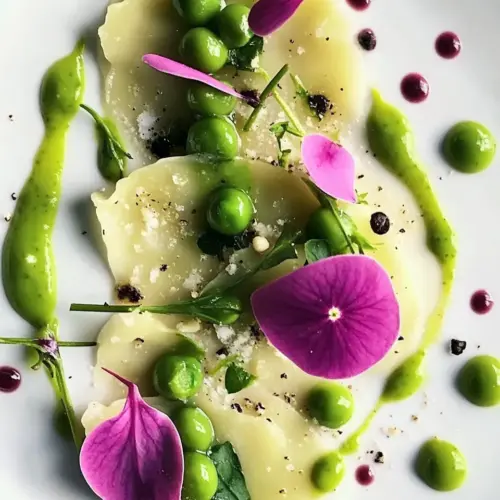
Kohlrabi Ravioli Stuffed with Avocado Cream and Pea Puree
Kohlrabi Ravioli Stuffed with Avocado Cream and Pea Puree is a creamy, crisp, and visually striking spring starter. The silky avocado filling pairs with bright pea purée for an easy weeknight dinner or elegant appetizer. Light, fresh, and full of texture, it is a simple way to impress guests and celebrate seasonal produce.
Equipment
- Mandolin
- Blender
- Mixing Bowl
- Fork
Ingredients
- 1 kohlrabi peeled and sliced using a mandolin Thinly sliced to create tender, flexible sheets that serve as the ravioli wrappers; mandolin slicing ensures even thickness for gentle folding and quick cooking.
- half a ripe avocado Ripe and mashed to a creamy consistency to provide rich, buttery texture inside the ravioli that balances vegetal kohlrabi flavors.
- 2 tbsp cream cheese or vegan alternative Softened and blended into the filling to add tangy creaminess and help bind the avocado for a smooth mouthfeel; vegan option preserves texture and flavor profile.
- 1 tbsp coriander finely chopped Finely chopped and folded into the filling to introduce bright herbal notes and a fresh, slightly citrusy aroma that lifts the creaminess.
- 1/2 fresh lemon zest Zested finely to incorporate concentrated citrus oils that brighten the filling with aromatic floral and slightly bitter notes without adding acidity.
- 1/2 lemon juice Squeezed to add bright acidity that balances the richness of avocado and cream cheese while accentuating other fresh flavors in the filling.
- salt to taste Added sparingly to enhance and balance overall flavors, drawing out sweetness and controlling the perception of acidity and richness.
- pepper to taste Freshly ground to season the filling and finished dish with a subtle, pungent heat that complements the delicate vegetables.
- 2 tbsp peas fresh or cooked from frozen Blended into a vibrant puree to contribute natural sweetness, color, and a tender legume texture that contrasts with the crisp kohlrabi.
- 1 garlic clove peeled Minced or crushed and incorporated into the pea puree to add pungent depth and a savory backbone that enhances other mild ingredients.
- salt Used as needed to properly season elements like the puree and filling, ensuring balanced savory taste throughout the dish.
- white pepper Sprinkled lightly to offer a milder peppery note than black pepper, useful for delicate seasoning without overwhelming subtle flavors.
- olive oil Drizzled over finished ravioli or used in cooking to add fruity, rich fat that helps meld components and create a glossy finish.
- 1 tsp lemon juice Added to the pea puree or drizzle to introduce a fresh, bright acidity at the end, sharpening flavors and balancing richness.
- hazelnuts toasted Toasted and chopped to provide crunchy texture and warm, nutty flavor as a garnish that contrasts the creamy filling.
- baby spinach leaves Placed as a bed or scattered to add tender chew, fresh green color, and mild earthy flavor that complements the dish's components.
- edible flowers Used sparingly as a decorative and aromatic garnish to add delicate floral color and subtle fragrance, enhancing presentation and sensory appeal.
Instructions
- Drizzle the kohlrabi slices in a little lemon or vinegar to prevent it from going brown. Just before making, blanch the kohlrabi slightly until tender.: The initial lemon or vinegar touch introduces a faint citrus scent and slows oxidation, so the pale flesh stays visually inviting. As you drizzle, you should notice a faint bright smell from the citrus, and the slices will slightly shine, which helps them layer neatly. This acid also starts to tenderize the surface, making later blanching more even. One mistake people make is overdoing the acid, which can make the slices limp; use just a little to preserve crispness.
- Make the avocado filling by mixing all the ingredients together until well combined and season to taste.: When blanching, steam or simmer water produces a gentle vegetal steam aroma and softens the kohlrabi just enough to be pliable without losing structure. You want a tender bite, not mushy, so monitor closely and test a slice for slight resistance. Cooling the slices in an ice bath stops cooking and preserves the pale color. A common error is leaving them in hot water too long, which yields soggy, fragile rounds that will fall apart during assembly.
- Make the pea purée by blitzing all the ingredients in a blender adding as much oil as you need to make it a runny consistency.: As you mash and combine, you will notice a creamy, buttery aroma from the avocado and a tangy lift from the cream cheese and lemon . The texture should be smooth but with tiny herb flecks from the coriander . Season slowly with salt and pepper , tasting between additions, because the delicate balance can change quickly. If the filling is too loose, chilling it briefly firms it up; if it's grainy, it usually means the avocado was slightly underripe.
- Assemble by layering slices of kohlrabi, fill with the avocado filling, top with another kohlrabi slice and lightly seal the edges with a fork.: When you blend the peas and garlic , expect a sweet, green aroma and a smooth, bright green color. Add olive oil in a slow stream while the blender runs to emulsify into a silky sauce; this gives a glossy sheen and a luxurious mouthfeel. Taste for seasoning, adding salt and a squeeze of lemon juice to brighten. A frequent pitfall is underblending, which leaves a grainy texture; blend until completely smooth and adjust oil for desired looseness.
- Once you have used up all the ravioli, drizzle over the pea purée and garnish with the baby spinach, hazelnuts and edible flowers. Drizzle a good EVOO on top and finish with a grating with lemon zest.: During assembly you will appreciate the contrast of cool, creamy filling against the crisp, slightly chilled kohlrabi. Each little ravioli should sit flat and look neat; sealing with a fork compresses the edges so the filling stays inside. Work on a cool surface to keep the filling from softening too fast. One error to avoid is using too much filling, which prevents a good seal and leads to leaks when drizzled with purée.
- Once you have used up all the ravioli, drizzle over the pea purée and garnish with the baby spinach, hazelnuts and edible flowers: As you plate, spoon the pea purée in a thin ribbon or dot pattern so each ravioli gets a bright lift. Scatter the baby spinach and chopped hazelnuts for texture and visual depth, and tuck a few edible flowers on top for color. Finish with a drizzle of high quality olive oil and a light grating of lemon zest to release citrus oils. Watch for overgarnishing, which can hide the delicate ravioli; aim for balance so each element is perceptible.
Notes
- Swap the nuts: Try toasted almonds or walnuts if you prefer a different crunch, but keep them coarsely chopped so they add texture without overwhelming the delicate filling.
- Herb variation: Replace coriander with finely chopped chives or dill for a different aromatic note, which pairs beautifully with pea purée.
- Dairy free: Use a smooth vegan cream cheese to maintain the same creamy binder for the avocado filling without dairy.
- Presentation: Pipe the avocado filling with a small spoon or piping bag for neater, restaurant style presentation that makes assembly faster.
- Make ahead: Prepare the pea purée and the filling a day ahead and keep chilled, then assemble right before serving to save time.
- Texture boost: Fold a small amount of finely chopped toasted nuts into the filling for an internal crunch, but do not add too much or it will change the creamy mouthfeel.