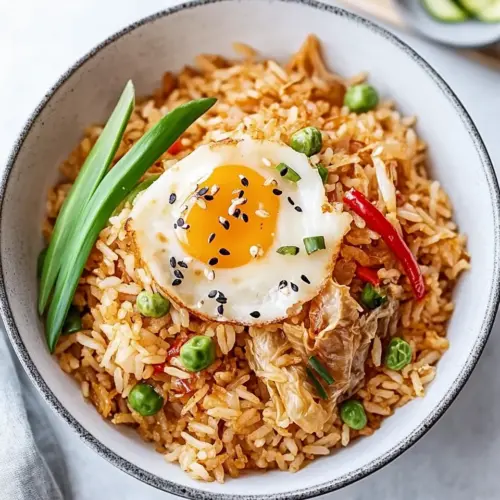
Kimchi Fried Rice
Kimchi Fried Rice is a quick, savory stir of tangy fermented kimchi, crisped day old rice, and bright vegetables, perfect for an easy weeknight dinner. It offers crunchy bits, silky egg topping options, and bold umami from soy sauce and sesame oil. Make it to transform leftovers into a comforting, flavor forward meal that’s ready in under 30 minutes.
Equipment
- Large heavy bottomed skillet
- Wok
- Spatula
Ingredients
- 2 tablespoons olive oil Provide a neutral cooking fat to sauté vegetables and prevent sticking while adding mild flavor; ideal for medium-high heat browning of carrots and onions and for finishing rice with a glossy sheen.
- 1 tablespoon sesame oil Add a nutty, aromatic layer and deepen flavor complexity when tossed with rice; use sparingly to impart sesame fragrance without overwhelming other savory components.
- 1/2 cup diced carrots Add sweet, crunchy texture and subtle sweetness when sautéed; dice evenly so they cook quickly and contribute color contrast throughout the fried rice.
- 1/2 cup diced sweet yellow onion Supply soft, savory sweetness and body to the dish when caramelized; dice consistently to ensure even cooking and to meld with other aromatics.
- 2 large cloves garlic minced Deliver pungent depth and aromatic sharpness once minced; stir into hot oil early to bloom flavor and complement ginger and kimchi.
- 1 teaspoon grated ginger Provide bright, slightly spicy citrusy warmth when grated; cook briefly to release oils and balance the fermented tang of kimchi.
- 4 cups cooked cold day-old white rice Offer bulk and the characteristic fried rice texture when cold and day-old; separate grains before frying to avoid clumping and to achieve a crisp exterior.
- 1/4 cup soy sauce Contribute savory umami and salt to season the rice; add gradually and taste to avoid over-salting given kimchi and other salty components.
- 1/2 cup frozen peas Introduce pops of sweetness and tender texture when thawed; add near the end to retain color and prevent overcooking.
- 1 cup kimchi roughly chopped Bring a tangy, spicy, fermented backbone and moisture to the dish; chop roughly to distribute pockets of flavor and juice throughout the rice.
- 2 green onions thinly sliced Deliver fresh, sharp oniony brightness and a crisp green finish; slice thin and sprinkle on top or stir in briefly to preserve color and crunch.
- 2 fried or soft-boiled eggs optional Provide rich creaminess and a silky yolk to top the fried rice optionally; fry or soft-boil to preference and serve immediately to add protein and sauce-like richness.
Instructions
- Heat a large heavy bottomed skillet (or wok) over medium-high heat. Add the olive oil and sesame oil. When the oil is hot, add the carrots and onion. Cook for 2-3 minutes, or until the onions are beginning to brown.: You should notice the pan warming and a faint shimmer on its surface before you add oil, which signals it is hot enough to sear foods. A heavy bottomed skillet or wok distributes heat consistently so the rice can crisp without burning. If the pan is too cool, ingredients will steam instead of brown, leaving a soft, soggy texture. A common error is overcrowding the pan, which reduces contact with the hot surface and prevents that golden sear, so keep space for movement.
- Next add the garlic and ginger. Stir and cook for an additional minute.: The oils will thin and ripple when they reach temperature, releasing a gentle nutty scent from the sesame oil . This combination carries flavor and helps the carrots and onion brown evenly. If you see wisps of smoke quickly, reduce heat to avoid bitterness. Avoid pouring too much oil, as the rice will become heavy instead of crisp.
- Add the rice and soy sauce. Stir and saute for another 3-4 minutes or until the rice is lightly browned and beginning to crisp.: You will hear a lively sizzle on contact, and within a minute the onions will begin to wilt and caramelize, giving off a sweet, toasted aroma. These vegetables need a few minutes to soften and build flavor, so resist stirring constantly; let them sit briefly to color. A mistake here is leaving them raw by moving them too often, which prevents proper browning and flavor development.
- Add the frozen peas and chopped kimchi. Cook, stirring occasionally, for another 3-4 minutes or until the kimchi is warmed through.: Watch for edges turning translucent and golden, releasing a rich fragrance that hints at the dish's depth. Slight caramelization adds sweetness that balances the tang of the kimchi . If you see pieces blackening, reduce heat because burnt bits taste acrid and will dominate the dish.
- Lastly, add the green onions and stir to combine. Serve the fried rice topped with an egg and garnished with sesame seeds, additional green onion, and/or gochugaru.: The moment you add these aromatics you will smell an immediate lift, a bright, warm note that infuses the pan. Stir them with the softened vegetables for about a minute so they bloom without scorching. Burnt garlic becomes bitter quickly, so keep the heat moderated and stir continuously to prevent sticking.
- Stir and cook for an additional minute: During this minute the mixture should smell fragrant and slightly sweet from the softened vegetables, with warm spice from the ginger . This is the foundation for the dish, so take this time to adjust heat and scrape any flavorful browned bits from the pan. Rushing this stage often leaves the aromatics underdeveloped, so pause and let the scents deepen.
- Add the rice and soy sauce: The rice will hiss as it meets the hot pan, and the soy sauce will immediately begin to color and season the grains, creating savory pockets of flavor. Break up clumps with your spatula so each grain sees heat and sauce. If you dump too much rice at once it can lower pan temperature and cause steaming instead of toasting, so add in manageable amounts.
- Stir and saute for another 3 to 4 minutes or until the rice is lightly browned and beginning to crisp: You should notice some edges of the rice turning golden and hearing occasional crackles as grains crisp, signaling proper texture development. This toasting deepens flavor and reduces mushiness. A frequent misstep is cooking too briefly, resulting in a limp, gluey texture rather than the sought after bite of good fried rice.
- Add the frozen peas and chopped kimchi: When they hit the pan the peas will release a bright, vegetal aroma and the kimchi will steam and warm, sending tangy, fermented scents through the kitchen. Stir gently so the kimchi mixes without releasing too much liquid, which could make the rice soggy. If the kimchi is especially wet, drain a bit first to protect the crispness of the rice .
- Cook, stirring occasionally, for another 3 to 4 minutes or until the kimchi is warmed through: At this stage you should see the kimchi soften and integrate, and the whole pan will smell savory with a bright acidic note from the fermented vegetables. Allow occasional pauses between stirs so the rice can brown further; constant stirring reduces browning and can yield a uniformly colored but less textured dish. Overheating will dry out the kimchi and mute its flavor, so monitor heat closely.
- Lastly, add the green onions and stir to combine: The thinly sliced green onions will add a fresh, peppery finish and a pop of bright color. Stir them in just long enough to wilt slightly so their crunch remains. Leaving them out earlier would cause them to become limp and lose their vibrant bite, so add them at the end for contrast.
- Serve the fried rice topped with an egg and garnished with sesame seeds, additional green onion, and/or gochugaru: The final plating releases steam carrying all the dish's aromas, and a runny egg yolk, when broken, will create a luscious sauce that binds the components. Garnishes add both texture and visual appeal. A common serving mistake is over-salting before tasting; the soy sauce and kimchi already contribute a good amount of salt, so always taste first.
Notes
- Toast the rice properly by letting it sit a few moments between stirs so certain grains get crispy, this contrast is what elevates the texture and keeps the dish interesting.
- Balance the salt by adding soy sauce gradually and tasting, the goal is savory depth without overpowering the fermented notes from the kimchi.
- Protect aromatics by adding minced garlic and grated ginger after the onions have softened, this prevents burning and preserves bright flavors.
- Garnish last with sliced green onions and sesame seeds to preserve color and provide a fresh contrast to the warm, savory rice.
- Adjust spice thoughtfully by incorporating gochugaru or gochujang in small amounts, tasting as you go to reach your desired heat level without masking the kimchi's character.
- Make it ahead by prepping the vegetables and chopping the kimchi in advance; when you cook, the process is fast and stress free.