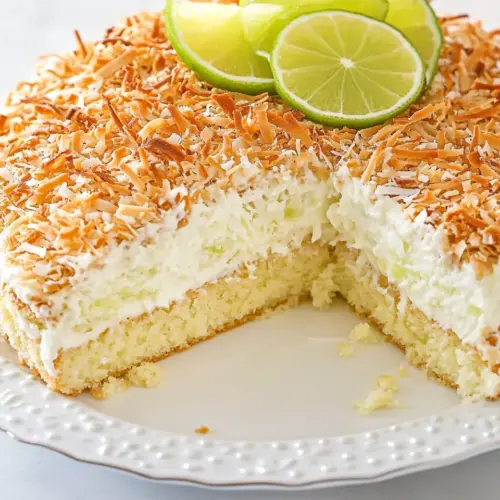
Key Lime Coconut Cake
Key Lime Coconut Cake is a creamy, tangy, and slightly crunchy dessert that balances bright lime with toasted coconut. The airy sponge soaks up a zesty lime syrup while a velvety cream cheese and sour cream frosting keeps it luscious. Perfect for warm-weather gatherings or easy weeknight celebrations, it delivers impressive flavor with approachable technique, making it a must-make.
Equipment
- Oven
- Mixer with whisk attachment
- Serrated Knife
- Measuring Cup
- Small baking pan
Ingredients
- 6 large eggs, room temperature Whisk vigorously to incorporate air and provide structure; eggs also emulsify fats and liquids for a tender crumb and help leaven the cake when beaten with sugar and folded into the batter.
- 1 cup granulated sugar Sweeten and tenderize the batter; granulated sugar dissolves into the eggs to create a stable foam that contributes to volume and provides balanced sweetness throughout the cake.
- 1 cup all-purpose flour Sift and fold gently to create the cake’s body; all-purpose flour supplies gluten that gives structure while being balanced enough to keep the cake tender when combined with eggs and fat.
- 1/2 tsp baking powder Leaven lightly to aid rise; baking powder releases gas during baking to help the cake lift and prevents it from becoming dense when used in a small measured amount.
- 1/4 cup freshly squeezed lime juice, from 3 medium limes Brighten and flavor with acidity; freshly squeezed lime juice adds characteristic key lime tartness and reacts with other ingredients to accentuate flavor without altering texture significantly.
- 3 tbsp granulated sugar Sweeten the lime mixture and balance acidity; a small amount of granulated sugar tamed the lime’s sharpness and helps dissolve into the warm water for use as a simple syrup or soak.
- 3/4 cup warm water Dissolve and hydrate components; warm water helps dissolve sugar and blend with citrus, creating a syrup or thinening liquid that can be folded into batter or brushed on layers.
- 8 oz cream cheese, softened Soften and enrich for creamy filling; cream cheese provides tang, fat, and a dense smooth mouthfeel when blended with sugar and sour cream for a rich topping or filling.
- 1 cup granulated sugar Sweeten the cream cheese mixture; granulated sugar balances the tang of cream cheese and sour cream, helping to create a smooth, balanced filling or frosting without graininess if well combined.
- 16 oz cold sour cream, full fat Stabilize and add tang to the filling; cold full-fat sour cream lightens the texture while contributing a clean lactic acidity that complements lime and cream cheese for a silky finish.
- 3 tbsp lime juice, freshly squeezed (from 2 medium limes) Enhance tang and brightness in the filling; fresh lime juice intensifies citrus flavor and helps balance the richness of cream cheese and sour cream while adding freshness.
- 1 tbsp lime zest, from 2 medium limes Zest to intensify aromatic lime oils and fragrance; lime zest provides concentrated citrus aroma and flavor that amplifies key lime character without adding extra liquid.
- 2 cup 7 oz sweetened shredded coconut Add texture and tropical flavor; sweetened shredded coconut contributes chew, coconut sweetness, and a contrasting bite that complements the lime and creamy components of the cake.
Instructions
- Toast coconut at 350˚F in a small baking pan in oven, stirring a few times, especially towards the end, until golden and dry, 7 to 10 minutes. Set aside to cool.: You will notice a warm, nutty aroma as the coconut browns, and the flakes will shift from pale to a warm golden hue; this scent signals that the natural oils are releasing and flavor is deepening. Use a shallow pan so the heat distributes evenly and stir frequently in the last few minutes to prevent hot spots that burn the edges. A common mistake is walking away, which leads to burnt coconut and an acrid taste, so stay attentive and listen for a soft sizzling that fades as moisture leaves the flakes. Once cooled, the coconut crisps up and is easy to handle without clumping, which is why I always let it cool fully before using it on the cake.
- Make 4-Ingredient Sponge Cake and set aside to cool. Get the recipe on natashaskitchen. com and be sure to watch the tutorial.: You should end up with light, airy sponge cake layers that spring back when tapped, offering a tender crumb and gentle sweetness; this foundation is crucial because it soaks up the syrup and supports the frosting. When you slice the layers, you want clean edges and an even texture, which indicates proper mixing and baking. Avoid overmixing the batter once the flour is added, as that develops gluten and will make the cake heavy instead of delicate. If the center sinks slightly, it can still be salvageable if the crumb is uniform; trim carefully and press the syrup in evenly to restore moisture.
- In the bowl of your mixer fitted with whisk attachment, beat together cream cheese and 1 cup sugar on high speed 3 minutes until whipped, scraping down the bowl as needed.: You will see the cream cheese lighten in color and become fluffy as air is incorporated, giving the frosting a silky mouthfeel. Scraping the bowl ensures there are no stubborn pockets of cold cream cheese that would lead to lumps in the final frosting. If the mixture is too warm it can become runny, so pause if it feels overly soft and chill briefly. A common pitfall is adding the sugar too late or too quickly; add it gradually to achieve a smooth, stable whip.
- Beat in 16 oz cold sour cream until smooth (1 min on high). Add lime zest and juice and beat to combine (1 minute on high). Refrigerate frosting if not using right away.: The texture will shift to a velvety, spoonable consistency that spreads easily and holds shape without being stiff; the cold sour cream helps firm the frosting while contributing a subtle tang. The lime zest releases fragrant oils, brightening the aroma, and the lime juice adds a gentle acidity that balances sweetness. If your frosting seems loose, a short chill will help it stabilize; avoid overbeating which can break the emulsion and cause separation. Refrigerating also makes it easier to pipe or spread neatly.
- In a measuring cup, combine 1/4 cup fresh lime juice, 3/4 cup warm water and 3 tbsp sugar. Stir to dissolve the sugar and set aside.: As you stir, the sugar will vanish into the liquid and the mix will smell sharply of citrus, a concentrated but gentle syrup that will seep into the sponge cake layers to promise moistness and zesty flavor. Warm water helps dissolve the sugar quickly and encourages even absorption into the cake. Avoid using boiling water which could compromise the cake texture if applied too soon; tepid warmth is ideal. If the syrup tastes overly sweet, check your sugar measure, because the goal is to enhance, not drown, the lime note.
- Slice cake layers in half with a serrated knife. Place the first layer, cut-side-up on a cake platter. Brush with 1/4 of the lime syrup. Top with a generous amount of cream. Repeat with remaining cake layers then cover the entire cake with remaining cream.: As you slice, the knife should glide through the cake with minimal tearing, revealing an even crumb; placing the cut-side up allows the syrup to penetrate deeply where it will be most effective. Brushing the syrup produces a faint sheen and the cake will give slightly as it absorbs the liquid, a sign that it is moistening properly. Apply the frosting while the layers are cool to prevent melting, and use even, confident strokes to spread so there are no air pockets. One mistake is over-saturating a single layer, which leads to sogginess; distribute the syrup evenly and trust it to wick through the layers naturally.
- Cover the entire cake generously with toasted and cooled coconut flakes, using your hands to scoop coconut onto the sides, pressing gently to adhere. The coconut flakes are crispiest if served right away but it is easier to slice the cake once it's had a chance to set in the refrigerator for about 2 hours.: The tactile act of pressing the toasted coconut into the frosting is satisfying, and you will notice the coconut sticking readily to the chilled cream. The contrast between the soft frosting and the crisp flakes creates a lively texture profile. If you press too hard you might compress the frosting and mar the cake shape, so use firm but gentle motions. Serving immediately gives maximum crunch, while chilling allows cleaner slices; I often refrigerate for a couple of hours to get tidy wedges without sacrificing much texture.
Notes
- Boost the coconut crunch by using larger flake pieces toasted until just golden, they add more dramatic texture on the exterior.
- Personalize the sweetness by adjusting the sugar in the lime syrup, reduce by a tablespoon or two if you prefer a tarter finish.
- Make ahead advantage by preparing the frosting and syrup in advance; store them chilled and assemble the day you serve for freshest texture.
- Freezing tip freeze individual slices wrapped tightly to preserve texture, then thaw in the refrigerator for a gentler texture that I have found still tastes excellent.
- Presentation idea press extra toasted coconut into a ring on the platter before placing the cake for a neat serving perimeter and easier plating.
- Texture control if you want maximum crispness serve the cake soon after applying the coconut, whereas chilling yields neater slices for events.