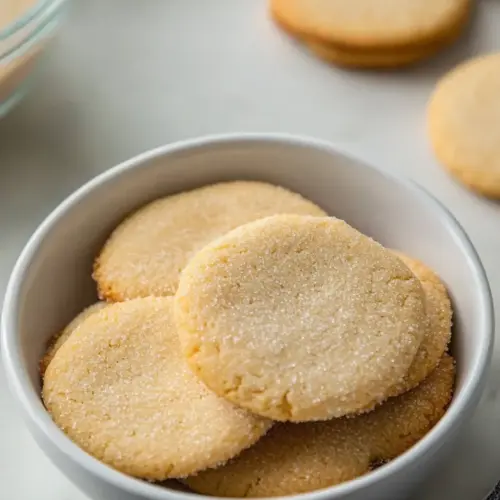
Keto Sugar Cookies with Almond Flour
Keto Sugar Cookies with Almond Flour are tender, nutty, and satisfyingly crisp at the edges while staying soft inside. These low carb cookies use finely ground almond flour and sugar free brown sugar for rich flavor and pleasant texture, making them an ideal easy weeknight dessert or snack. Try them for a lighter treat that still feels indulgent.
Equipment
- Stand mixer
- Rubber spatula
- Baking Sheet
- Parchment Paper
Ingredients
- 1 stick 8 Tbsp, 115 grams unsalted butter, slightly softened but still chilled Provide rich, creamy fat and structure; helps create tender, melt-in-your-mouth cookie texture while contributing to browning and flavor when slightly softened but still chilled.
- 1/2 cup sugar-free brown sugar Add caramel-like sweetness without sugar; balances umami from butter and enhances chewiness while keeping net carbs low for keto-friendly results.
- 1 large egg at room temperature Bind the dough and add lift; contributes moisture, richness, and structural stability so cookies hold shape and achieve a tender crumb.
- 1 tsp pure vanilla extract Impart warm, familiar sweet-spice flavor; enhances overall aroma and complements almond extract for a classic cookie profile.
- 1/2 tsp almond extract Deliver a concentrated nutty aroma; intensifies almond character and layers complexity when used sparingly alongside vanilla.
- 2 1/2 cups finely ground almond flour Provide the primary bulk and structure with a low-carb profile; finely ground texture ensures a smooth dough and tender bite.
- 1 tsp baking powder Leaven gently to create slight lift; improves lightness and texture without adding significant rise, helping cookies avoid being too dense.
- 1/4 tsp sea salt Enhance and balance flavors; a small amount sharpens sweetness and rounds out the overall taste profile in the final cookie.
Instructions
- Preheat the oven to 350 degrees F and line a baking sheet with parchment paper.: As you heat the oven, notice the dry warm scent that fills the kitchen, an early signal that baking is underway. Preheating to 350 degrees F ensures the cookies start baking immediately and develop gentle lift and edge color. Lining the pan with parchment paper protects the bottoms and makes clean up easy. One common mistake is not fully preheating, which causes uneven spread and underbaked centers. If your oven runs hot, watch the first tray carefully to judge exact timing.
- Add the butter and sugar-free brown sugar to a stand mixer and beat until fluffy.: You'll see the mixture lighten in color and develop a slightly airy texture, releasing a soft caramel like aroma from the sugar free brown sugar melding with the butter . This aeration builds lift and helps the cookies feel tender. Avoid over beating which can incorporate too much air and cause excessive spreading. If you do not have a stand mixer, use a hand mixer and scrape the bowl frequently to ensure even creaming.
- Scrape the sides of the bowl using a rubber spatula and add the egg and vanilla and almond extracts. Beat until well-incorporated.: After scraping, add the egg and extracts so the mixture becomes uniform and glossy, with a fragrant lift from the vanilla and almond . The mixture should look smooth and slightly glossy when well combined. If you skip scraping, pockets of unmixed butter or sugar can remain, leading to inconsistent texture. Make sure the egg is at room temperature so it blends smoothly without cooling the batter.
- Scrape the sides of the bowl again and add the almond flour, baking powder, and sea salt. Beat until a thick dough forms and everything is well combined.: The dough will transition from glossy to thick and sandy as the almond flour absorbs moisture, with a nutty scent becoming more prominent. Mixing just until the dough forms prevents overdevelopment and keeps the cookies tender. A frequent error is over mixing, which can make the dough dense and dry; stop when the flour is just incorporated. If your almond flour is packed, fluff it first to avoid adding too much.
- Form the dough into round disc shapes and if desired, roll them in sugar-free granulated sweetener.: As you shape the dough, it should hold together and feel slightly cool to the touch from the butter . Rolling them in sugar free granulated sweetener adds a sparkling exterior and a subtle crunch that contrasts with the soft center. If the dough feels too sticky, chill briefly to firm it up; too warm dough will spread too much in the oven. Be careful not to compact the discs when shaping, or the cookies may lose lightness.
- Place on the parchment-lined baking sheet at least 2 inches apart and bake for 8 to 10 minutes, or until the edges are slightly golden-brown.: As the cookies bake, watch for a light golden rim and a set center, the telltale signs they are done. You may smell a warm nutty perfume as the almond flour toasts lightly. Removing them when the edges are just turning golden prevents overbaking, which causes dryness. A common pitfall is leaving them too long; remember they continue to set as they cool on the sheet.
Notes
- Make them dairy free Use softened coconut oil or vegan butter spread to replace the butter for a dairy free version. Expect a slightly different mouthfeel and aroma from coconut oil, so chill the dough a bit longer to maintain shape. The texture will remain tender, though the flavor will shift to a hint of coconut, which I find pleasant with the almond flour.
- Swap sweeteners carefully If you do not have sugar free brown sugar, use regular sugar free granulated sweetener or sugar free confectioners sweetener. Each sweetener behaves differently, so adjust texture by adding a teaspoon of water or an extra egg white if the dough is crumbly. Taste the dough before baking to ensure sweetness level is to your liking.
- Adjust extract intensity If you prefer a subtler almond note, reduce the almond extract to a scant 1/4 teaspoon and increase vanilla slightly. Conversely, if you want a pronounced nutty aroma, add a touch more almond extract but add little at a time; it can become overpowering quickly.
- Vary shapes and sizing Make smaller cookies for crispier results and larger discs for soft centers. Baked time will vary, so reduce by a minute or two for small cookies and add a minute or two for larger ones. Keep spacing about two inches apart so they bake evenly without merging.
- Enhance browning For slightly deeper color at the edges, rotate the tray halfway through baking and ensure the oven is fully preheated to 350 degrees F. Avoid opening the oven early, which can cool the environment and prevent proper browning.