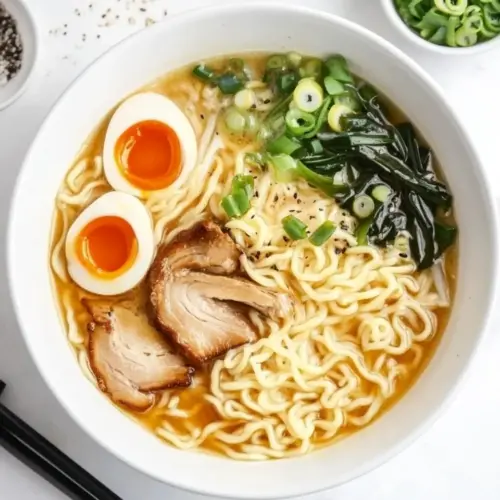
Keto Ramen
Keto Ramen is a creamy, savory, and easy low carb bowl that delivers authentic ramen vibes using shirata ki noodles and a rich chicken broth. Quick to make for an easy weeknight dinner, it balances silky egg, crisp bok choy, and toasty sesame for a satisfying meal that still fits a ketogenic plan. Try it for a fast comforting bowl that keeps carbs low.
Equipment
- Small Saucepan
- Large Bowl
- Strainer
Ingredients
- 1 packet shirataki noodles* See notes Rinse thoroughly and drain well to reduce odor and excess liquid; use as the noodle base to replicate ramen texture while keeping carbs very low. Heat briefly in a pan or microwave to firm up before adding to broth so they better absorb flavors. Chop or separate into strands if desired to improve presentation and mouthfeel.
- 3 cups chicken broth Simmer gently to form a savory, umami-rich broth that carries all flavors throughout the bowl. Use low-sodium if preferred to control salt level and adjust seasoning toward personal taste. Keep at a gentle simmer to meld aromatics without reducing too aggressively.
- 1 tablespoon soy sauce Add a salty, savory depth and balance to the broth; incorporate gradually and taste as you go to avoid oversalting. Use a light hand to preserve the subtle flavors of broth and toppings. Substitute with tamari for gluten-free options if necessary.
- 1 teaspoon Togoshari optional ** see notes Sprinkle sparingly to introduce a bright, citrusy-spicy pop that lifts the broth's flavor profile; optional so flavor can be tailored to preference. Rehydrate if using dried forms and add near the end of cooking to preserve volatile aromatics. Omit if sensitive to spice or unfamiliar heat elements.
- 1 soft boiled egg Peel and halve to add a rich, silky yolk that contributes creaminess and extra protein to the bowl. Cook to soft-boiled doneness so the yolk remains slightly runny and melds into the broth for added body. Season lightly with salt or soy before serving for direct savory impact.
- 1/4 cup baby bok choy Trim and slice to add a tender-crisp, slightly bitter green that brightens the bowl and contributes freshness and texture contrast. Blanch briefly in the broth or steam until just wilted to retain color and nutrients. Layer near the end of cooking so leaves remain vibrant and not overly soft.
- 1 teaspoon sesame seeds Toast lightly and sprinkle over the finished bowl to introduce a nutty aroma and delicate crunch that enhances mouthfeel. Use a small amount to avoid overpowering other flavors and to provide visual contrast. Toasting intensifies flavor and prevents raw sesame bitterness.
Instructions
- Drain your shirataki noodles and wash them with boiling water. Set them aside.: The smell and feel of the noodles after rinsing becomes much cleaner, and quickly pouring boiling water over them helps remove any packing liquid aroma. As you rinse, notice the water run clear and the noodles separate, which tells you they are ready. This washing also tightens the texture so they hold up when boiled briefly. A common mistake is leaving excess liquid, which dilutes the broth, so drain thoroughly and pat lightly with a clean towel if needed. Visual cue: the noodles should look glossy and not clumped.
- Combine the chicken broth and soy sauce in a small saucepan and bring to a boil. Add the noodles and boil for 3 minutes, before removing it from the heat. Add the Togoshari or chili flakes.: You will smell a rich aroma as the chicken broth and soy sauce mingle, a savory steam that tells you the base is building flavor. Once boiling, the sound changes to a steady rolling bubble, and that is the moment to add the shirata ki noodles . Boiling for about three minutes warms them through and allows them to soak up the broth, softening slightly without becoming mushy. After removing from heat, adding the Togoshari releases its fragrance into the hot liquid, giving a gentle spicy perfume. Avoid over boiling, since long exposure makes the noodles too soft and squashy. If your broth tastes flat, a small splash more soy can lift it, but add sparingly to prevent oversalting.
- Transfer to a large bowl, top with the sliced soft-boiled egg, baby bok choy, and sprinkle with sesame seeds and sliced spring onions.: The moment you pour the broth and noodles into a bowl you should see steam rising and catch a warm umami scent. Arrange the soft boiled egg sliced in half so the yolk threatens to spill, and place the baby bok choy for color and crispness. The sesame seeds toasted will pop with a tiny nutty aroma, and adding a few sliced spring onions gives a fresh oniony snap. Texturally, this finishing stage balances silky broth, tender noodles, and crisp vegetables. One mistake is dropping the egg in whole and breaking the yolk prematurely; slice it carefully on a cutting board to maintain that jammy center. The bowl should look layered, not soupy, with toppings visible and inviting.
Notes
- Boost the broth — Gradually reduce the chicken broth and simmer with a folded piece of kombu for extra umami, but remove the kombu before it dissolves to avoid bitterness.
- Noodle swap — If you prefer a different low carb noodle, use another zero calorie noodle in place of shirata ki noodles, washing and briefly boiling it the same way to match texture.
- Egg variations — For a firmer yolk, extend the soft boiled egg time by one to two minutes, but watch carefully so it does not become chalky.
- Greens upgrade — If you want more bite, briefly sauté the baby bok choy in sesame oil for a minute before adding to the bowl, which adds toasted flavor and tender crispness.
- Heat control — Start with a small amount of Togoshari and taste, you can always add more to dial in the warmth gradually without overpowering the broth.