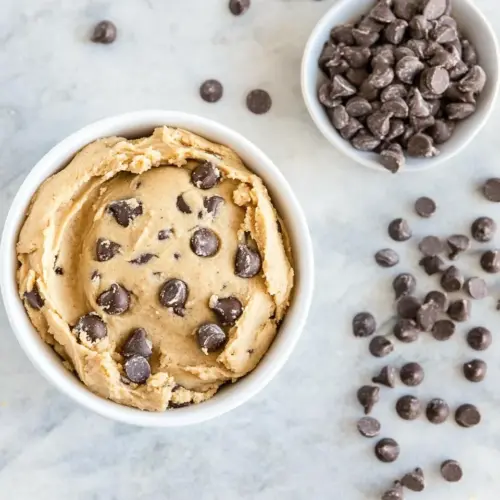
Keto Peanut Butter Edible Cookie Dough
Keto Peanut Butter Edible Cookie Dough is a creamy, low carb treat with a rich peanut butter backbone and a scoopable, nostalgic texture. This easy no bake dessert is perfect for quick snacks or sharing at gatherings, delivering satisfying richness with minimal fuss and smart ingredients. Make it for an easy weeknight dessert and enjoy a guilt conscious reason to indulge.
Equipment
- Mixing Bowl
- Spoon or spatula
- Measuring Cups
- Refrigerator
Ingredients
- 1 cups uper fine almond flour Provide a light, tender base and add a mild, nutty flavor while supplying structure similar to traditional flour; sifts easily to prevent clumps and helps create the cookie-dough texture when combined with fats and sweeteners.
- 1/2 cup unsweetened peanut butter Add creamy richness and concentrated peanut flavor while contributing healthy fats and moisture; binds dry ingredients and enhances the overall peanut-forward profile of the edible dough.
- 1/4 cup unsalted butter melted Melt to incorporate fat evenly, boost richness, and create a smooth, pliable consistency; aids in mouthfeel and helps the mixture hold together without baking.
- 1/3 cup confectioners sugar-free sweetener Sweeten without sugar, deliver bulk and a powdered texture similar to confectioners sugar, and help balance flavors; dissolves smoothly to provide sweetness without raising carbs.
- 1/4 tsp sea salt Season subtly to enhance and balance the sweetness and nuttiness, cutting any cloying notes; helps accentuate flavors and prevent the treat from tasting flat.
- 1/3 cups ugar-free chocolate chips optional Provide optional chocolate bursts and textural contrast while keeping the recipe low in sugar; melt slightly into the dough for pockets of chocolate or stay intact for a chew.
Instructions
- Add all of the ingredients (except for the chocolate chips if using) to a mixing bowl and stir well until everything is completely combined.: The moment you stir, you will notice the aroma of peanut butter lift and the batter thicken as the almond flour hydrates. Listen for the almost silent shift in texture, and look for a uniform paste without streaks of melted butter . This step matters because uneven mixing leaves pockets of dry flour or greasy spots, which changes the final mouthfeel. A common mistake is under mixing, which results in a crumbly dough; mix until smooth and cohesive, scraping the bowl sides to incorporate any dry flecks. If the mixture seems dry, give it a minute for the almond flour to absorb moisture before adding anything else, since it often plumps slightly.
- Note: If your peanut butter is very cold, warm it up in the microwave for a little bit until it softens up. The ingredients will need to be warmer than room temperature in order to easily mix them.: If your peanut butter is very cold, warm it up in the microwave for a little bit until it softens up : Warmed peanut butter blends more readily, producing a glossy, even dough that is easy to work with. You will see the oils reincorporate and feel a silkier texture under your spoon. This technique helps avoid clumps and ensures a consistent bite across every spoonful. Overheating is the pitfall here, as making the fats too hot can thin the mixture excessively, so microwave in short bursts and stir between intervals. If you notice separation, allow it to cool slightly before continuing.
- If desired, stir in chocolate chips.: Folding in the chocolate chips introduces textural contrast and occasional bursts of deep cocoa. When you fold them in, aim for even distribution so each scoop has a few chips. The visual cue is a speckled canvas of chips across the dough surface. A common error is adding chips while the dough is hot, which can cause them to melt and alter the intended texture; wait until the mixture is cooled a bit to preserve firmness.
- Refrigerate the dough until it sets up, about 1 to 2 hours. Once set up, the consistency of the dough is identical to regular cookie dough! You can eat it as is or form little bites out of it.: Chilling is where the dough transforms from soft paste to a firm, scoopable consistency similar to baked cookie dough. You will sense the mixture tighten and the fats solidify, creating that familiar chew. This resting also gives flavors time to meld, enhancing the overall depth. Rushing this step usually yields a runny result, so trust the time and let the dough chill completely. If you need it faster, use a shallow container to increase cooling surface area, but avoid freezing unless you plan to portion for storage.
- Store any leftovers in the refrigerator or freezer in a sealed container or bag.: After chilling, scoop or form small balls, noticing how they hold shape and have a slightly dense give when pressed. The aroma will be more rounded, and the texture will be pleasantly cohesive, not crumbly. This stage is important for serving and portion control, and it also affects mouthfeel significantly. A mistake is warming the formed bites too long at room temperature, which can cause them to soften and lose shape; keep them chilled until serving if you want tidy bites.
- Store any leftovers in the refrigerator or freezer in a sealed container or bag: Proper storage preserves texture and flavor, and prevents freezer or fridge odors from invading the dough. In the fridge the bites stay scoopable for several days, while the freezer allows longer storage, though the texture becomes firmer. When reheating from frozen, brief thawing at room temperature is best to retain the original bite. A common oversight is leaving the dough uncovered, which dries the surface and alters the smooth mouthfeel, so always seal tightly.
Notes
- Dairy Free Swap Use melted coconut oil instead of the unsalted butter to make the dough dairy free; coconut oil gives a slightly tropical aroma and still helps the dough bind when chilled.
- Chunky Texture Stir in a few chopped nuts in addition to the chocolate chips for a heartier bite; this adds chew and a toasty contrast to the smooth base.
- Sweetness Level Adjust the amount of confectioners sugar-free sweetener to taste, adding a tablespoon at a time if you prefer a sweeter profile without adding carbs.
- Portion Control Roll the dough into small bite sized balls and place them on a tray to chill, making individual servings that are easy to grab and resist overeating.
- Flavor Boost Fold in a pinch more sea salt if you like a salted profile; the salt enhances the roasted notes of the peanut butter and rounds out the sweetness.