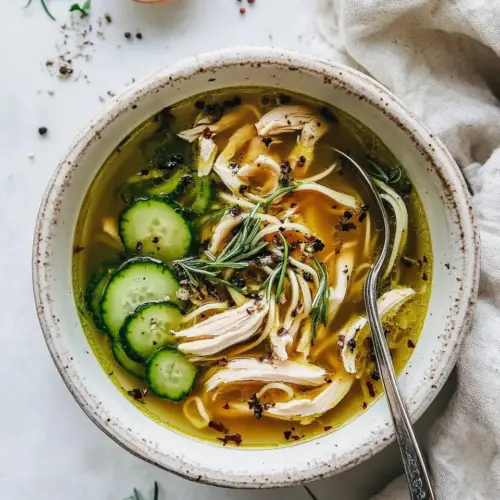
Keto Chicken No Noodle Soup
Keto Chicken No Noodle Soup is a silky, savory bowl featuring rich, slow simmered chicken broth and crisp spiralized zucchini. This easy weeknight dinner is light yet comforting, offering deep, layered flavor from whole spices and a tied herb bundle. Perfect for chilly evenings or make ahead meals, it delivers a nourishing, low carb option worth trying for its clean taste and crowd friendly yield.
Equipment
- Large stock pot
- Tea infuser or spice diffuser
- Fine-mesh strainer
- Spiralizer
Ingredients
- 1 pasture-raised stewing hen roaster chicken works well too Roast or simmer thoroughly to extract rich gelatin and deep chicken flavor, using a pasture-raised stewing hen or roaster for the most collagen and body in the broth. Trim excess fat and optionally brown the bird first to deepen savory notes, then simmer low and slow for several hours to maximize nutrition and mouthfeel. Strain solids and shred meat to add back into the soup for texture and protein.
- 3 medium carrots Peel and chop into large chunks to contribute natural sweetness and aromatic depth; carrots also add subtle body and color to the broth as they release sugars during long simmering. Add early in the cooking process so they soften and infuse the stock, but reserve a portion if you prefer firmer pieces to return to the finished soup.
- 4 celery stalks Roughly chop stalks to build savory, aromatic base alongside onion and carrot; celery adds a bright, slightly bitter counterpoint that balances the broth. Include leaves if fresh for extra herbal notes, and add early to fully mellow during the simmer for a cohesive flavor profile.
- 1 large onion Peel and quarter to provide aromatic sweetness and umami depth when sautéed or simmered with the chicken; onion helps build the savory backbone of the soup. Cook early in the process to break down and impart its sugars into the stock, enhancing overall complexity and mouthfeel.
- 2 bundles of parsley wrapped and tied with food-safe twine Wrap and tie bundles to create a bouquet garni that infuses fresh herbal brightness without leaving loose stems or leaves in the finished soup. Use whole parsley bundles during simmering and remove before serving to deliver clean, verdant notes and a pleasant finish.
- 6 bay leaves Add whole to impart a subtle, slightly floral and herbal aroma that complements the savory broth; bay leaves help unify flavors and add depth to long-simmered stocks. Use cautiously—remove before serving to avoid sharp, astringent edges or overpowering bitterness.
- Whole peppercorns Toast lightly or add whole during simmering to provide warm, spicy aroma and a subtle peppery bite that lifts the broth’s complexity. Use sparingly and strain out before serving to control heat while contributing clean, clean pungency.
- 2 whole star anise Simmer whole to contribute sweet-anisey, warm spice notes that provide an unexpected depth and aromatic lift to the broth, balancing savory flavors. Remove the star anise before serving to keep the anise character subtle and pleasant rather than overpowering.
- 2 boxes chicken broth not sodium-reduced Pour in as the liquid base using non-sodium-reduced chicken broth to ensure robust, savory foundation and sufficient seasoning for a keto soup. Combine with homemade stock or water as needed, and taste for salt after dilution since these broths can be fully seasoned.
- Zucchinis spiralized with blade D (or 1 zucchini per person) Spiralize zucchini using blade D or substitute about one zucchini per person to create noodle-like strands that hold up well in hot soup while remaining low-carb. Add near the end of cooking to preserve tender texture and prevent overcooking; they provide body and a noodle-like experience without carbs.
- Salt to taste Season at the end to taste, adjusting for broth saltiness and personal preference to enhance overall flavor balance. Start with a small amount and incrementally add until the soup achieves the desired savory finish without becoming overly salty.
Instructions
- Place the hen in a large stock pot.: The moment you slide the whole hen into the pot you will notice a distinct, meaty aroma that promises depth. As it warms, the skin may tighten slightly and any excess surface moisture will reduce, which helps the initial flavor extraction. Use a pot large enough so the hen sits comfortably without crowding, this ensures even circulation of heat. A common mistake is using too small a pot which restricts water coverage and leads to uneven cooking.
- Cut each carrot and celery stalk into 3 large chunks and place on top of the hen.: When you add the chopped carrots and celley in big pieces they start releasing sweet and vegetal aromatics into the surrounding liquid. You'll smell a sweet, slightly green lift as the vegetables warm, which complements the savory chicken. The large chunks are easy to fish out later and keep the broth clear. If you cut them too small they will disintegrate and cloud the stock, so resist the urge to dice finely.
- Cut the onion into large chunks and place on top of the carrots and celery.: The onion gives a round, sweet foundation as it heats, and its scent becomes more complex as it simmers. Chunking the onion allows it to impart richness without breaking apart. The caramelized fragrance is subtle rather than overt, and keeping large pieces prevents tiny bits from floating in the finished broth. Overstirring the pot at this stage can shred aromatics, increasing turbidity in the stock.
- Place the wrapped parsley and bay leaves on top of the vegetables.: Dropping the tied parsley bundle and the bay leaves into the pot creates an herbal envelope that infuses the liquid gently. You'll notice a green, slightly floral scent join the savory notes, which brightens everything. Bundling the herbs makes them easy to remove, preserving a clean texture. Leaving loose leaves in can release small particles, so tying is an important small technique to avoid extra straining.
- Fill two steel diffusers (or a tea ball) with black peppercorns and star anise and place in the stock pot. This doesn't have to be an accurate measurement, just fill it up. If you don't have diffusers, just pop them into the pot with the vegetables and make sure to strain the vegetables later.: Placing the whole peppercorns and the star anise inside diffusers concentrates their aromatic oils while keeping them contained. The spices will release warm, slightly sweet and pungent notes as they steep, and using diffusers makes post simmer cleanup simple. If you omit diffusers and add the spices loose, be prepared to strain very carefully to avoid unexpected crunchy spices in the finished bowl.
- Pour the box of chicken broth over top of everything in the stock pot.: Adding boxed chicken broth along with water layers umami and speeds up the depth development. The combined liquid will pick up color and flavor quickly as it heats, and you'll notice the surface begins to show small suspended fats and flavor particles. Using a full strength broth is fine, but taste later before any extra salting because some commercial broths are pre salted.
- Fill the rest of the pot up with water, until all the ingredients are just covered.: Topping with water ensures even extraction from the hen and aromatics. Watch as the liquid level rises just to cover the solids, and aim to avoid a pot overloaded with water which could dilute flavors. A good visual cue is that the bird and vegetables remain submerged but not swimming in excess. If you add too much water the final stock will taste weak, so err on the conservative side.
- Bring the pot to a boil over high heat and then turn down to medium/low and cover and simmer for the whole day (or at least 8 hours).: The initial boil wakes up flavors, then the long gentle simmer coaxes collagen and depth from the hen. As it simmers you will see little beads of fat rise and the surface will take on a warm sheen, the smell becoming homey and layered. Keeping the simmer low prevents agitation that clouds the stock, and a lid with a small gap controls evaporation. A frequent error is simmering too hard which emulsifies fat into the liquid, making it cloudy and greasy.
- Once the stock is done simmering, remove the chicken and place onto a plate. Skim any little floaty bits off the top of the stock, then strain it into another pot to remove the veggies (optional).: Lifting the cooked bird out is a satisfying moment, and you will immediately notice a change in the pot aroma, a concentrated, clean chicken scent. Let the hen cool enough to handle, and keep the pot covered to hold heat in the remaining liquid. A common mistake is shredding the bird in the hot pot which can release small bits of meat and bone into the stock, so moving it to a plate keeps things tidy.
- Shred the chicken and set aside, then discard the carcass and bones.: Skimming clarifies the surface and improves presentation, and straining through a fine sieve produces a glossy, clean broth. You'll notice the liquid looks brighter and more translucent after straining, and the aroma becomes purer. Use cheesecloth if you want extra clarity. If you skip skimming, the finished bowls may carry a dusty appearance from suspended solids.
- Taste the stock to see if it needs any additional salt, or any additional chicken broth.: As you shred the meat it should be tender and pull apart easily, offering a comforting, fibrous texture. Shredded chicken soaks up broth beautifully when added to bowls, contributing both protein and mouthfeel. Remove any cartilage or skin you do not want in bowls. One trap is over shredding so you lose bite, keep the pieces varied for texture.
- Gently press out any excess moisture from the zoodles with a paper towel and then divide them between bowls. Ladle stock over top and add shredded chicken.: Tasting at this stage allows you to balance seasoning and body, adding box broth or salt to correct thinness or flatness. Warm a small spoonful and adjust in small increments, because salt can easily overshoot. If the broth is too weak, concentrate it by simmering uncovered briefly or add more boxed broth. Over-salting is hard to fix, so proceed cautiously and taste frequently.
- Gently press out any excess moisture from the zoodles with a paper towel and then divide them between bowls: Preparing the zucchinis at the last minute preserves their crispness; pressing removes water that would otherwise dilute the broth. The zoodles should feel slightly firm and have a fresh vegetal scent, offering a bright counterpoint to the warm stock. Avoid packing them into hot liquid for long, or they will release water and become limp.
- Ladle stock over top and add shredded chicken: When you ladle the hot, aromatic broth over the zoodles the steam will slightly wilt them while preserving snap, creating a pleasing interplay of textures. Add shredded chicken on top so each bite has protein and richness, and finish with a final taste for salt. A common misstep is pouring boiling broth too long before serving which overcooks the zoodles, so assemble bowls right before eating.
Notes
- Use a large stock pot so the hen and aromatics have room, this ensures even heat circulation and prevents boiling over during the initial heat up.
- Tie your herbs with food safe twine, it makes removal simple and prevents tiny leaf fragments that cloud the finished broth.
- Keep vegetables in large chunks to control clarity, smaller pieces will break down and create a cloudy appearance in the stock.
- Contain whole spices in diffusers or a tea ball, you will get the flavor without having to pick out peppercorns and star anise later.
- Spiralize zucchini last and press gently to remove moisture so they stay crisp when the hot broth is poured over them.
- Adjust salt at the end only after tasting the strained stock, boxed broths may already contribute a lot of sodium.