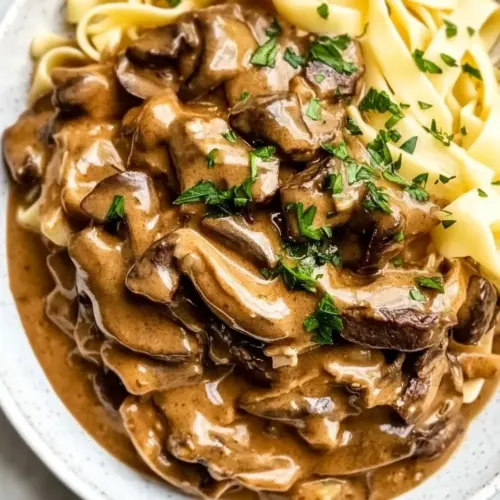
Keto Beef Stroganoff
Keto Beef Stroganoff is a creamy, savory low carb twist on the classic, with tender sirloin steak, earthy mushrooms, and a luscious sour cream sauce. This easy weeknight dinner delivers big flavor in minimal time, making it perfect for busy evenings when you still want something comforting and satisfying. Try it for a cozy family meal or when you need a reliable low carb crowd pleaser.
Equipment
- Non-stick pan
- Skillet
- Knife
Ingredients
- 1 1/2 pounds sirloin steak Slice thinly and sear quickly to develop a caramelized exterior while keeping the interior tender; cutting against the grain ensures maximum tenderness and a pleasant mouthfeel in the stroganoff.
- 1/4 cup butter unsalted Melt gently to create a rich cooking fat that carries flavor; use unsalted butter so you can control seasoning while forming the base for sautéing onions and mushrooms.
- 2 large onions sliced Sweat slowly until translucent and slightly caramelized to add natural sweetness and depth; sliced texture helps create a silky sauce body and aromatic foundation.
- 1 clove garlic minced Mince finely and sauté briefly to awaken bright savory notes; gentle cooking prevents bitterness and infuses the dish with aromatic complexity.
- 1 1/2 cups beef broth Simmer to deglaze the pan and concentrate savory beef flavor; low simmering incorporates browned bits and forms the liquid backbone of the sauce.
- 1 teaspoon Worcestershire sauce Stir in sparingly to add tangy, umami complexity that complements the beef; a small amount enhances savory depth without overpowering the creaminess.
- 1/2 cup mushrooms sliced Sauté until lightly browned to add earthy flavor and tender bite; sliced mushrooms contribute moisture and an umami boost to enrich the sauce.
- 1/4 cup almond flour * See notes Dust lightly to thicken the sauce while keeping the recipe low-carb; almond flour provides body and a subtle nutty taste without using traditional wheat flour.
- 1 1/2 cups sour cream Fold in off heat to create a creamy, tangy finish and smooth texture; stirring gently prevents curdling and yields the classic stroganoff richness.
Instructions
- Slice the beef into 1-inch strips, cutting against the grain.: The meat will feel firm but not tough as you slice, and cutting against the grain shortens the muscle fibers which produces tender bites. You should notice the grain direction and slice across it with a sharp knife, which helps give a pleasant chew rather than a stringy texture. If you slice too thickly you may end up with pieces that take longer to tenderize, and slicing with the grain can make the meat feel tougher, so take a moment to orient your cuts for the best results. Also, chill the beef briefly if it feels slippery, it firms up and slices more cleanly.
- In a non-stick pan or skillet, add the butter and place it over medium heat. Once hot, add the garlic and onions and cook until soft. Remove them from the pan.: Early on you will smell the butter warm and then a sweet, toasty aroma as the onions begin to soften, the kitchen will fill with a comforting scent. The garlic should sizzle briefly and become fragrant, not browned, which keeps it from turning bitter. Visually, the onions will go from opaque to translucent and then to hints of gold at the edges, that is your cue to remove them before they darken too much. Overcrowding the pan prevents proper softening, and burning the garlic is the common mistake here, so keep heat moderate and stir frequently to ensure even cooking.
- Add the sirloin and cook for 4-5 minutes, until no longer pink. Add the beef broth and Worcestershire sauce and bring to a boil. Once boiling, reduce the heat to low and let it simmer for 15 minutes.: As the sirloin steak sears you will hear a steady sizzle and see edges brown, that Maillard reaction is what builds savory depth. The meat should change color from pink to a warm brown, and the pan juices will deepen. Adding the beef broth and Worcestershire sauce lifts all those fond flavors, producing steam and a fragrant, meaty aroma as you bring it to a boil. When it reaches a boil, lowering to a simmer allows flavors to concentrate without toughening the meat, simmering for the stated time makes the sauce more cohesive. A typical mistake is rushing the simmer, which leaves the sauce watery and the flavors thin, so resist the urge to crank up the heat and instead let gentle bubbling do the work.
- Add the mushrooms and the cooked onion and garlic. Stir through the almond flour. Let everything simmer for 5 minutes, before stirring through the sour cream until combined and smooth.: When you add the mushrooms you will notice the pan releasing a fresh earthy scent as they begin to join the sauce, and the previously cooked onions will melt back into the mix, enriching the texture. Sprinkling in the almond flour helps the sauce thicken and cling, but you should whisk or stir briskly to avoid lumps and ensure an even consistency. After a few minutes of simmering you will see the sauce take on a more velvety sheen, and then folding in the chilled or room temperature sour cream off the heat yields a smooth, luxurious finish. Adding the sour cream while the pan is too hot risks curdling, so remove from direct heat briefly before stirring it in, that's the common pitfall to avoid.
- Remove the skillet off the heat and serve immediately with your favorite low carb pasta or mock potatoes.: The final moment is all about plating and enjoying the sensory payoff, the sauce should shimmer and coat each strand of low carb pasta or spoonful of cauliflower mash. You will notice steam rising and the fragrance will be rich and savory, inviting the first bite. Letting the dish sit too long in the pan can thicken the sauce excessively and change texture, so serve promptly for the best mouthfeel. If you need to hold it briefly, keep it warm on the lowest heat and stir occasionally to maintain a smooth consistency and avoid a skin forming on top.
Notes
- Trim and chill the meat before slicing, it firms up and slices more uniformly which helps the pieces cook evenly and remain tender.
- Control the heat for aromatics by keeping it medium, this prevents the garlic from burning while allowing the onions to become sweet and translucent.
- Whisk almond flour into a small amount of broth first to create a slurry if you are worried about lumps, this ensures the thickener disperses evenly into the sauce.
- Stir in sour cream off the heat to keep the sauce silky, sudden high heat can separate the cream and change the texture.
- Let the sauce rest for a minute after removing from heat to settle and thicken slightly, which improves how it clings to low carb pasta or mash.
- Season gradually because the broth and Worcestershire sauce already contribute salt and umami, taste as you go to avoid over salting.
- Store leftovers properly by cooling quickly and refrigerating in an airtight container for up to five days to maintain texture and flavor.