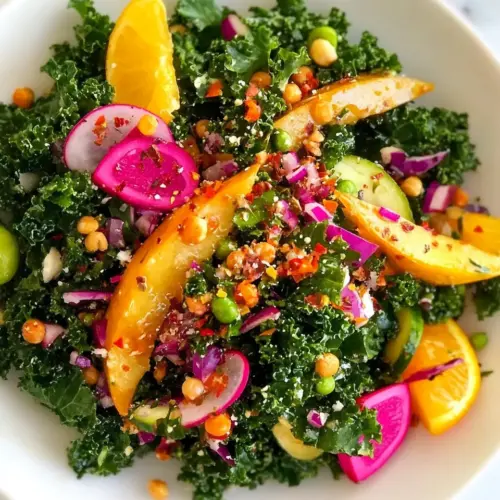
Kale Salad
Kale Salad blends tender massaged kale with a creamy carrot ginger dressing, crispy roasted chickpeas, toasted pepitas, and creamy avocado for a crunchy, bright, and easy weeknight bowl. This salad offers layered textures and balanced flavors that work great for lunches or light dinners, promising a satisfying and wholesome meal you will want to make again and again.
Equipment
- Oven
- Baking Sheet
- Parchment Paper
- Blender
- Large Bowl
Ingredients
- 3/4 cup chopped carrots Provide sweet, crunchy texture and bright color while contributing natural sweetness and fiber to balance the salad; chop uniformly for even distribution and visual appeal across bites.
- 1/3 to 1/2 cup water Add moisture and help adjust dressing consistency while allowing control over thickness; use incrementally to achieve desired dressing viscosity without diluting flavors.
- 1/4 cup extra-virgin olive oil, plus more for drizzling Contribute rich, fruity fat that forms the base of the dressing and helps carry flavors; use extra for drizzling to finish the salad with glossy sheen and mouthfeel.
- 2 tablespoons rice vinegar Impart mild acidity and a subtle tang that brightens the dressing and balances the oil; whisk thoroughly with oil and ginger to marry flavors smoothly.
- 2 teaspoons minced fresh ginger Lend warm, aromatic heat and fresh zing to the dressing, enhancing overall brightness; mince finely to disperse evenly and avoid overpowering raw kale.
- 1/4 teaspoons ea salt, plus more for sprinkling Season the dressing lightly to enhance flavors and help round out the sweet and acidic components; reserve extra for sprinkling on finished salad to taste.
- 1 recipe Roasted Chickpeas Provide crunchy, protein-rich topping and savory depth when prepared roasted, adding satisfying texture contrast to tender kale and vegetables; add just before serving to keep crispness.
- 1 bunch curly kale, stems removed, leaves torn into bite-sized pieces Offer sturdy, slightly bitter leafy base that holds up to robust dressings and massaging; remove stems and tear into bite-sized pieces for easier chewing and dressing absorption.
- 1 teaspoon fresh lemon juice Brighten the salad with a splash of citrus acidity that lifts flavors and balances richness; add after tasting the dressing to adjust brightness precisely.
- 1/2 teaspoon extra-virgin olive oil Add a small finishing touch of olive oil to enhance sheen and mouthfeel on micro-components like grated vegetables or avocado; drizzle sparingly to avoid greasiness.
- 1 small carrot, grated Provide crunchy, sweet texture and fresh carrot flavor when grated finely; incorporate in ribbons or shreds to disperse sweetness evenly throughout the salad.
- 1 small red beet, grated Contribute earthy sweetness, vibrant color, and subtle density when grated thinly; balance with acidic dressing to prevent the beet from dominating other flavors.
- 1/2 watermelon radish, very thinly sliced Introduce mild peppery color and crisp, decorative bite when sliced paper-thin; use sparingly for visual interest and a gentle radish bite without overwhelming.
- 1 avocado, cubed Add creamy richness and buttery texture along with healthy fats that mellow the dressing; cube just before serving to prevent excessive browning.
- 2 tablespoons dried cranberries Bring concentrated sweet-tart chewiness that complements crunchy elements and adds bursts of flavor; scatter across the salad to provide intermittent pops of sweetness.
- 1/4 cup pepitas, toasted Offer nutty crunch and toasty aroma as a hearty garnish that adds textural contrast and healthy fats; toast lightly to enhance flavor and sprinkle evenly.
- 1 teaspoons sesame seeds Provide small crunchy accents and subtle nutty flavor to finish the salad with delicate texture; toast briefly if desired to amplify aroma and flavor.
- Sea salt and freshly ground black pepper Season final salad to taste with coarse salt and freshly ground pepper to enhance and balance all components; adjust at the end to avoid over-salting delicate ingredients like avocado.
Instructions
- Make the dressing: Preheat the oven to 400°F and line two baking sheets with parchment paper. Place the carrots on one of the baking sheets. Drizzle with olive oil, sprinkle with salt, and toss to coat. Spread evenly on the baking sheet and roast for 20 to 25 minutes, or until soft. Transfer the carrots to a blender and add the water, olive oil, rice vinegar, ginger, and salt. Blend the dressing until smooth and chill in the fridge until ready to use.: Preheat the oven to 400°F and line two baking sheets with parchment paper : The scent of roasting carrots will become sweet and warm, a signal that their sugars are caramelizing and the dressing will develop depth. You should hear a quiet pop as the edges brown slightly, and the visual cue is golden spots on the carrot pieces. This step matters because roasted carrots provide both body and sweetness to the dressing, which raw carrots cannot fully replicate. A typical mistake is crowding the pan, which steams rather than roasts the vegetables, so spread them evenly to encourage browning. If the oven seems too hot and the carrots brown too fast, reduce heat slightly to allow even softening.
- On the second baking sheet, prepare the roasted chickpeas according to this recipe.: When the carrots hit the warm pan, they will begin to sizzle lightly and a toasty aroma will rise, indicating the beginning of caramelization. Visually, the carrots should lie in a single layer so each piece browns on its edges; you want gentle golden color rather than deep charring. This technique helps concentrate flavor for the dressing, making it rich rather than flat. Avoid using very small pieces that can burn quickly; if some pieces cook faster, remove them earlier to protect the rest.
- Place the kale leaves in a large bowl and add the lemon juice, olive oil, and a few pinches of salt. Use your hands to massage the leaves until they become soft and wilted and reduce in the bowl by about half.: The oil helps the surface of the carrots brown evenly and carry heat, and the salt enhances their natural sweetness as they roast. You will see the oil glisten on the pieces and smell a hint of savory warmth as they turn golden. Tossing ensures even seasoning and browning, and skipping this will produce uneven texture and flavor. If you over-salt at this stage, the dressing may taste too sharp, so season lightly and adjust later.
- Add the carrot, beet, watermelon radish, half of the cubed avocado, cranberries, pepitas, a few more pinches of salt, and a few grinds of pepper. Toss to combine. Drizzle generously with the carrot ginger dressing. Top with the remaining avocado, more dressing, and the roasted chickpeas and sprinkle with the sesame seeds. Season to taste and serve.: During roasting, watch for a gentle caramel scent and edges that blush golden brown, which indicate readiness. The carrots should yield to a fork and feel tender but not mushy. Roasting concentrates flavor, which is why this step is essential for a balanced dressing. A common error is under-roasting, leaving the carrots gritty in texture; if they are not soft to the skewer, give them a few more minutes and monitor closely to prevent burning.
- Transfer the carrots to a blender and add the water, olive oil, rice vinegar, ginger, and salt: As you blend, you will hear the motor smooth the mixture and see the dressing turn glossy, the color a bright orange that promises freshness. This emulsion binds the ingredients, making a dressing that clings to the kale . The reason for blending is to create a silky texture that coats leaves evenly, which a chopped dressing cannot achieve. If the dressing is too thick, add water sparingly to reach desired consistency; adding too much water at once will thin it excessively.
- Blend the dressing until smooth and chill in the fridge until ready to use: The chilled dressing will firm up slightly and the flavors will mellow and meld. Cooling also lets the ginger infuse without overpowering the palate. Aromatically, you should detect bright vinegar and warm ginger notes balanced by sweet carrot. A frequent oversight is using the dressing hot, which can wilt the kale too quickly; always allow it to cool before tossing with greens.
- On the second baking sheet, prepare the roasted chickpeas according to this recipe: As the chickpeas roast, they will develop a toasted, nutty aroma and a satisfying crunch, crucial for texture contrast in the salad. The visual cue is a golden to deep golden hue and a crisp snap when you bite one. Well roasted chickpeas add protein and structure, so take care to dry them well before roasting for maximum crispness. If they remain moist, they will become soft rather than crunchy, losing their desired impact.
- Place the kale leaves in a large bowl and add the lemon juice, olive oil, and a few pinches of salt: The citrus will begin to gently break down the leaf fibers, and you will notice the leaves darken slightly as they relax. This massaging yields a silkier mouthfeel and reduces bitterness, which makes the kale more enjoyable raw. Use your hands to feel the texture soften; if you stop too soon the leaves will remain tough. Over-massaging can turn the leaves limp, so aim for tenderness without mushiness.
- Use your hands to massage the leaves until they become soft and wilted and reduce in the bowl by about half: The tactile feedback is key here you should feel the leaves give and become noticeably more pliable. This physical step matters for the final texture, allowing the dressing to cling and the salad to be tender. A common error is skimping on this step which leaves the kale coarse and difficult to eat, so take your time until you see visible reduction.
- Add the carrot, beet, watermelon radish, half of the cubed avocado, cranberries, pepitas, a few more pinches of salt, and a few grinds of pepper: At this stage the bowl begins to feel layered and colorful, and you can hear the pepitas as they tumble with the other ingredients. The variety of textures and colors enhances the eating experience, with each element contributing a distinct flavor. It is important not to over-salt now because the roasted components and pepitas already contribute savory notes; taste as you go to prevent over-seasoning.
- Toss to combine: As you toss, the dressing will lightly coat the leaves and distribute flavors. You should see the salad glisten and smell a balanced brightness from the lemon and rice vinegar. Proper tossing ensures even seasoning so every bite is consistent. If you toss too roughly you can bruise the avocado too much, so fold gently for even distribution.
- Drizzle generously with the carrot ginger dressing: The dressing should coat leaves and vegetables in a thin, glossy layer, delivering sweet, tangy, and slightly spicy notes with each bite. This step transforms the raw components into a cohesive dish and helps the dried cranberries and pepitas cling to the leaves. Apply the dressing in increments to find the right balance; too much will make the salad heavy.
- Top with the remaining avocado, more dressing, and the roasted chickpeas and sprinkle with the sesame seeds: The final assembly should look composed, with creamy cubes of avocado and crunchy roasted chickpeas on top for visual appeal and texture. The sesame seeds add a soft toasty finish and aroma. A misstep here is mixing the chickpeas into the bowl too early, which softens them; add them at the end to preserve crunch.
- Season to taste and serve: Taste the salad for balance, adjusting salt, pepper, or a squeeze of lemon if needed. You will notice how small tweaks elevate harmony among sweet, salty, and acidic notes. Serve promptly so the textures remain distinct, since time causes the pepitas and chickpeas to soften. If you plan to serve later, keep crunchy components separate until plating.
Notes
- Use more or less lemon to control brightness, adding small increments and tasting as you go to avoid overpowering the other ingredients.
- Swap rice vinegar for apple cider vinegar if you prefer a fruitier acid note, but use the same amount to maintain overall balance.
- Toast the seeds longer for a deeper nutty aroma, but remove them from heat as soon as they become fragrant to prevent bitterness.
- Prepare roasted chickpeas ahead and store them in a sealed container to preserve crunch when you are ready to assemble the salad.
- Grate vegetables finely to ensure they mingle with the kale evenly, producing a consistent bite throughout the salad.
- Add the avocado last and reserve some for topping so you have both mixed creaminess and visual garnish.