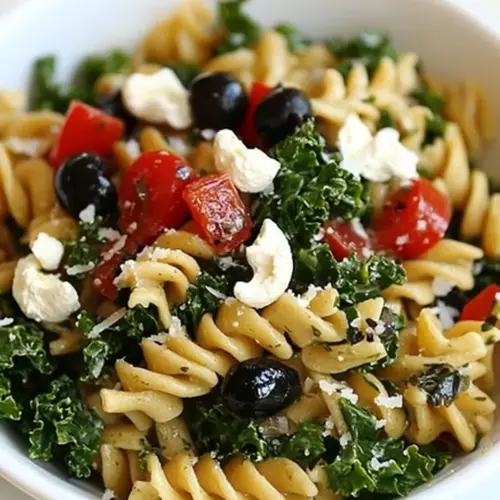
Kale Pasta Salad
Kale Pasta Salad is a bright, easy pasta salad that blends tender wilted kale with curly pasta, juicy cherry tomatoes, briny black olives, and crumbly Feta. Creamy and zesty, it makes a perfect easy weeknight dinner or shareable side dish with fresh spring flavors and satisfying textures. Make it for a quick meal that feels both wholesome and indulgent.
Equipment
- Large Pot
- Colander
- Large non-stick frying pan
- Mixing Bowl
- Salad spinner
Ingredients
- 8 oz . Fiber Gourmet Light Rotini (or other curly pasta of your choice) Boil to tender al dente and serve as the hearty base for the pasta salad; its curly shape traps dressing and ingredients for balanced bites. Measure precisely for consistent texture and to maintain the intended ratio of pasta to vegetables. Rinse briefly with cold water after cooking to stop cooking and cool the pasta for salad assembly.
- 1 tsp . salt (for pasta cooking water) Season boiling water to enhance starch absorption and bring out the pasta's flavor; it helps the pasta cook evenly. Add at the start of the simmer to ensure proper seasoning throughout. Use the salt sparingly if using salty add-ins like olives and feta.
- 8 oz . kale leaves, coarsely chopped Chop coarsely and wilt slightly to provide earthy, nutritious greens that add texture and color contrast. Sauté briefly to soften tough stems and mellow bitterness while retaining some chew. Massage gently if not cooking to tenderize and make it easier to eat in the cold salad.
- 1 T olive oil (for stir-frying the kale) Heat briefly to soften and slightly caramelize the kale while preventing sticking, adding a subtle fruity note and sheen. Use just enough to coat the leaves lightly and help the dressing adhere. Choose extra-virgin for more flavor or a milder oil if preferred.
- 1 cup cherry tomatoes, cut in half Halve to release juices and provide bright, acidic bursts that balance the richness of olives and feta. Add just before serving or toss gently to avoid crushing and to maintain fresh texture. Choose ripe tomatoes for peak sweetness and color.
- one 6 oz. can black olives, drained and cut in half Drain and halve to contribute briny, savory pockets that contrast the sweet tomatoes and bitter greens. Rinse if overly salty and pat dry to prevent watering down the salad. Chop to the same approximate size as the tomatoes for uniform bites.
- 1/4 cup crumbled Feta (or more) Crumble to add creamy, tangy, and salty notes that round out the flavors and provide a contrasting texture. Sprinkle to taste and fold gently so it distributes without completely melting into the warm pasta. Use higher amounts for a saltier, richer profile or reduce if watching sodium.
Instructions
- Bring a large pot of salted water to a boil, add pasta, stir, and reduce heat to a low boil and cook for until pasta is al dente probably about 15 minutes for Fiber Gourmet pasta, but I would start to check after about 12 minutes.: You should notice the water moving actively with large rolling bubbles and a faint steam aroma, and once you add the pasta the scent of cooked wheat will soon appear. Stir immediately to separate pieces so they do not clump, then lower the heat so the pot maintains a steady but gentle boil. The ideal texture is al dente, offering slight resistance when bitten, which preserves structure in the salad. A common mistake is cooking too aggressively or too long, which makes the pasta mushy and less able to hold dressing. To test, fish out a piece around 12 minutes, cut it, and taste for a firm center. If it still feels chalky, continue cooking and check every minute to avoid overcooking.
- Drain pasta into a colander placed in the sink and let it drain well.: Expect a brief sizzle and the steam of hot pasta releasing as you pour; that steam carries starch that helps the dressing cling when the pasta is still warm. Let it rest briefly so excess water drains away, which prevents a watery salad later. A mistake people make is shaking the pasta too vigorously, which can break delicate shapes; simply tilt and let gravity do the work. If the pasta is very starchy, you can give it a quick gentle toss in the colander to release excess starch, but avoid rinsing because that removes seasoning.
- While the pasta cooks, chop up the kale leaves (cutting away the inner ribs if they’re large), and wash kale in a salad spinner if needed.: As you chop, you will smell the green, slightly bitter aroma of raw kale , which becomes milder after cooking. Removing thick ribs makes the leaves tender and pleasant to eat, and spinning them dry helps the oil and dressing adhere later. A common oversight is leaving leaves too large, which causes uneven wilting. Aim for even, bite sized pieces so each forkful balances with pasta and other ingredients.
- Heat the olive oil in a large non-stick frying pan with high sides, add the kale all at once, and stir-fry for 2-3 minutes until the kale has wilted and is starting to get tender.: When the olive oil warms, it gives off a soft fruity scent; adding the kale should create an immediate sizzling sound and bright green steam. Stir continuously so the leaves cook uniformly, taking notice as they shift from rigid to glossy and slightly reduced in volume. This quick sauté retains some chew and prevents bitterness from developing. A typical mistake is using too high heat causing the kale to brown and crisp, so maintain medium heat and keep the leaves moving in the pan.
- Turn off pan and let the kale cool.: Allowing the kale to cool prevents it from wilting the rest of the salad into limpness, and you will notice the aroma mellow into a softer green note. Cooling also stops carryover cooking so the leaves retain a pleasant texture. People sometimes add hot kale straight into chilled pasta and end up with a soggy result, so this pause matters for texture. If you are in a hurry, spread the kale on a plate to release heat faster, but avoid shocking it with ice cold water which alters the mouthfeel.
- Mix together the fresh-squeezed lemon juice, white balsamic vinegar, and pesto, then whisk in the olive oil to make the dressing.: As you whisk, you will see the dressing emulsify into a glossy, cohesive sauce, and its aroma should be bright and herb forward. Whisking helps break up the acids and disperse fat evenly so each strand of pasta gets flavored. The acid balances the oil and lifts the overall taste. A pitfall is under-whisking, which leaves the dressing separated and unevenly distributed; take a few extra seconds to achieve a smooth, harmonious texture.
- When the pasta has drained well but is still warm, transfer it to a bowl and stir in about half the dressing.: The warmth from the pasta helps it absorb the dressing so flavors penetrate rather than sit only on the surface. You should hear gentle clinking as pieces move and see a light sheen appear across the noodles. Letting it rest after adding dressing gives time for the pasta to soak up flavor. Beware of over-dressing at this stage, which can make the salad oily; start with less and add later if needed.
- Let the pasta sit while you cut cherry tomatoes and olives and crumble the feta.: While the pasta rests, preparing the fresh components ensures they retain brightness and texture when combined. The tomatoes will smell sweet and herbaceous when cut, and crumbling Feta releases that creamy, tangy aroma that signals readiness. A common misstep is prepping these too early and letting them sit, which drains juices and dulls freshness; cut them close to assembly time to maintain peak texture.
- Stir the cooled kale into the pasta in the bowl.: When you fold in the kale , you will notice a pleasing mix of warm pasta and cool greens, which creates a layered temperature profile in the bowl. The dressing already in the pasta helps the kale integrate without clumping. This step improves flavor melding, since the kale absorbs a bit of the dressing but stays distinguishable. Avoid piling hot kale in one spot which can make pockets overly soft; distribute it evenly for the best balance.
- Add the tomatoes and olives and gently combine; then add more dressing as desired.: As you fold these colorful elements in, you will see the salad take on a mosaic of colors and textures, and the juices from the tomatoes will mingle slightly with the dressing for brightness. Taste and adjust, adding more dressing sparingly until the balance feels right. One frequent mistake is adding all the dressing at once; incremental additions help you avoid over seasoning. Combine gently to preserve tomato shape and keep the salad visually attractive.
- Gently stir in the crumbled Feta, season salad to taste with salt and fresh-ground black pepper, and serve.: The Feta should appear as creamy pockets against the salted, acidic backdrop, delivering an immediate flavor lift. Freshly ground black pepper adds aromatic heat, and a final check for seasoning ties everything together. Serve while the salad still has a slight warmth from the pasta , which enhances flavor, though it also holds well chilled. Avoid over mixing at this point or the Feta will disperse and lose its impact; fold it in gently to preserve texture.
Notes
- Warm pasta holds dressing: Toss the pasta with some dressing while it is still warm so the flavors absorb rather than sit on the surface.
- Prep produce last: Cut the cherry tomatoes and crumble the Feta just before assembly to retain their freshness and texture.
- Control oil with restraint: Start with half the dressing and add more as needed to prevent an oily finish and to keep the salad bright.
- Use medium heat for kale: Stir-fry the kale gently so it wilts without browning, preserving a tender but slightly chewy mouthfeel.
- Taste incrementally: Season with salt and fresh-ground black pepper at the end, tasting as you go so the salad remains balanced.