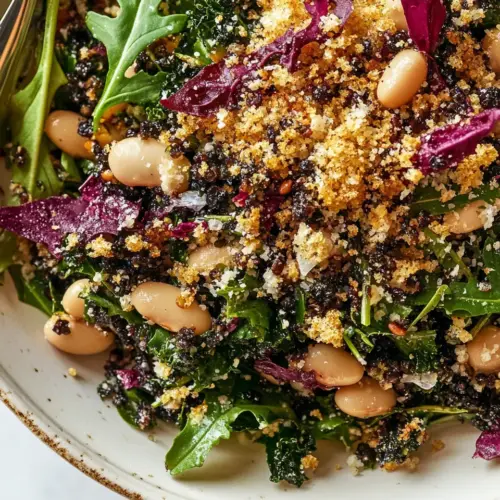
Kale Arugula Butter Bean Salad with Mustard Tahini and Garlicky Bread Crumbs
Kale Arugula Butter Bean Salad with Mustard Tahini and Garlicky Bread Crumbs is a creamy yet crunchy salad that balances peppery greens, tender beans, and a nutty tahini dressing. This easy to assemble dish is perfect for weeknight dinners or potlucks, offering bright lemon notes and savory toasted crumbs, making it an irresistible choice to bring to the table.
Equipment
- Medium sauté pan
- Medium Bowl
- Microplane Grater
- Whisk
- Large Bowl
Ingredients
- 2 tablespoons olive oil Adds a fruity, rich base for sautéing and dressing components, helping to bloom flavors and crisp the breadcrumbs during toasting.
- 1 1/2 cups fresh bread crumbs Provides a coarse, bready texture that becomes crunchy when toasted; contributes body and a toasty flavor to top the salad.
- 1 tablespoon nutritional yeast Imparts a savory, umami boost to the breadcrumbs and overall dish, giving a cheesy depth without dairy.
- 1/2 teaspoon garlic powder Lends a warm, mellow garlic flavor to the breadcrumb mixture and dressing, enhancing savory notes without overpowering.
- sea salt and ground black pepper, to taste Balances and heightens flavors throughout the salad and breadcrumbs, used to season mixtures to personal taste and lift other components.
- 1/4 cup tahini Creates a creamy, nutty backbone for the dressing, binding liquids and adding a rich mouthfeel for coating greens and beans.
- sea salt and ground black pepper, to taste Used again to season the tahini dressing, providing salt and pepper balance so the dressing brightens the salad without tasting flat.
- 1 clove garlic finely grated with a Microplane Contributes a sharp, fresh garlic pungency to the dressing when finely grated, releasing intense aroma and integrating smoothly into the tahini.
- 1 tablespoon grainy mustard Adds bright, tangy, and slightly savory grain texture to the dressing, helping to cut the richness of tahini and complement the greens.
- 1 tablespoon lemon juice Provides acidity to the dressing to brighten flavors, balance fats, and help wilt the kale slightly for easier eating.
- 1 tablespoon olive oil Offers a silky mouthfeel and helps emulsify the dressing, aiding in coating the salad ingredients evenly.
- 1 teaspoon maple syrup Introduces a light touch of sweetness to balance the tangy and bitter elements in the dressing for a well-rounded flavor profile.
- 1/4 cup ice water, plus extra if needed Thins and loosens the tahini dressing to a pourable consistency and chills it slightly for a refreshing finish; additional water can adjust viscosity.
- 4 cups baby arugula, lightly packed and chopped Supplies a peppery, tender leafy base with distinctive bite and aromatic lift when chopped, forming part of the salad green mix.
- 4 cups kale, lightly packed and chopped Adds sturdy, hearty texture and nutritional heft to the salad; chopping helps the kale become more tender and easier to chew when dressed.
- 1 small head radicchio, chopped Contributes a bitter, crunchy contrast and vivid color to the salad mix, offering complexity and visual appeal.
- 1/2 cup basil leaves, finely sliced Provides an aromatic herbaceous note and fresh, sweet flavor when finely sliced, brightening the overall herb profile.
- 1/3 cup pickled red onions, chopped Delivers a tangy-sweet pop and subtle crunch that complements creamy beans and helps cut through rich dressing flavors.
- 13.5 oz (398 ml) can butter beans, drained and rinsed Supplies creamy, starchy protein and a smooth texture when rinsed and drained, making the salad more substantial and filling.
- sea salt and ground black pepper, to taste Final seasoning for the assembled salad and components, used to adjust saltiness and pepper heat to taste before serving.
Instructions
- Make the garlicky bread crumbs. Set a medium sauté pan over medium heat. Once hot, pour in the olive oil and swirl it around. Add the bread crumbs, nutritional yeast, garlic powder, salt, and pepper. Stir often, until bread crumbs are golden brown and crisp, about 5-7 minutes. Remove from heat and set aside.: The first sensory cue you'll notice is a warm, toasty aroma as the olive oil heats in the pan, and that scent deepens once the bread crumbs hit the surface and begin to sizzle lightly. Listen for a gentle crackle rather than aggressive popping; that indicates medium heat and proper browning. Stir frequently so the crumbs brown evenly and develop an even golden color, which takes about five to seven minutes. You'll see wisps of steam and smell a rich, roasted garlic note once the nutritional yeast and garlic powder begin to bloom in the oil. The reason this step matters is texture, the crisp crumbs provide contrast to creamy beans and salad leaves, so do not skip proper toasting. A common error is leaving the pan unattended, which can cause rapid burning and a bitter aftertaste. If the crumbs brown too quickly, lower the heat and remove the pan from the burner once they reach a warm golden hue, then transfer to a plate to stop carryover cooking.
- Make the grainy mustard tahini. In a medium bowl, whisk together the tahini, salt, pepper, garlic, grainy mustard, lemon juice, olive oil, and maple syrup. Then, while whisking, slowly pour in the ice water. Once you have a homogenous, creamy, and fluid/pourable texture, you're good! You may have to add a bit more water to get it to this point. Once the dressing is to your liking, set aside.: You will sense the pan warming before any ingredients go in, indicated by faint heat waves rising and the base becoming uniformly hot. This step ensures the olive oil shimmers rather than smokes, which gives the crumbs an even crisping surface. Preheating allows immediate contact browning and prevents the crumbs from absorbing excess oil. The why is simple, a properly warmed pan produces a clean, toasted flavor while a cold pan results in soggy crumbs. A mistake here is overheating the pan until the oil smokes, which imparts a burnt flavor, so test the heat by adding a single breadcrumb first to check how it sizzles.
- Assemble the salad! In a large bowl, combine the arugula, kale, radicchio, basil, pickled red onions, butter beans, salt, and pepper. Pour all of the grainy mustard tahini dressing over the salad and toss to combine. Top the salad with the garlicky bread crumbs.: You should see the oil thin and glide across the pan, and it will shimmer slightly when ready. Swirling distributes the fat evenly so every breadcrumb touches oil, encouraging even browning and avoiding dry spots. This action also helps the nutritional yeast and garlic powder coat the crumbs uniformly when added. Skipping the swirl can create unevenly toasted crumbs where some pieces are burnt and others underdone. If oil smokes, remove the pan from heat and let it cool a touch before proceeding.
- Add the bread crumbs nutritional yeast garlic powder salt and pepper: As you introduce these dry ingredients, you'll notice an escalating aroma of toasted bread and umami from the nutritional yeast . The mixture will begin to darken uniformly, and tiny flecks of seasoning will cling to the crumbs. Stirring often is essential to prevent localized burning and to encourage a crisp, even texture. This matters because these crumbs form the crunchy counterpoint to the salad, so even toasting ensures consistent mouthfeel. A frequent slip is adding too much salt at this stage, which can overseason the crumbs, so season modestly and adjust later if needed.
- Stir often until bread crumbs are golden brown and crisp about 5 to 7 minutes: You will see the crumbs shift from pale to a warm golden tone and hear a more pronounced, dry crisping sound as moisture leaves. This visual and auditory feedback tells you the crumbs are done, and their fragrance will turn toasty and slightly nutty. Letting them sit in the pan too long leads to rapid carryover browning, so remove them promptly. The technique matters because biscuits sized crumbs toast at different rates versus finer crumbs, so adjust stirring frequency accordingly. If you notice any smoky smell, transfer the crumbs immediately to a bowl to halt cooking.
- Remove from heat and set aside: When you take the pan off the burner, the residual heat will continue to crisp the crumbs for a short time, so transferring them to a cool surface prevents overcooking. You will feel relief knowing the crunchy component is ready while you prepare the dressing. The rationale is to preserve texture and prevent any bitter overtones from scorching. A common oversight is leaving the crumbs in the hot pan, which results in darker, bitter pieces that can dominate the salad.
- Make the grainy mustard tahini: Immediately you will notice the thick, nutty scent of tahini as it meets other ingredients, and combining garlic and lemon juice brings a sharp, aromatic lift. Whisking by hand or with a small whisk begins to break down the tahini into a smoother body, and as you add the olive oil and maple syrup the dressing becomes silkier and slightly glossy. The crucial part is slowly adding the ice water while whisking, which lightens and emulsifies the dressing into a creamy, pourable consistency. This technique matters for achieving a dressing that coats leaves without clumping, and it ensures the tahini does not remain pasty or separated. A misstep is dumping the water in too quickly, which can make the dressing overly thin or dilute its flavor, so add water in small increments.
- In a medium bowl whisk together the tahini salt pepper garlic grainy mustard lemon juice olive oil and maple syrup: As these components meld, the mixture will thicken and then relax into a cohesive dressing, with the mustard seeds contributing subtle textural interest. Whisking also blooms the seasonings so they integrate fully. This step is important because even distribution of seasoning ensures a balanced dressing that complements the hearty greens. A common mistake is under whisking, which leaves pockets of undissolved tahini or mustard, leading to uneven flavor pockets in the salad.
- Then while whisking slowly pour in the ice water: Adding ice water changes the dressing from dense to light, and you should watch it transform into a creamy, fluid consistency that will pour and coat leaves without pooling. The cooling effect also brightens the flavors and prevents the dressing from becoming overly viscous. The why is that a properly emulsified dressing clings to leaves and beans evenly, giving consistent flavor in each forkful. A slip here is adding too much water at once, which can thin the dressing beyond repair, so stop when it reaches a pourable but still coating texture.
- Once you have a homogenous creamy and fluid pourable texture you're good: The dressing should be smooth, with no visible lumps or separation, and it will hold together with a glossy sheen. This visual cue indicates proper emulsion and readiness for the salad. Texture is everything here, because an overly thick dressing will clump on leaves and a runny one will pool and make the salad soggy. If the dressing seems slightly grainy, whisk a bit longer or add a teaspoon of water at a time until it smooths out.
- You may have to add a bit more water to get it to this point: Small adjustments with ice water let you fine tune the dressing based on tahini thickness and room temperature. The sensory cue to stop is when the dressing coats the back of a spoon and then slides off evenly. This matters because different tahini brands vary in viscosity, so responsiveness here ensures predictable results. A rookie error is assuming one brand behaves like another, so taste and adjust gradually.
- Once the dressing is to your liking set aside: Letting the dressing rest gives flavors a moment to meld and mellow slightly, and it makes final seasoning adjustments easier once you taste it against the salad. This pause also lets the garlic soften its raw edge into a rounded note. The why is flavor integration leads to a more harmonious result at the table. Mistakenly tossing too soon can yield disparate sharp notes that overwhelm the salad.
- Assemble the salad: At this point, the sensory mix of bright citrus, nutty tahini, and toasted crumbs will start to come together as you combine the greens, beans, and finishing elements in a large bowl. You will feel the weight and volume of the salad change as you add each component, and visually the bowl will become colorful and inviting. As you toss, ensure the dressing coats every leaf for balanced flavor distribution. This step matters because even coating prevents pockets of under or over seasoned bites. A common misstep is over tossing, which bruises delicate leaves and can make the salad limp.
- In a large bowl combine the arugula kale radicchio basil pickled red onions butter beans salt and pepper: The sound of leaves rustling and the sight of contrasting colors signaling a composed salad are satisfying cues that you are on track. Mixing in the butter beans last helps them remain intact rather than mushy, and the pickled red onions will add bright streaks of color. The why here is to preserve textures and visual appeal for each bite. A mistake to avoid is adding too much salt at this stage before tasting with the dressing, which can push the salad toward over seasoning.
- Pour all of the grainy mustard tahini dressing over the salad and toss to combine: The dressing should glisten across the leaves, creating an even sheen and knitting flavors together. As you toss, listen for the soft crunch and watch the leaves soften slightly and take on a glossy coating. Proper tossing ensures that the peppery arugula and hearty kale are seasoned, and the butter beans pick up the lemony nutty notes. The technique matters because gentle tossing preserves leaf integrity while distributing dressing evenly. Over aggressive tossing will tear leaves and make the salad look ragged.
- Top the salad with the garlicky bread crumbs: Finish by sprinkling the crisp, golden crumbs over the dressed salad so they remain texturally distinct, giving a satisfying crunch against soft leaves and tender beans. The aroma of warm garlic and toasted crumbs will be the final enticing cue before serving. This step is about contrast, and adding crumbs at the end ensures they stay crisp. A frequent error is mixing in the crumbs too early, which will cause them to lose their crunch and diminish the salad's appeal.
Notes
- Use gluten free bread for crumbs: Plenty of gluten free bread options work great for the fresh bread crumbs here, and toasting them gives the same crunchy result; dry the bread slightly before pulsing into crumbs so they brown predictably.
- Make the dressing ahead: To save time, whisk the grainy mustard tahini up to a week in advance and chill it, then loosen with a tablespoon or two of ice water when ready to use so it pours smoothly.
- Swap kale variety: I used red kale from my garden in photos, but Lacinato kale is ideal for texture and tenderness; choose what you love and chop accordingly.
- Keep crumbs crisp for serving: Store toasted crumbs in an airtight container at room temperature and sprinkle just before serving to preserve their crunchy texture.
- Adjust acidity to taste: If the dressing tastes flat after chilling, add a squeeze more lemon juice or a touch more maple syrup to brighten and balance flavors.