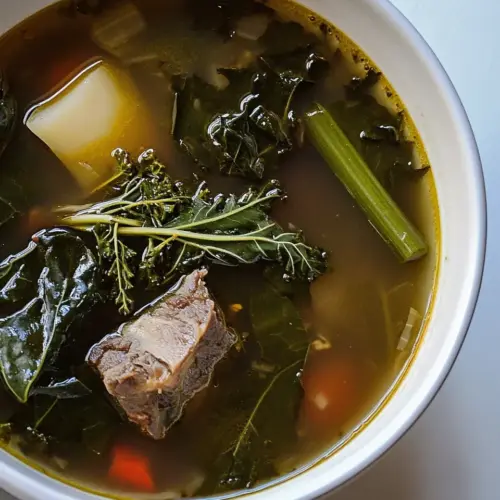
Kale and Chard Potlikker Soup
Kale and Chard Potlikker Soup is a bright, nourishing bowl with silky greens, fragrant shallots, and a lemony finish. Creamy and comforting yet light enough for an easy weeknight dinner, this soup is perfect for cold winter evenings and makes excellent leftovers. Whip up a pot for simple meals all week and enjoy a bowl that feels both restorative and deeply satisfying.
Equipment
- 1 chef knife
- 1 Dutch oven or large pot
Ingredients
- 2 big leaves red kale Wilt and chop to add hearty, slightly bitter green texture that holds up well in simmering broth; remove tough stems for tenderness before slicing.
- 1 bunch of swiss chard Strip stems and roughly chop to contribute tender, earthy leaves that balance the kale’s bitterness; stems can be simmered longer for extra body in the potlikker.
- Olive oil Drizzle or sauté to provide a flavorful cooking medium that helps soften aromatics and greens while adding healthy monounsaturated fat and sheen.
- 2 shallots, peeled and minced Gently sweat after heating in oil to build a sweet, mild onion base; minced shallots dissolve into the broth and enhance overall savory depth.
- 1 garlic clove, peeled and minced Lightly sauté with shallots to impart pungent, aromatic warmth; minced garlic blooms quickly and layers complexity into the soup’s savory profile.
- Salt Season to taste during and after cooking to enhance and balance all flavors; sprinkle gradually and adjust as the broth reduces to avoid over-salting.
- 1/2 teaspoon crushed red pepper flakes Add sparingly to introduce a lively, warming heat that brightens the potlikker; crushed red pepper flakes can be adjusted to preferred spice level.
- Water Pour as the cooking liquid to simmer greens and aromatics, extracting nutrients and flavor; use enough to create a brothy consistency for potlikker.
- Juice from 1/2 lemon Squeeze in at the end to brighten and lift the soup with fresh acidity; lemon juice balances richness and enhances the greens’ flavors.
- 1 chicken sausage link, sliced (optional) Slice and add optionally to introduce smoky, savory protein and a meaty texture; chicken sausage can enrich the broth and make the soup more substantial.
- 1 egg, boiled and halved (optional) Halve and garnish optionally to provide a silky, protein-rich finishing touch; boiled egg adds creaminess and visual contrast to each serving.
Instructions
- To prep the kale and swiss chard, tear the leaves from the stems. We’re going to sauté the stems first: they hold a ton of flavor and tend to be more fibrous so they need a bit of extra care and love. Cut the stems into a small dice and set aside. Loosely chop up the kale and swiss chard leaves and also set aside.: You will smell fresh, green aromas releasing as you separate the leaves, which signals that the vegetables are lively and full of flavor. Work on a clean cutting board, tearing the leaves away with your hands to preserve more texture than slicing would. The stems hold a firmer, almost celery like crunch, and they need smaller dice so they soften properly during cooking. A common mistake is leaving stems whole, which results in stringy bits in the finished bowl. Keep the pieces small and even so they cook at the same rate as the shallots, and set everything aside in separate piles so you can add them in the right sequence.
- In a dutch oven or large pot, heat about three tablespoons of olive oil over medium heat. When the oil hot and visibly glistens, add the shallot and reserved kale and swiss chard stems. Sprinkle the stems with a teaspoon of salt and red pepper flakes and mix. Saute for about 8 to 10 minutes, until they’ve become softened. If needed, add a bit more oil and turn the heat down to medium-low. Give them a stir every so often.: they hold a ton of flavor and tend to be more fibrous so they need a bit of extra care and love : As the stems hit the hot oil you will hear a faint sizzle, and their scent will deepen to a savory, slightly sweet note. This early sauté draws out sugars and softens the fibrous texture, creating a base that makes the broth feel substantial. Use a medium heat, and if the oil starts to smoke back it off to medium low; burnt oil gives off acrid flavors that are hard to mask. Stir occasionally so the pieces brown gently but do not burn. If the stems feel like they are drying out, add a tablespoon of water to deglaze and keep flavors building in the pan.
- Add kale and swiss chard leaves along with 6 cups of filtered water. Add an additional teaspoon of salt; cover the pot and cook for 30 minutes, until the leaves are wilted and soft. Give it a taste and stir in more salt to taste (I added about 1 teaspoon). Cook for an additional 10 minutes. Stir in lemon juice.: The tactile feel of the diced stems should be firm but not woody, and when you press a piece with a fingertip it should yield slightly. Dicing evenly ensures consistent cooking and prevents some pieces from staying tough while others become mushy. A common error is chopping too coarsely, which leaves unpleasant chewy bits. Keep a steady rhythm with your knife, and if you find any particularly thick ribs, halve them lengthwise so they match the rest.
- While the pot likker is cooking, sauté the sausage and slice (if using). Stir in the sausage and divide the soup between bowls. If adding an egg, place an egg into each bowl. Serve immediately. Soup will keep in an airtight container in the fridge for 4-5 days. Bonus: This soup heats up really well. It’s a good one to make at the beginning of the week and eat throughout.: As you chop the leaves they will wilt slightly from the heat of your hands, and the aroma will become brighter and greener. Loose chopping keeps the leaf texture present in the bowl rather than pureed, which I prefer for mouthfeel. Avoid mincing the leaves into confetti, which can make the soup feel heavy; chunkier pieces give delightful bites. If any leaves have blemishes, trim them away so the potlikker remains clean and fresh tasting.
- In a dutch oven or large pot, heat about three tablespoons of olive oil over medium heat: The oil should shimmer but not smoke, and when you tilt the pot you should see it move fluidly. This stage is about building a warm, oily coating that will gently carry the shallot and stems as they cook. If your oil smokes, reduce the heat and start again; smoky oil imparts a bitter note. Using a heavy bottom pot helps distribute heat evenly so you get consistent sautéing across the surface.
- When the oil hot and visibly glistens, add the shallot and reserved kale and swiss chard stems: You will hear a welcoming sizzle as the shallots meet the oil, and a sweet onion aroma will rise. The stems will begin to soften and pick up color after a few minutes, releasing savory compounds that form the backbone of your broth. Stir so nothing sticks to the bottom, and listen for the gentle sizzling to keep steady. Burning at this phase will make your potlikker bitter, so watch the heat and adjust as needed.
- Sprinkle the stems with a teaspoon of salt and red pepper flakes and mix: Salt draws moisture from the vegetables, intensifying their flavor and helping them soften faster, while the crushed red pepper flakes add a subtle warmth that deepens the broth. You should notice the mixture become juicier as the salt works. A slip here is using too much salt up front, which can make the whole pot overly salty; it is easier to add more later than to rescue an oversalted pot.
- Saute for about 8 to 10 minutes, until they’ve become softened: During this time the stems will shift color and their texture will go from fibrous to tender, and the pan will fill with a gently sweet, caramelized scent. Keep stirring every few minutes to promote even browning. If the stems start to brown too quickly, lower the heat and add a splash of water to slow things down, because aggressive browning can turn pleasant caramel into burnt bitterness. The goal is gentle tenderness, not a crisp char.
- If needed, add a bit more oil and turn the heat down to medium low: Adding oil lubricates the pan and helps prevent sticking while maintaining a glossy mouthfeel in the finished broth. Reducing the heat allows the vegetables to release their flavors slowly, creating depth without charring. Overcrowding the pot is a common misstep; if the pan feels jammed, remove some of the stems to a plate and return them after the initial wilt so everything cooks consistently.
- Give them a stir every so often: Regular stirring ensures the pieces cook evenly and prevents any from clinging to the pot and burning. You will notice a richer, more aromatic smell as flavors develop, and small fond bits on the pot surface will contribute savory complexity. Scrape those bits gently to reincorporate them into the base, because that fond is flavor gold. Neglecting this can mean uneven cooking and lost flavor.
- Add kale and swiss chard leaves along with 6 cups of filtered water: When the leaves hit the pot they will steam and immediately begin to reduce in volume, releasing bright vegetal juices into the water that will become your potlikker. Use filtered water for a cleaner flavor. As the leaves wilt, stir so they submerge evenly; leaving them piled on top can cause some to undercook while others become overcooked. Expect a fragrant, green steam to rise.
- Add an additional teaspoon of salt; cover the pot and cook for 30 minutes: This gentle simmer lets the greens thoroughly soften and infuse the liquid with their essence, creating a clear yet richly flavored broth. Keeping the pot covered traps steam and speeds the breakdown of fibers, yielding a silky mouthfeel. A frequent mistake is cooking at too high a boil which can break down the greens into mush; aim for a gentle simmer instead.
- Until the leaves are wilted and soft: At this point the greens should be tender and the broth should smell deeply vegetal and slightly sweet. The visual cue is uniformly collapsed leaves and a light emerald tinge to the liquid. If the leaves still seem fibrous, continue cooking in five minute increments rather than pushing the heat, so you avoid an overcooked, slimy texture.
- Give it a taste and stir in more salt to taste: Taste the potlikker with a clean spoon so you can judge seasoning accurately; flavors concentrate as the soup cools, so aim slightly under seasoned if you plan to reheat. Adjusting salt now layers seasoning into the broth rather than masking it. One common error is salting only at the end, which can lead to uneven seasoning; seasoning in stages is the safer approach.
- Cook for an additional 10 minutes: This quiet period allows flavors to marry further, and you will notice the broth deepening both aromatically and visually. The edges may show tiny shimmering bubbles, and a faint herbaceous steam will rise. Rushing this step risks a less integrated flavor profile, so be patient and let the pot work its slow magic.
- Stir in lemon juice: The bright acidity of the lemon juice lifts the entire bowl, cutting through any heft and giving the potlikker a lively finish. Add it off heat or at low heat to keep its freshness. Too much lemon can dominate, so add a little, taste, and adjust gently to maintain balance.
- While the pot likker is cooking, sauté the sausage and slice if using: When you brown the chicken sausage link , it releases savory fats and caramelized bits that add umami to the bowls. The sizzle and the browned edges signal deep flavor development. Avoid crowding the pan, which can cause steaming instead of browning; work in a single layer for best results. Drain briefly on paper towel if the sausage releases excess grease before adding it to the soup.
- Stir in the sausage and divide the soup between bowls: As the hot potlikker meets the browned slices, aromas will bloom and the sausage will add heartiness to each bowl. Serve immediately so textures remain distinct, with tender leaves and warm slices. A misstep is letting the sausage sit too long in the soup before serving, which can make it lose its browned texture; fold it in at the last moment for the best contrast.
- If adding an egg, place an egg into each bowl: A halved boiled egg gives a creamy richness and makes each serving feel indulgent without heaviness. The contrast between silky yolk and bright potlikker is lovely. Be careful when placing the egg so you do not break it apart prematurely; a gentle touch keeps the presentation intact.
- Serve immediately: Serve while steaming and bright, so the lemon and aromatics sing. Freshly ladled bowls have the most vivid flavors; waiting too long can mute the lemon and flatten the broth. If you must hold it, cover the pot and keep it warm on very low heat, but anticipate a slight loss of brightness upon reheating.
- Soup will keep in an airtight container in the fridge for 4 to 5 days: Stored properly, the potlikker mellows and often tastes even better after a day. Reheat gently on the stove over low heat to preserve texture, and add a splash of water if it seems too concentrated. Freezing is possible, but I find fresh leaves change texture on thawing, so refrigeration is my preferred storage method.
- Bonus: This soup heats up really well : The aromas rebound when you reheat it, and the textures remain satisfying for several days. If the broth tastes a bit flat after refrigeration, a squeeze of lemon or a pinch of salt will bring it back to life. Avoid high heat reheating which can break down the greens further and make them mushy.
Notes
- Make it vegetarian Remove the optional chicken sausage link and rely on the stems and shallots for savory depth, add an extra pinch of salt for body.
- Adjust the heat Increase or decrease the crushed red pepper flakes to suit your spice tolerance, a little goes a long way in a light broth.
- Egg timing For a soft yolk follow the timings in the notes, placing the halved egg on top just before serving preserves its texture.
- Water ratio If you prefer a thicker potlikker reduce the water slightly, for a brothy soup keep the full six cups of water.
- Use good olive oil Since the olive oil is a primary flavor carrier, choose one with pleasing fruitiness for the best aroma.
- Reheat gently Warm the soup over low heat and add a splash of water if needed to refresh the broth without overcooking the greens.