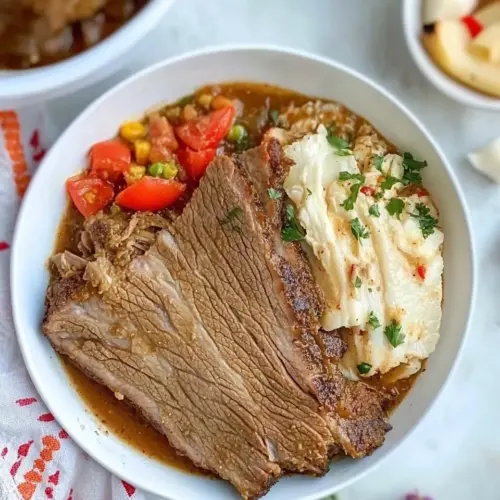
Juicy Slow Cooker Brisket
Juicy Slow Cooker Brisket is a tender, flavorful braise that yields melt in your mouth slices and a rich, savory sauce. This easy weeknight dinner uses simple aromatics and a patient slow cooker to develop deep beefy flavor, perfect for family meals or small gatherings. Make it for a cozy winter supper that rewards minimal hands on time.
Equipment
- Slow Cooker
Ingredients
- 4 pounds brisket, trimmed of excess fat Trimmed of excess fat and roasted slowly, provides the rich, meaty centerpiece that becomes tender and shreddable after long, low cooking; absorbs braising flavors and yields savory juices for a sauce or gravy.
- 1/2 teaspoon kosher salt Seasoned sparingly to enhance natural beef flavors, helps build a balanced savory profile without making the dish overly salty; draws out moisture and aids in crust formation during initial browning if seared.
- 1 large yellow onion, thinly sliced Thinly sliced to soften and melt into the cooking liquid, contributes a sweet, aromatic base that complements the meat; caramelizes slightly during browning and adds body to the final sauce.
- 4 carrots, chopped Chopped to add texture and natural sweetness, supplies earthy, vegetal notes that round out the braising liquid; softens during slow cooking and helps thicken the sauce slightly as it breaks down.
- 2 garlic cloves, minced Minced to distribute pungent, aromatic flavor throughout the braise, gives depth and a mild sharpness that brightens the overall profile; mellows with long cooking, blending into the sauce.
- 1 bay leaf Added whole to impart a subtle, bay-like herbal aroma, contributes a background layer of warmth that complements the meat and vegetables; removed before serving to avoid an overpowering bitterness.
- 1 -2 sprigs fresh rosemary, left whole Left whole to release piney, resinous fragrances slowly into the braising liquid, adds a savory, herbaceous note that pairs well with beef; can be left in while cooking and removed before serving.
- 2 cups beef or chicken stock Poured to cover and braise the brisket, provides the moist heat and flavorful medium needed for slow cooking; contributes salinity and body, and reduces into a concentrated sauce as the meat cooks.
Instructions
- Place the beef in the slow cooker and sprinkle with salt. Place the onions, carrots, garlic, bay leaf and rosemary on top of the beef. Pour in the beef stock.: The aroma at this stage is simple but promising, a faint mineral saltiness meeting the raw, meaty scent of the brisket . Press the brisket gently so it sits flat, allowing the seasoning to cling and begin to work its way into the surface. This initial salting helps draw out moisture that will mingle with the cooking juices, improving overall flavor penetration. A common mistake is under seasoning at the start, which can lead to a bland finish, so be sure to distribute the salt evenly across the meat.
- Cover, set to high and cook until fork-tender, about 4-6 hours.: As the sliced onion and chopped carrots meet the meat, they release sweet, vegetal aromas that begin to perfume the cooker. The minced garlic gives an underlying warmth, while the bay leaf and whole sprigs of rosemary contribute herbal top notes. Layering the aromatics over the brisket allows them to slowly infuse their flavors into the meat and cooking liquid. Avoid overcrowding the cooker; jammed vegetables will steam unevenly rather than gently soften.
- Serve with steamed, boiled or roasted red potatoes.: The sound of liquid settling around the meat is reassuring, and you will notice steam beginning to carry the mingled scents upward. The stock should just come up around the sides, enough to surround the brisket without submerging it entirely, so the top browns slightly and the bottom braises richly. Using a flavorful stock is crucial, since it becomes the sauce. One trap is adding too little liquid, which can lead to scorching, so ensure there is adequate stock to keep the cooker moist.
- Cover, set to high and cook until fork-tender, about 4 to 6 hours: During the long cook, you will notice the kitchen gradually filling with deep, savory notes as collagen in the brisket melts into gelatinous richness. The meat should become fork tender, meaning a fork slides in and the muscle fibers begin to separate with little resistance. This slow transformation is what makes the dish so luxurious. Resist the urge to lift the lid repeatedly, which lets heat escape and prolongs cooking time; a single check near the lower end of the range is usually enough to assess doneness.
- Serve with steamed, boiled or roasted red potatoes: When you plate, the visual contrast between the glossy brisket and the bright starchy potatoes is inviting, and the first bite should combine tender meat with the softened vegetables and a spoonful of the braising liquid. The potatoes absorb some of the sauce, making them a perfect partner. A common misstep is slicing the meat too soon; allow it to rest briefly so juices redistribute, ensuring each slice stays moist and flavorful.
Notes
- Increase herb intensity Add an extra sprig of rosemary for a more pronounced piney note, but remove the woody stems before serving to avoid tough bites.
- Use beef stock for deeper flavor Choosing beef stock intensifies the savory base, making the braising liquid richer and more robust for serving spooned over slices.
- Swap carrot size Cut the carrots into larger chunks if you prefer a meatier texture, which also helps them hold their shape after long cooking.
- Adjust salt early If you reduce sodium elsewhere in your diet, start with slightly less salt at the beginning and adjust at the end after tasting the braising liquid.
- Herb removal Leave the rosemary sprigs whole so you can easily fish them out prior to serving, preserving herb flavor without leaving tough bits.