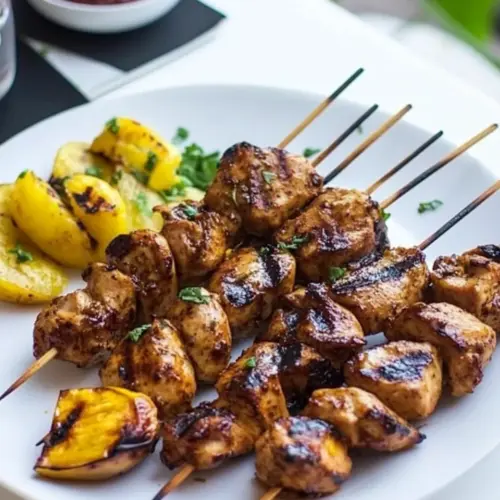
Jerked Chicken Plantain Skewers
Jerked Chicken Plantain Skewers deliver smoky, spicy, and sweet flavors in every bite. Tender chicken coated in zingy lime and jerk seasoning pairs with caramelized plantain and bright tomatoes for an easy weeknight dinner that also shines at gatherings. Rustic, satisfying, and full of contrast, these skewers are a reason to fire up your grill or oven tonight.
Equipment
- Skewers
- Baking Sheet
- Grill
- Mixing Bowl
Ingredients
- 2 teaspoons jerk seasoning Adds a warm, aromatic heat and authentic Caribbean flavor; helps form a spicy rub that penetrates the chicken and skins the plantain lightly during grilling, creating depth and complexity in the overall dish.
- 1 lime juiced Provides bright acidity and citrusy brightness to balance the heat; helps tenderize the chicken slightly and lifts the other flavors when squeezed over the skewers just before serving.
- 1 tablespoon extra virgin olive oil Contributes a fruity, smooth fat that aids in coating the chicken and vegetables for even cooking; helps the jerk seasoning adhere and prevents sticking on the grill or skillet.
- 1 pound boneless and skinless chicken breasts or thighs, chopped into 1 inch cubes Supplies the main protein and hearty texture for the skewers; absorbs the seasoning and marinades, cooks through to juicy tenderness when cut into uniform 1-inch cubes for even grilling.
- 1 red onion chopped into 1 inch pieces Introduces a sweet-sharp, crunchy component that softens with heat; adds layers of flavor and color while providing pockets of savory-sweet contrast between chicken pieces.
- 1 cup grape tomatoes or cherry tomatoes Brings juicy bursts of sweet-tart flavor and moisture to the skewers; prevents dryness, adds freshness, and complements the smoky-spicy notes of jerk seasoning.
- 1 cup pineapple fresh, cut into cubes (optional) Offers tropical sweetness and acidic balance that pairs beautifully with jerk spices; adds caramelized char and juicy contrast when grilled, though optional based on preference.
- 1 plantain very ripe (blackened peel), peel on, cut into slices (if using grill, remove peel when eating but not before grilling) Provides starchy-sweet body and caramelizing potential when ripe; holds shape on the skewer and offers a soft, sweet contrast to savory chicken as it chars and sweetens during grilling.
- 1/2 teaspoon kosher or sea salt Enhances overall seasoning by balancing and intensifying flavors; helps bring out natural tastes in the chicken, plantain, and vegetables without overpowering them.
- 1/2 teaspoon black pepper Adds subtle sharpness and background warmth to the seasoning profile; helps round out the savory elements and lift the dish with a slight peppery note.
Instructions
- Toss chicken, onions, and tomatoes in the marinade. Marinate in the refrigerator, covered, for at least 20 minutes and up to one day. If using bamboo skewers, soak in warm water for 30 minutes before using to avoid splintering.: The air fills with a peppery citrus scent as the jerk seasoning melds with the lime and olive oil , creating a glossy coating on the chicken and vegetables. This step allows the flavors to seep into the surface, which helps create a more flavorful crust during cooking. You should notice the chicken look slightly pale from the lime, and the onions begin to soften in the liquid. A common mistake is skimping on mixing, which leaves pockets of unseasoned meat. If you sense any large clumps of seasoning, redistribute them with a spoon so every cube is evenly coated. Marinating also makes the texture more forgiving, but don't over-marinate acidic mixes for too long or the protein will become mealy.
- Place chicken, onion, tomatoes, pineapple (if using), and plantains on a skewer. Leave space at both top and bottom of the skewer. Sprinkle each skewer all around with salt and pepper.: Chilling dampens harsh raw notes and helps the aromatics penetrate, resulting in a more rounded aroma and juicier bite when cooked. You will notice the marinade cling tighter over time, and the chicken will take on a slight blush from the lime and spices. If you plan to prepare ahead, marinate overnight, but avoid exceeding the maximum to prevent textural breakdown from the acid. A frequent misstep is leaving marinated food at room temperature, which can invite uneven bacteria growth; always refrigerate promptly.
- Preheat oven to 425 degrees. Line a baking sheet with parchment or foil. Place skewers on sheet and roast for 30 minutes, rotating sheet pan, and turning over skewers halfway through. Baste with leftover marinade halfway through.: Soaking prevents the skewers from burning and helps them stay intact while you turn them. Run your fingers along a soaked skewer and you will feel it slightly more flexible and less likely to snap when threaded. Forgetting this step can lead to brittle skewers that char and crack, sometimes catching fire. If you notice any splinters while threading, discard that skewer and use a new one to avoid an unpleasant texture in the final bites.
- Oil the grates of the grill and set the grill to medium heat. Use marinade for basting while cooking. Cook for about 15 minutes, turning to grill each side. Enjoy!: As you thread, the fragrance of spice and fruit becomes layered and tactile, with the tender chicken nestled against the sweet gel of the plantain and pops of tomato. Leave space at both top and bottom of the skewer to make turning easier, and alternate pieces to ensure even cooking and visual appeal. If you compress items too tightly they will steam rather than roast, losing the desirable char. A common error is making uneven sequences that cook at different rates; aim for consistent size and spacing to avoid some pieces drying out while others finish.
- Leave space at both top and bottom of the skewer: This makes handling safer and gives you room to hold and turn the skewer without burning your fingers. You'll notice turning becomes fluid and steady when the ends are free, and the heat circulates more evenly around each piece. Avoid overloading the center, which can trap steam and prevent proper browning; if the skewers look crowded, use an extra skewer to spread the components. One mistake is holding too near the hot portion when turning, which risks accidental burns.
- Sprinkle each skewer all around with salt and pepper: A light dusting creates surface seasoning that crisps and deepens when exposed to high heat. Smell the air as salt meets heat; a savory aroma starts to form. Be careful not to over salt, especially if your jerk seasoning already contains salt. An over salted skewer will taste flat because the salt numbs other flavors, so always taste a small piece if you are unsure.
- Preheat oven to 425 degrees: A hot oven promotes Maillard browning and caramelization on the exterior, turning the edges golden and slightly crisp. You'll hear faint sizzles as juices hit the hot sheet and see edges take on a warm color within minutes. If your oven temperature runs hot or cool, use an oven thermometer to check, as the wrong heat level will either burn the outside before the inside cooks or leave the pieces pale and underdeveloped. Not preheating is a common misstep that leads to uneven color and texture.
- Line a baking sheet with parchment or foil: This step keeps the pan from accumulating burnt residue and helps with easier cleanup, while also promoting even heat transfer. The surface will reflect heat and encourage the undersides to color correctly. Avoid using thin pans that warp under high heat, which can cause juices to pool and steam the skewers. If you notice excess pooling, carefully tilt the pan to drain or blot with a paper towel halfway through.
- Place skewers on sheet and roast for 30 minutes, rotating sheet pan, and turning over skewers halfway through: As they roast, aromas intensify and the outside develops a caramelized sheen, while the interior stays juicy. Rotating and turning ensures even browning and prevents one side from overcooking. Keep an eye on the color and listen for subtle sizzling; if pieces seem dry, baste lightly with reserved marinade. The typical error is leaving them untouched for the whole time, which risks uneven cooking and scorching on one side.
- Baste with leftover marinade halfway through: Basting adds a refreshed layer of flavor and helps maintain moisture, resulting in a glossy finish. The liquid will hiss slightly on contact and the scent will lift, signaling that sugars are starting to caramelize. Be careful not to use marinade that has been in contact with raw chicken unless you boil it first; cross contamination is a serious safety concern. If you see any burnt bits accumulating, scrape them away to avoid bitterness in the next baste.
- Oil the grates of the grill and set the grill to medium heat: Oiling prevents sticking and creates a clean sear that leaves attractive grill marks. You will hear a more pronounced sizzle when the skewers meet the hot grates, and the smoke will carry the spice aroma into the air. Too high heat will char the exterior before the center cooks, so maintain medium heat for balanced results. A common mistake is placing the skewers on a dirty grate, which causes sticking and uneven charring.
- Use marinade for basting while cooking: As the skewers cook, basting adds another layer of flavor and helps the surface develop a shiny, sticky glaze. The sound of the juices meeting the hot grates signals progress, and visual cues like bubbling glaze and darkened edges indicate readiness. Avoid continuous basting which cools the surface and prolongs cooking; apply sparingly for best results. If you detect an acrid burnt smell, stop basting and reduce heat to prevent bitterness.
- Cook for about 15 minutes: At medium heat, the skewers typically finish in this window, producing slightly charred edges and a tender interior. You can tell they are done when juices run clear and the chicken feels springy yet firm to the touch. Overcooking will dry the chicken , while undercooking is a safety risk, so check doneness with a thermometer if unsure. A usual oversight is assuming color alone guarantees doneness; use internal temperature or time cues to be safe.
- Turning to grill each side: Turning ensures all sides receive direct contact with the heat, developing even color and texture. You should hear a repeating sizzle as you rotate, and visually the cubes will darken uniformly. Rushing turns can tear softer ingredients like plantain , so be gentle and patient. If pieces start to fall off, pause and reposition them more securely on the skewer to avoid losing components during the final minutes.
- Enjoy: The final reward is a balance of smoky spice, bright lime, sweet plantain , and juicy chicken . Let the skewers rest briefly if they are very hot to settle the juices, then serve warm. Eating immediately gives you the best textural contrast, while letting them sit too long will soften the crisp edges. A frequent misstep is stacking them while hot, which steam softens the exterior.
Notes
- Swap chicken cut Use thighs for juicier results, or breasts for a leaner bite, remembering that thighs stay forgiving if you slightly overcook.
- Grill vs roast Grilling adds smoky char and faster cooking, while roasting is more hands off and produces consistent browning in the oven.
- Pineapple option Add pineapple for a sweeter, tropical contrast, but avoid marinating too long with fresh pineapple or it will tenderize the chicken excessively.
- Plantain readiness Use very ripe plantains for caramelization; underripe ones will be starchy and less complimentary to the spice.
- Control the heat Adjust the amount of jerk seasoning to suit guests who prefer milder or bolder spice profiles.