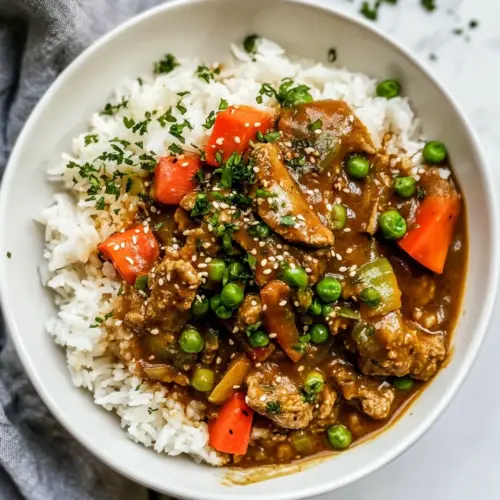
Japanese Curry Recipe
Japanese Curry Recipe is a creamy, savory weeknight classic with tender chicken, soft potatoes, and a warm spice roux. This easy weeknight dinner balances sweet notes from grated Fuji apple and honey with earthy mushroom broth, creating a comforting, family friendly meal you'll want to make again and again.
Equipment
- Dutch Oven
- Medium Saucepan
- Wooden Spoon
Ingredients
- Prepared brown rice for serving, see Instant Pot Brown Rice Serve warm prepared brown rice as the base for the curry to soak up sauce and balance flavors; use Instant Pot brown rice for consistent texture and convenience. Provide a neutral, slightly nutty backdrop that complements the rich, spiced curry and tender chicken. Adjust portion size per diner and keep covered until plating to retain steam and fluffiness.
- 2 tablespoons canola oil or grapeseed oil divided Heat 2 tablespoons canola oil or grapeseed oil divided for initial browning and later finishing; use a neutral oil with high smoke point to sear chicken and soften aromatics without burning. Reserve half for sautéing onions and garlic, and the remainder for finishing the curry for sheen and mouthfeel. Ensure oil is hot but not smoking to achieve even browning.
- 1 1/2 pounds boneless, skinless chicken thighs cut into bite-sized pieces Cut boneless, skinless chicken thighs into bite-sized pieces to provide tender, juicy protein that holds up during simmering; thighs are forgiving and remain moist. Brown pieces in hot oil to develop flavor through Maillard reactions before simmering in the sauce. Season and space pieces in the pan to avoid steaming and ensure even caramelization.
- 1/2 teaspoon kosher salt plus additional to taste Season with 1/2 teaspoon kosher salt plus additional to taste to enhance natural flavors and help proteins season throughout; salt supports seasoning at multiple stages of cooking. Add early to draw out moisture for better browning and adjust at the end to balance the finished curry. Use kosher salt for predictable salinity and measure carefully to avoid over-salting.
- 1/4 teaspoon ground black pepper Season with 1/4 teaspoon ground black pepper to add mild heat and aromatic spice that complements the curry spices; pepper lifts savory notes without overpowering. Incorporate during seasoning of the chicken or when sautéing aromatics to distribute evenly. Taste toward the end and adjust if more peppery bite is desired.
- 1 large yellow onion cut into 1-inch thick chunks Cut 1 large yellow onion into 1-inch thick chunks to provide body, sweetness, and savory depth as it breaks down during cooking; larger chunks soften and meld into the sauce while still offering texture. Sauté until translucent and slightly caramelized to develop complex flavors that underpin the curry. Use onions as a base with ginger and garlic for classic aromatic foundation.
- 1 teaspoon grated fresh ginger Grate 1 teaspoon fresh ginger to introduce bright, peppery warmth and slight citrus notes that cut through richness; fresh ginger offers sharp aromatics that dry spices can’t replicate. Add early when sautéing to release juices and infuse the oil, giving the sauce a lively backbone. Adjust amount for personal preference, since fresh ginger potency varies.
- 4 cloves garlic minced (about 4 teaspoons) Mince 4 cloves garlic (about 4 teaspoons) to contribute savory, pungent depth and aromatic richness when cooked; garlic melds with ginger and onions to build the curry’s flavor base. Add near the end of sautéing the aromatics to avoid bitterness from overcooking while ensuring it blooms in the oil. Use fresh minced garlic for the most vibrant taste.
- 4 medium carrots peeled and cut diagonally into 1/2-inch slices Peel and cut 4 medium carrots diagonally into 1/2-inch slices to add natural sweetness, color, and a tender-crisp texture that complements potatoes and chicken. Add with potatoes so both vegetables simmer to a fork-tender consistency without falling apart. Carrots also help balance savory and spiced elements with their inherent sugars.
- 4 Yukon gold potatoes peeled and cut into 2-inch chunks Peel and cut 4 Yukon gold potatoes into 2-inch chunks to provide starchy body and creamy texture that thickens the curry while absorbing flavors. Choose Yukon golds for their waxy, slightly buttery flesh which holds shape during simmering. Add early enough to cook through but avoid overcooking to prevent disintegration into the sauce.
- 1 Fuji apple washed and grated (peeling is optional; about 1 cup once grated) Wash and grate 1 Fuji apple (about 1 cup once grated) to add a subtle fruity sweetness and natural acidity that brightens the curry and balances savory spices. Stir grated apple into the simmering sauce so it dissolves and integrates, enhancing depth and gently sweetening without overt fruitiness. Peeling is optional depending on texture preference.
- 4 cups mushroom broth Use 4 cups mushroom broth as the cooking liquid to impart umami richness and a savory foundation that deepens the curry’s flavor profile without overpowering the spices. Add to deglaze the pan after browning and simmer to meld aromatics, chicken, and vegetables into a cohesive sauce. Choose low-sodium broth if further sodium control is needed.
- 1 tablespoon low-sodium soy sauce Add 1 tablespoon low-sodium soy sauce to boost umami and provide a savory, slightly salty accent that complements mushroom broth and balances sweetness. Stir in during simmering to incorporate evenly and adjust salt levels later as needed. Low-sodium option allows better control over overall seasoning.
- 1 cup frozen peas Stir in 1 cup frozen peas toward the end of cooking to contribute bright color, pop of sweetness, and a fresh vegetal note; peas cook quickly and retain texture when added late. Thaw in the hot curry just long enough to heat through, preserving their tender snap. Frozen peas are convenient and add a pleasant contrast to root vegetables.
- 1 tablespoon ground cumin Measure 1 tablespoon ground cumin to lend warm, earthy, and slightly smoky undertones that anchor the curry seasoning; cumin enhances savory depth and pairs well with coriander and turmeric. Toast briefly in the oil with other ground spices to bloom its aromatics before adding liquids. Balance cumin with sweeter elements to avoid overpowering bitterness.
- 2 teaspoons ground coriander Add 2 teaspoons ground coriander for bright, citrusy, and floral notes that lighten the spice blend and complement cumin and turmeric. Bloom coriander in the hot oil early to release its essential oils and integrate into the sauce. Use in combination with other spices to create a balanced, layered curry profile.
- 1 1/2 teaspoons ground turmeric Use 1 1/2 teaspoons ground turmeric to provide warm color, mild earthy bitterness, and subtle peppery undertones while offering anti-inflammatory properties. Incorporate with other spices to create the characteristic curry hue and a gentle backbone of flavor. Avoid overuse to prevent an overly bitter finish.
- 1 teaspoon ground cardamom Add 1 teaspoon ground cardamom to introduce floral, slightly sweet, and resinous aromatic notes that add complexity and a hint of exotic scent to the curry. Bloom with other spices in hot oil so its volatile oils release and perfume the sauce. Use sparingly, as cardamom is potent and should complement rather than dominate.
- 1/4 teaspoon ground cinnamon Measure 1/4 teaspoon ground cinnamon to contribute subtle warmth, sweet-spicy depth, and a rounded background note that harmonizes with cardamom and nutmeg. Combine with other warming spices to achieve a nuanced spice profile that supports both savory and sweet elements. Add early to allow cinnamon to meld into the sauce.
- 1/4 teaspoon chili powder Add 1/4 teaspoon chili powder to introduce mild heat and a touch of smoky complexity that livens the curry without making it overly spicy. Adjust to taste if a spicier profile is desired, but start conservatively to maintain balance with sweetness from apple and honey. Incorporate during spice blooming for even heat distribution.
- 1/8 teaspoon ground nutmeg Include 1/8 teaspoon ground nutmeg to provide a warm, nutty, and slightly sweet undertone that subtly rounds the curry’s spice blend and enhances savory-sweet interplay. Use very sparingly due to nutmeg’s potency, adding enough to add depth without noticeable nutmeg flavor. Mix with other warm spices for cohesion.
- 2 tablespoons canola oil or grapeseed oil Heat 2 tablespoons canola oil or grapeseed oil to make a roux and finish sautéing aromatics; neutral oil with high smoke point is ideal for frying flour and tomato paste without burning. Use this oil to evenly cook the flour for thickening, then whisk in liquids to form a smooth sauce base. Reserve some oil earlier for browning if following a divided-oil approach.
- 2 tablespoons all-purpose flour Whisk 2 tablespoons all-purpose flour into hot oil to form a roux that thickens the curry sauce and adds body; cook briefly to remove raw flour taste while maintaining a pale color. Gradually incorporate broth to prevent lumps and achieve desired consistency. Adjust thickness by varying flour amount or simmer time.
- 1 tablespoon tomato paste Stir in 1 tablespoon tomato paste to add concentrated tomato sweetness, acidity, and savory depth that enhances color and mouthfeel in the sauce. Cook briefly with the roux or aromatics to mellow acidity and deepen flavor. Tomato paste helps bind and amplify the spice blend while contributing umami.
- 3 tablespoons honey Whisk in 3 tablespoons honey to balance savory and spicy elements with natural sweetness and to lend a glossy finish to the curry; honey harmonizes with apple and carrots for a rounded profile. Add toward the end of cooking and adjust to taste to prevent overpowering sweetness. Use honey to create a pleasing, cohesive flavor balance.
Instructions
- In a Dutch oven or similar large, sturdy pot, heat 1 tablespoon oil over medium heat. Add the chicken, salt, and pepper. Sear the chicken, stirring every few minutes, until it’s mostly cooked through, about 5 to 6 minutes (it will finish cooking later). Transfer to a plate or bowl and set aside.: As the chicken hits the hot pot you should hear a steady, satisfying sizzle, and the smell will shift toward roasted, meaty notes; this caramelization builds flavor that will enrich the whole curry. I look for a golden edge on the pieces rather than a full cook through, because finishing in the simmering broth keeps them juicy. A common mistake is crowding the pot which causes steaming instead of searing, so give the chicken space and work in batches if needed. If the oil smokes, reduce heat slightly; you want a consistent sizzle without burning.
- To the now empty pot, add 1 tablespoon oil and the onion. Sauté stirring every so often, until beginning to brown and turning translucent, about 5 to 7 minutes. Stir in the garlic and ginger and cook, stirring constantly, just until fragrant, about 30 seconds.: The onion softening releases a sweet, savory aroma while the edges blush golden; this scent signals the Maillard reactions that form the flavor base. When you add the minced garlic and grated ginger , their bright, sharp fragrances will bloom instantly, creating a lively top note. I stir gently so the onion sweats evenly and the aromatics do not burn; burnt garlic turns bitter fast, so lower the heat immediately if you smell charring. The visual cue is translucent, glossy onion with slightly browned tips.
- Add the carrots, potato, apple, mushroom broth, soy sauce, and chicken. Bring to a boil over high heat, then reduce to a steady, gentle simmer. Skim off any scum that has risen to the surface. Let simmer uncovered, until the potatoes and carrots are softened, about 15 minutes.: When the pot comes to a boil the surface will froth slightly, and you may see pale foam collect; skimming it keeps the broth clear and the flavors pure. As the vegetables simmer, the kitchen fills with a warm, vegetal sweetness and a touch of fruity brightness from the grated Fuji apple . Test the potatoes with a fork for tenderness at the end of the simmer. Avoid covering the pot too tightly, which can trap excess steam and dilute the intensity of flavor; a gentle uncovered simmer concentrates tastes nicely.
- Meanwhile, make the curry roux: In a small bowl stir together the cumin, coriander, turmeric, cardamom, cinnamon, chili powder, and nutmeg.: In a small bowl stir together the cumin, coriander, turmeric, cardamom, cinnamon, chili powder, and nutmeg. : Mixing these spices ahead concentrates their aromas and keeps measurements accurate so each layer of the curry has balance. You will notice a mixture of warm, citrusy, and floral scents when you stir them, which readies them for blooming in hot fat. A common slip is adding spices directly without toasting, which can leave them flat; preblending ensures even distribution when you add them to the roux.
- In a medium saucepan, heat the 2 tablespoons oil over medium heat. Add the flour and with a wooden spoon, stir quickly and deliberately to toast the flour until it is a dark golden, mushroomy brown, about 4 minutes.: As you stir the flour , the aroma will deepen into a toasty, nutty fragrance, and the color will slowly darken to a rich, mushroomy brown; this is the backbone of the curry’s texture and flavor. Keep the movement steady to avoid scorching, and watch closely because the color shifts quickly near the end. If you see black flecks, you have gone too far and must start anew; a clean browned color is the goal.
- Stir in the spices and continue cooking and stirring for 1 minute more.: Once the spice blend hits the hot roux, the pot releases an immediate bloom of aroma, sharper and more layered than the dry mix. That one minute allows the spices to toast gently and marry with the roux, deepening the flavor while releasing essential oils. Do not let the mixture sit, as spices can burn quickly on direct heat; constant stirring ensures an even, fragrant paste.
- Remove the spices from the heat and stir in the tomato paste and honey until smoothly combined. Scrape into the pot with the curry.: Off the heat, adding the tomato paste and honey softens and binds the spice mixture into a glossy paste you can fold into the simmering pot. The tomato paste adds umami lift while the honey rounds bitterness and brightens the profile. If the paste feels grainy, stir in a splash of broth to smooth it before adding; this prevents lumps in the curry.
- Give the curry a big stir, making sure the spice paste is very well combined. Bring to a simmer and let cook until the potatoes are nice and fork tender and the curry has thickened a tiny bit more, about 5 minutes.: After folding in the paste the aroma becomes cohesive, and the sauce will take on a satin sheen. A gentle simmer encourages the sauce to tighten; visually you will see it cling more to the vegetables and chicken . If the curry seems too thin, simmer uncovered a touch longer, but avoid vigorous boiling which can break down the vegetables excessively.
- Remove from the heat and stir in the peas. Taste and adjust the seasoning as desired. Let cool at least 5 minutes, then serve with brown rice.: Adding the peas off heat keeps their color bright and texture tender but not mushy, offering a fresh contrast. Tasting at this stage lets you balance salinity and sweetness, so add a pinch more salt or a splash of soy sauce if needed. Letting the curry rest for a few minutes helps the flavors settle; serving too hot can mute some of the more delicate notes.
Notes
- Swap rice styles: Try serving with sticky white rice for a classic, neutral base that highlights the curry sauce more brightly.
- Adjust sweetness: Modify the honey amount by small increments to suit your palate, adding more for a mellow finish or less for tighter spice clarity.
- Make it spicier: Add cayenne cautiously to the spice blend, starting with a quarter teaspoon and tasting before adding more, so the heat complements rather than overwhelms.
- Broth choice matters: Use a robust mushroom broth for umami depth or a light vegetable broth if you prefer a cleaner, brighter profile.
- Roux color control: Toast the flour to a mushroomy brown for deeper flavor, but stop before it smells nutty-burnt to avoid bitterness.