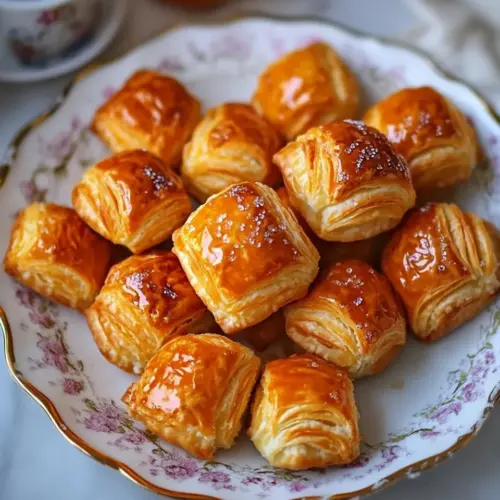
Jane Austen Apple Puffs
Jane Austen Apple Puffs are a flaky, aromatic treat with tender stewed apples, warm brown sugar, and a glossy marmalade finish. This easy, elegant pastry recipe makes a perfect easy weeknight dessert or brunch centerpiece, delivering crisp layers and cozy autumn flavor in every bite. Make it for gatherings when you want something classic and charming to share.
Equipment
- Baking Sheet
- Parchment paper or silicone baking sheet
- Mixing Bowl
- Pastry Brush
- Knife
Ingredients
- 8 ounces puff pastry Provide flakiness and structure to the puffs; keep chilled until use to ensure maximum rise and crisp layers when baked. Handle minimally to avoid warming, and dock or score as directed to control puffing.
- 1 pound cooking apples - I used Granny Smith Add firm, tart apple flesh that softens and releases juice while cooking; choose a firm variety like Granny Smith for balance of acidity and texture. Core and slice evenly to promote uniform cooking and gentle breakdown without turning to mush.
- 1/2 cup water Contribute moisture to help cook and soften the apples while creating a light syrup; simmer with apples until tender. Adjust cooking time to evaporate excess liquid for a thicker filling consistency.
- 2 tablespoons brown sugar Provide sweetness and a deep caramel-like flavor to the apple mixture when cooked; sprinkle in while apples simmer to dissolve completely. Brown sugar also enhances color and helps thicken the syrupy filling.
- 1 teaspoon lemon rind, finely grated Impart bright citrus aroma and a subtle acidic lift to balance sweetness; grate finely to avoid chewy bits. Stir into the cooked apples near the end to preserve volatile oils and fresh flavor.
- 1 tablespoon orange blossom water or 1/2 tsp cinnamon (optional) Deliver either floral or warming spice notes depending on choice; orange blossom water gives a delicate aromatic lift, while cinnamon adds familiar warmth. Add sparingly and taste as you go since both are potent and can dominate the filling.
- 1 tablespoon fine-cut orange marmalade, plus more for topping Introduce intensified orange flavor and a glossy, lightly sticky texture to the filling; fold in toward the end of cooking for a concentrated citrus note. Reserve a little more for brushing on top to add shine and extra sweetness after baking.
- Caster sugar for sprinkling Provide a final crunchy, sweet finish when sprinkled over the pastry before or after baking; use caster sugar for its fine granules that brown evenly. Apply sparingly to avoid overly sweet bites and to encourage caramelization on the surface.
Instructions
- Preheat oven to 400 degrees F. Grease and flour a baking sheet, or cover with parchment or a silicone baking sheet. Peel, core and slice the apples. Stew them in 1/2 cup of water until tender. Drain well and reserve the cooking juice. Allow to cool completely.: The kitchen will fill with warmth as the oven reaches this high temperature, which is essential for achieving a quick, vigorous rise in the puff pastry . You should hear a steady hum from the oven and later a light crackle as the pastry bakes. This hot start creates steam within the layers, producing lift and flake, so do not skimp on temperature. A common error is placing pastries in a cooler oven, which leads to greasy, dense layers rather than a crisp, airy texture.
- Put the cooked apple in a bowl and mix in brown sugar, lemon rind, marmalade and optional orange blossom water or cinnamon. Taste and adjust flavoring as needed.: The surface you choose will affect how the underside browns, and parchment or a silicone mat prevents sticking while allowing even heat. Run your fingers over the lined sheet to confirm it is flat and free of crumbs that could burn. If you skip lining, you risk tearing or sticking the pastry, making removal and presentation difficult.
- On a lightly floured surface, roll out the pastry to 1/8 inch thick and cut the pastry into 8 4-inch squares.: As you slice the apples , you will notice a crisp snap and a fresh, tangy aroma. Uniform slices ensure even stewing and consistent texture in the filling. If pieces are uneven, some will overcook while others remain firm, producing a filling with inconsistent mouthfeel. Work on a stable board and use a sharp knife to keep edges clean.
- Divide the apple puree between them, placing it in a line across the center of each square and stopping well short of the ends.: Gentle simmering softens the apples and concentrates their natural sugars, producing a fragrant steam that smells faintly of cooked fruit. Watch for the moment when pieces are tender but still hold a slight structure, which gives the filling texture without becoming soupy. Overcooking will create a very runny puree that can leak into the pastry base.
- With a pastry brush, use the reserved apple cooking liquid to dampen the edges of the pastry.: Draining separates concentrated flavor from excess moisture, and the reserved cooking liquid is a secret weapon for glazing and sealing the pastry edges. You should be able to tilt the bowl and see the liquid pool, which you then spoon off and save. If you neglect to drain, the filling can make the pastry soggy and prevent proper browning.
- Fold the two edges parallel with the line of filling over the puree. Pinch and seal the edges together with a fork, forming a tube.: Cooling the cooked apples prevents the warm filling from melting the layers of chilled puff pastry during assembly. You will notice steam dissipating and the aroma mellowing as the mixture cools. Rushing this step risks a messy assembly and a loss of flake in the pastry due to softened butter layers.
- Pinch and seal the ends of the tube together and use a fork to seal shut.: As you fold in these seasonings, the mixture becomes glossy and aromatic, with caramel and citrus notes weaving together. Stir until the sugar dissolves and the marmalade blends into the fruit, tasting and adjusting for balance. If you over sweeten, the filling may overpower the delicate pastry, so taste as you go.
- Brush the pastry lightly with the reserved apple cooking liquid and sprinkle with caster sugar.: A quick taste reveals whether you need more acid from lemon rind, more sweetness from brown sugar, or a touch more marmalade for brightness. This tasting ensures each batch suits your preference and the tartness of your chosen apples . Avoid adding too much liquid flavoring, as that can loosen the texture and cause leakage during baking.
- Using a sharp knife, gently cut vents into the top of the pastries.: Rolling produces a smooth sheet that is cool to the touch and slightly sprung back when pressed. Cut clean edges for even baking and to make sealing easier. If you roll too thin the pastry may bake too quickly and become brittle, whereas too thick leads to heavy dough pockets.
- Place the puffs on the greased or lined baking sheet and bake for 20 - 25 minutes, or until golden brown.: Placing the filling in a line gives a neat finished shape and ensures the pastry can be folded and sealed without overflow. The filling should look plump but contained, with no visible wetness at the edges. Overfilling is the most common mistake here and causes leakage during baking.
- Serve warm, topped with a little extra marmalade or candied orange peel.: The dampened edges act like glue, helping layers adhere when you fold and press. The liquid also imparts a subtle apple gloss that enhances final color. Brush gently, as too much liquid will soften the dough and make it hard to seal.
- Fold the two edges parallel with the line of filling over the puree: Folding creates a compact tube around the filling, sealing steam inside so the fruit steams and becomes tender while the pastry crisps. You should feel the pastry layers press together and see no gaps. If the pastry is warm and sticky, chill briefly before folding to maintain flake.
- Pinch and seal the edges together with a fork, forming a tube: The fork tines create a tight seal and a decorative edge that helps trap steam. Press firmly but evenly along the seam to avoid gaps. An improper seal will let filling escape, and that leakage can burn on the baking sheet and affect browning.
- Pinch and seal the ends of the tube together and use a fork to seal shut: Sealing the ends keeps the filling contained and shapes the puff into a neat parcel. You will hear a faint tearing sound when the pastry joins properly, indicating the layers are adhering. If ends are loose, the filling can leak and the pastry may unroll while baking.
- Brush the pastry lightly with the reserved apple cooking liquid and sprinkle with caster sugar: The glaze gives the pastry a glossy finish and helps the sugar adhere, producing a crackly top once baked. You should see a delicate sheen and even sugar coverage. Avoid soaking; a heavy brush will make the sugar dissolve and the surface sticky instead of crisp.
- Using a sharp knife, gently cut vents into the top of the pastries: Small vents let steam escape, preventing a soggy bottom and helping the top rise attractively. Aim for neat, shallow slits that do not cut through to the filling. Deep incisions risk the fruit leaking and the pastry losing structural integrity.
- Place the puffs on the greased or lined baking sheet: Arrange with space between each puff so hot air circulates and they bake evenly. You will see the pastry edges already slightly chilled from handling, which is ideal for crisping. Crowding leads to uneven baking and reduced lift.
- Bake for 20 to 25 minutes, or until golden brown: During baking you will notice an audible rise and a rich golden color developing, along with a warm, fruity aroma. The sugar on top may caramelize into tiny sparkles, and the pastry should sound hollow when tapped lightly. Underbaking leaves a doughy center, while overbaking creates a tough, overly dark crust.
- Serve warm, topped with a little extra marmalade or candied orange peel: Warm pastries offer the best contrast between flaky exterior and tender filling, and a smear of extra marmalade highlights citrus notes. Garnish adds both shine and a fresh burst of flavor. Serving cold reduces the pastry's crispness, so reheat briefly if needed.
Notes
- Chill everything: Keep your puff pastry and even your rolling surface cool to maintain solid butter layers, which trap steam and create flakiness. If the pastry warms up, pop it in the fridge for 10 to 15 minutes before continuing. Working with warm dough is the quickest way to lose lift and end up with a dense texture.
- Use tart cooking apples: Opt for firm varieties like Granny Smith because they hold shape and offer bright acidity that balances the sugar. Their texture yields small tender pieces that are pleasant in the mouth rather than collapsing into a soupy puree. Sweeter apples may require less sugar, so taste and adjust carefully.
- Reserve the cooking juice: The liquid you drain from the apples is perfect for glazing and sealing edges, adding both flavor and shine. Brush sparingly to avoid softening the dough, and use it to help the caster sugar adhere for a crisp finish. Discard any overly cloudy or thin liquid if it seems too watery.
- Don’t overstuff the pockets: Fill them modestly to avoid leakage during baking and to ensure the pastry seals properly. A neat line of filling across the center leaves ample pastry to fold and crimp, producing tidy tubes that bake evenly. If you see filling oozing, reduce the amount next time.
- Make neat vents: Small, shallow slits let steam escape without letting the filling pour out, producing a nicely risen top and preventing soggy bottoms. Use a sharp knife and make consistent cuts for an attractive finish. Over cutting can lead to dried out filling around the vents.