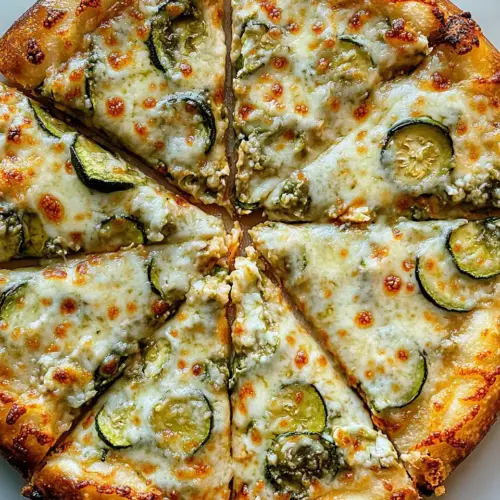
Jammy Zucchini Pizza
Jammy Zucchini Pizza is a creamy and savory vegetable forward pie that balances jammy, slow cooked zucchini with bubbling mozzarella on a crisp 12 inch crust. This easy weeknight dinner offers silky texture, bright finishing pepper, and a comforting, rustic aroma, making it a great choice when you want something simple yet memorable.
Equipment
- Skillet
- Oven or Grill
- Pizza Peel
Ingredients
- 2 tablespoons (24 g) olive oil Sauté in a skillet to develop sweet, caramelized flavors that form the savory base for the pizza topping; cook until translucent and lightly golden to enhance overall depth.
- 1 (270 g) medium onion (minced) Minced finely to distribute mild onion aroma evenly across the pizza; cook with oil until soft so it melds into the jammy zucchini mixture without large crunchy pieces.
- 1/2 teaspoon kosher salt Season sparingly during cooking to draw out moisture and amplify natural flavors; dissolve into the vegetables so the final topping tastes balanced and not flat.
- 1 (300 g) small zucchini (chopped into small dice) Dice small to create tender, jammy bites that release moisture as they cook; cook down until softened so the zucchini complements the creamy and cheesy components.
- 2 tablespoons (28 g) heavy cream Enrich and bind the cooked vegetables with a silky, luscious texture; stir in near the end of cooking to add creaminess without thinning the mixture excessively.
- Pizza dough (enough for 1, 12-inch pie) Stretch or roll out to form the crisp, chewy foundation that holds the toppings; prebake or top and bake to desired doneness for a 12-inch pizza.
- Flour for dusting Dust lightly to prevent the dough from sticking while rolling or shaping; use sparingly to maintain optimal dough hydration and texture.
- 3 oz (90 g) torn or shredded mozzarella cheese Scatter evenly to provide melty, gooey richness and a mild, milky flavor that contrasts with the jammy vegetable topping; add toward the end of assembly for even melting.
- Black pepper for finishing Finish with a few grinds to brighten and contrast the richness; add just before serving to provide a subtle peppery lift and aromatic finish.
Instructions
- To make the jammy zucchini: Heat the olive oil in a medium skillet over medium heat. Add the onion and salt. Cook for about 10 minutes, until the onion just starts to soften. Stir in the zucchini, cover, and cook for another 10 minutes. Remove the lid, lower the heat to medium low, and continue to cook, stirring occasionally, until the zucchini has broken down and is lightly caramelized, 25-35 minutes. Stir in the heavy cream and set aside until ready to use.: The pan should smell gently sweet and savory within minutes, a low sizzle that tells you the olive oil and onion are warming. As the onion softens, it releases sugar and a faint caramel aroma fills the air. Stirring occasionally keeps the pieces from sticking and ensures even browning. You will hear a soft, steady sizzle as moisture evaporates, and visually you’ll see the onion turn translucent and then pale gold. The slow transformation matters because quick high heat will char the outsides and leave raw centers, so maintain medium heat. A common misstep is rushing at high heat; that results in uneven texture and a burnt note. Keep the skillet covered at first to help the zucchini sweat out moisture, then uncover to let the reduction begin. Once you lower the heat to medium low, the cooking takes on a gentle, rhythmic quality as the zucchini breaks down, becoming tender and slightly jammy. The scent will deepen into a warm vegetal sweetness, and the surface will show scattered, glossy brown bits where sugars have caramelized. When the mixture reaches that stage, stir in the heavy cream off heat to add silkiness, tasting to adjust seasoning. If your mixture seems too watery midcook, be patient and continue to reduce; resist the urge to add extra fat or liquid, which can dilute flavor.
- To make the pizza: While the zucchini is cooking, preheat an oven or grill (whichever you prefer for cooking pizza). Let the pizza dough rest, covered, at room temperature, while preheating and prepping.: While the topping is simmering, you will feel the room warm slightly from the oven, and the dough resting at room temperature becomes more elastic and relaxed. Letting the dough sit under a light cloth helps it relax; when you stretch it, it should feel pliable rather than springy. Dust your peel with a light layer of flour so the dough slides easily without tearing. If the dough resists, let it rest a few more minutes. A frequent error is overstretching too quickly, which creates thin spots that can bubble or tear in the oven. Preheating your oven or grill to a high, steady temperature is crucial so the crust crisps quickly when it hits the heat.
- Stretch the dough into a 12-inch circle. Place on a floured pizza peel, spread the jammy zucchini over the dough, and sprinkle with the mozzarella cheese. Bake until the cheese is bubbly and the crust is golden brown and cooked through. (The cook time will depend on your chosen pizza-making method.): As you stretch, listen for a faint slackening in the dough that tells you the gluten has relaxed. Place the dough on the floured pizza peel and feel the surface for even thickness. Once stretched, spread the warm jammy zucchini across the surface, leaving a border for the crust to develop. The visual cue is a glossy, compact layer that holds together rather than a loose watery pile. Scatter the torn or shredded mozzarella cheese so it melts into pockets, browning in places for contrast. If you notice pools of liquid after spreading, blot lightly and continue; excess moisture can make the crust soggy. Avoid piling the topping too thick, which prevents even cooking and can weigh down the dough.
- To serve: Once the pizza is cooked finish with black pepper before serving.: Slide the pizza into your preheated oven or onto the grill, and listen for an immediate, lively sizzle as the crust hits high heat. The smell will shift to toasty and slightly nutty as the crust browns, and the mozzarella will melt into glossy, bubbling patches. Watch the crust edges for golden coloring and the underside for a toasted pattern, both cues that the heat is doing its job. Baking time varies by method, but the sensory signs are consistent: bubbling cheese, a fragrant toasty aroma, and a firm yet springy crust. A common mistake is underbaking due to low temperature, which leaves a pale, doughy base. If the top browns too quickly before the base cooks through, lower the top heat or move the pie to a lower rack to allow the bottom to crisp.
- To serve: When you remove the pizza, the first sensory note is the steam rising with a warm mix of caramelized zucchini and toasted crust. Letting it rest briefly keeps the melted mozzarella from sliding off, and the topping sets into neat, sliceable ribbons. Finish with a few turns of black pepper for a bright aromatic lift that contrasts the sweet jammy topping. Cutting too soon can smear the topping, so allow a minute to settle; rushing this final step often creates a messy presentation. Serve slices warm, noticing how the textures contrast: crisp crust, silky zucchini, and stretchy cheese.
Notes
- Heat control matters: Keep the skillet at medium to medium low when reducing the zucchini to allow gentle caramelization without scorching. If the pan gets too hot, reduce the temperature and stir more frequently.
- Even dice for even cooking: Chop the zucchini into small, uniform pieces so they break down at the same rate. Irregular pieces lead to inconsistent texture and some undercooked bites.
- Measure the salt: Use the listed kosher salt amount to coax moisture from the vegetables. Too little leaves the topping flat, and too much oversalts the final pizza.
- Flour sparingly on the peel: Use a light dusting of flour to prevent sticking, but not so much that the flour burns and leaves bitter spots on the crust.
- Let the dough rest if it resists: If the dough snaps back while stretching, cover and let it relax for 10 to 15 minutes before trying again to avoid tearing.