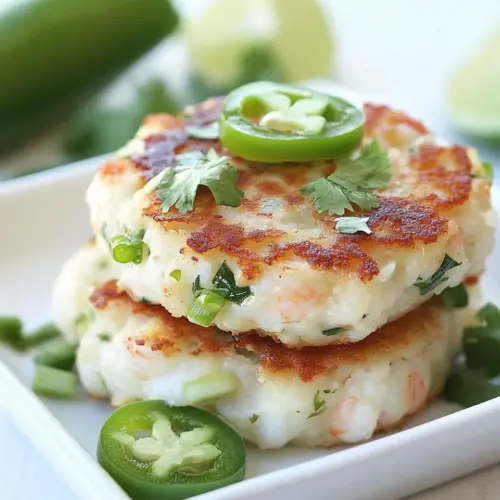
Jalapeño Shrimp Cakes
Jalapeño Shrimp Cakes deliver crispy golden exteriors and tender, flavorful centers with bright jalapeño heat and fresh lime finish. These easy, quick shrimp patties are perfect for an easy weeknight dinner or summer entertaining, offering a lively balance of spice, herb, and cream from avocado. Make them for a crowd pleasing seafood option that cooks fast and tastes impressive.
Equipment
- Food Processor
- Non-Stick Skillet
- Spatula
- Paper towels
Ingredients
- 1 lbs shrimp, peeled and deveined (weight after peeled) Provide diced, firm texture and sweet seafood flavor that forms the primary protein base for the cakes; bind with other ingredients and brown quickly when pan-fried to develop savory crust and juiciness inside.
- 1 large jalapeño, seeded and minced (for spicy, leave the seeds) Add bright heat and vegetal brightness when seeded and minced; adjust spice level by retaining or removing seeds, and distribute small pieces throughout the mixture for a lively, peppery kick.
- 1 garlic clove, minced Impart aromatic pungency and depth when minced finely; mellow during cooking to add savory backbone and help balance the heat from jalapeño while enhancing overall flavor complexity.
- 3 medium scallions, chopped Contribute mild oniony crunch and fresh green color when chopped; fold into the mixture to add textural contrast and a light, sharp note that complements the shrimp.
- 2 tablespoons fresh cilantro, chopped Provide fresh herbal lift and citrusy, slightly peppery notes when chopped; sprinkle into the mixture to brighten flavors and add a fragrant finish that pairs well with lime.
- 2 tablespoons panko, use GF crumbs for gluten free Offer light crispness and bind slightly while adding subtle toasty flavor; incorporate to give structure and a tender crumb to the cakes, using gluten-free crumbs if needed.
- 1/4 teaspoons ea salt Season the mixture to enhance and balance flavors with a controlled savory note; distribute evenly to ensure the shrimp cakes taste well-rounded without being bland.
- 1/8 teaspoon fresh ground black pepper Give a warm, aromatic finish in small amount to enhance overall seasoning; grind fresh for best flavor and add sparingly to avoid overpowering delicate seafood taste.
- 4 lime wedges Provide acidic brightness and a fresh burst when squeezed over finished cakes; cut into wedges to allow diners to add tangy lift that cuts through richness.
- 1/2 medium avocado, sliced thin Add creamy richness and smooth texture when sliced thin; serve alongside or atop cakes to introduce cool, buttery contrast and complementary mouthfeel.
Instructions
- Dry shrimp well with a paper towel then place the shrimp in the food processor along with jalapeño and garlic then pulse a few times until almost pasty.: The first sensory cue is the change in texture, as the rough shrimp transforms into a cohesive, slightly tacky paste that holds together when pressed, while the aroma of crushed garlic and fresh jalapeño becomes noticeable but not overpowering. I listen for the processor to move in short bursts rather than a continuous puree to prevent overheating, which can make the proteins firm up and become rubbery; this technique keeps the interior tender and silky. If the mixture looks too wet, a short pause to let it rest will let moisture redistribute, and you can blot excess liquid with a paper towel. A common mistake at this stage is overprocessing into a smooth puree, which robs the cakes of pleasant texture. To avoid that, pulse in short intervals and check the mixture; you want it nearly pasty but with a little body left so the patties retain some bite.
- Combine the shrimp in a large bowl with remaining ingredients and mix well to combine.: As you fold in the scallions , chopped cilantro , panko , salt , and black pepper , pay attention to how the mixture holds together; it should be moist but formable, and the flecks of green and crumbs will signal even distribution. Smell the bowl for a rounded scent of citrus and herbal brightness from the cilantro , which balances the savory garlic . I use a spatula to cut through the mixture rather than beat it, preserving a tender texture. If you overwork it, the cakes can become dense, so stop mixing when everything is evenly distributed. A frequent misstep is adding too much binder early, making the mixture gluey; instead, add small increments and test by shaping a small patty to see if it holds.
- Using rubber gloves (easier with gloves), form shrimp into 4 patties.: Touch is the most important guide here, you want each patty compact enough to hold but not overly compressed, which keeps the center tender after searing. The surface should appear smooth with a slight sheen from natural juices, and the patties should measure roughly the same thickness for even cooking. I press the edges gently to create a seal so they do not fall apart when flipping. A trick is to chill the formed patties for a few minutes to firm them up if they feel loose. One thing to avoid is packing them so tightly that air pockets are eliminated, because that can lead to a rubbery bite.
- Heat a non-stick skillet over medium heat and spray with oil.: You'll know the pan is ready when a drop of water skitters across the surface, and a faint wispy aroma of heated oil rises. Using a non stick skillet and a light spray prevents sticking while allowing the exterior to caramelize; choose medium rather than high heat to ensure the interior cooks through without burning the outside. I always preheat for a minute or two so the first set of patties gets an even sear. Avoid overcrowding the skillet, which lowers pan temperature and leads to steaming instead of browning; cook in batches if necessary.
- Add the shrimp cakes to the heated grill and cook 4 minutes without disturbing, then gently flip and cook an additional 4 minutes.: The initial quiet period lets a golden crust form, and you should hear a soft sizzle when the patties hit the pan, followed by a change in aroma as the sugars and proteins brown. After about four minutes the edges will look set and the underside will be a warm golden color, which signals it's time to flip. Use a thin spatula and a gentle motion to turn them without tearing. After the second side cooks, the internal texture should be firm but springy, and juices should run clear. A common error is flipping too often, which prevents a consistent crust, so resist the urge to nudge them prematurely.
- Serve with fresh lime juice and top with thin slices of avocado.: Right after cooking, the cakes will carry a toasty scent that pairs beautifully with the bright snap of squeezed lime and the cool cream of thinly sliced avocado . Squeeze a wedge over each patty to heighten flavors and place avocado slices on top or to the side for contrast. I like the way the heat and acidity play off the richness visually and on the palate. The main pitfall here is letting the cakes sit too long after cooking, which will soften the crust; serve immediately for the best textural experience.
Notes
- Control the heat: If you want milder cakes, remove the seeds and membranes from the jalapeño before chopping. For more kick, mince the pepper including the seeds, or reserve a few seeds to stir in selectively. Taste a tiny bit on a spoon before adding to the whole batch if you are unsure about your guests' tolerance.
- Dry the shrimp well: Pat the shrimp dry with paper towels before pulsing, because excess moisture prevents browning and makes the mixture too loose. If shrimp are wet from thawing, pat until just damp, then pulse. This step is the single most important trick for a good crust.
- Measure binder carefully: Add panko sparingly and check the mixture by forming a test patty. The goal is a mixture that holds together but remains tender. Excessive crumbs will make the patties cakey rather than delicate.
- Use moderate heat: Preheat the pan to medium and avoid too high a flame, which can char the exterior before the center cooks. If the cakes brown too fast, reduce heat slightly and cover briefly to finish cooking through.
- Serve immediately: These are best right out of the pan when the crust is crisp and the interior is juicy. If you must hold them, keep them on a wire rack in a warm oven to preserve texture.