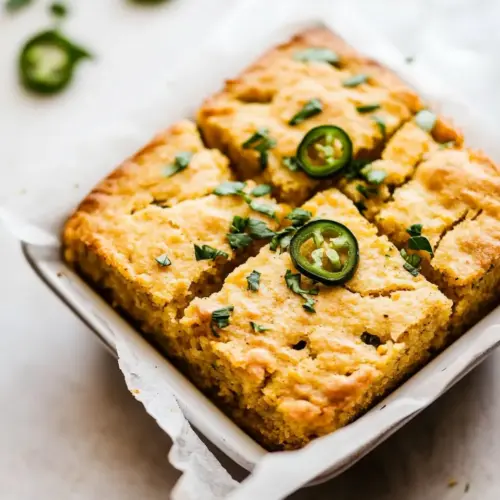
Jalapeno Cornbread
Jalapeno Cornbread blends a slightly sweet, golden cornmeal crumb with a mild peppery kick for a creamy yet sturdy slice. This easy, quick loaf is perfect for weeknight dinners or potlucks, offering crispy edges and tender interiors with melty pockets of cheese. Make it for a crowd pleasing side that brings warmth and just enough heat.
Equipment
- Large Bowl
- Whisk
- Measuring Cup
- 8×8-inch pan
- Oven
Ingredients
- 1 cup yellow cornmeal Provide a coarse, slightly gritty texture that forms the base of the cornbread and contributes a characteristic corn flavor; combine with the flours and leaveners to give structure and golden crumb.
- 1 cup whole wheat pastry flour Offer a lighter, whole-grain flour option that tenderizes the batter while adding nutty flavor and extra fiber; blend with cornmeal to balance texture and absorb liquids evenly.
- 1 tablespoon baking powder plus 2 teaspoons Leaven and lift the batter by producing carbon dioxide when mixed with wet ingredients, ensuring a tall, airy crumb; adjust quantity precisely to avoid metallic or bitter aftertaste.
- 1 teaspoon kosher salt Season and enhance other flavors while promoting a balanced savory profile; dissolve into the batter to evenly distribute saltiness throughout the cornbread.
- 1 cup kim milk Moisten and bind the dry ingredients while contributing slight tang or dairy richness depending on milk type; help create a tender crumb and assist with browning.
- 2 large eggs at room temperature Incorporate air when beaten and coagulate during baking to stabilize the structure, yielding a richer texture and improved rise; ensure room temperature for even mixing.
- 1/4 cup unsweetened applesauce Replace some fat while providing moisture and natural sweetness, helping keep the cornbread tender and reducing added oil; contribute a subtle fruity undertone without overpowering.
- 2 tablespoons canola oil Add fat to tenderize the crumb and promote moistness and browning; use sparingly to maintain an optimal balance between richness and lightness.
- 1 tablespoon honey Sweeten mildly and round out savory flavors, enhancing corn sweetness and balancing heat from jalapeños; integrate smoothly into wet ingredients for even distribution.
- 1/2 cup freshly grated part skim sharp cheddar cheese or any combination of shredded sharp cheddar, Monterrey Jack, Colby, or Pepper Jack (for extra heat) Introduce sharp, cheesy flavor and melty pockets that add richness and savory depth; grate freshly for best meltability and distribute evenly to prevent sinking.
- 1/4 cup chopped green onions white and green parts, plus additional 1-2 tablespoons for garnish (2-3 scallions total) Provide a mild oniony brightness and fresh herb-like aroma that complements the corn and jalapeños; chop finely and fold into batter, reserving a bit for garnish.
- 2 jalapeño peppers seeded and minced Deliver bright, spicy heat and vegetal flavor while adding texture; seed and mince to control heat level and stir into the batter for even spicy distribution.
Instructions
- In a large bowl, stir together the cornmeal, whole wheat pastry flour, baking powder, and salt. In a separate bowl or large measuring cup, combine the milk, eggs, apple sauce, oil, and honey.: As you whisk these dry ingredients, you will notice the pale yellow of the cornmeal blending with the slightly tan hue of the whole wheat pastry flour , and the mixture will smell faintly of toasted grain. This step ensures even distribution of the baking powder so the loaf rises uniformly, which prevents pockets of dense batter. A common mistake is under mixing the dry ingredients, which can leave uneven leavening; take a minute to stir until the color and texture look consistent.
- Make a well in the center of the dry ingredients, then add the wet ingredients.: When you whisk these wet components, the mixture should appear glossy and slightly viscous, with the honey thinning into the liquid and the eggs creating a cohesive emulsion. This cohesion helps the batter hold air and contributes to an even crumb. If the liquids separate or you see flecks of unincorporated oil, continue whisking until smooth, because poor emulsification can make the texture uneven.
- Stir by hand, just until combined, then let the batter rest for 20 minutes.: Pouring the wet mix into the well allows a gentle incorporation that prevents over mixing. As the wet and dry come together, watch for streaks of flour to disappear and the batter to take on a uniform, slightly thick consistency. Over mixing at this juncture can develop the gluten in the flour too much, yielding a tougher loaf, so stir just until you no longer see dry patches.
- Stir in the cheese, 1/4 cup green onions, and jalapenos.: The batter will feel a bit grainy from the cornmeal and slightly looser after resting as the liquids fully hydrate the grains. Resting smooths the texture and allows the baking powder to begin its action, improving rise and crumb. Resist the urge to add more liquid during the rest; if the batter seems thin, it will still set up in the oven. A typical error here is skipping the rest, which can yield a coarser texture and less uniform crumb.
- Preheat the oven to 350 degrees F. Lightly coat an 8×8-inch pan with cooking spray. Then, pour the rested batter into the prepared pan, then smooth the top. Sprinkle remaining green onions over the top.: Adding the cheese , scallions, and minced jalapeño peppers at this stage disperses pockets of savory flavor throughout the batter. You will see flecks of white and green and little green dots of pepper, with the aroma shifting toward sharp and vegetal. Be mindful to fold gently so the distribution is even; vigorous stirring can deflate the batter and result in a denser loaf.
- Bake until the top and edges are dry and a toothpick inserted in the center comes out clean, 24-29 minutes. Let cool, then slice and serve warm or at room temperature.: As the oven warms, the kitchen will start to smell faintly of warm grains; when you pour the batter, you should notice a thick, spoonable texture that spreads easily when smoothed. The top will look slightly pebbled from the cornmeal. Garnishing with extra scallions adds a fresh green contrast and a hint of crispness after baking. A frequent oversight is not preheating the oven fully, which can flatten the rise and affect crust formation, so wait until the oven reaches 350 degrees F before baking.
- Bake until the top and edges are dry and a toothpick inserted in the center comes out clean, 24 to 29 minutes: In the oven the loaf will develop a golden brown top and slightly darker, caramelized edges, and you may hear a soft crackle as the surface sets. The aroma will become toasty and cheesy near the end of baking. Use the toothpick test to confirm doneness rather than relying solely on time, because ovens vary; a wet crumb on the toothpick means it needs a few more minutes. Avoid over baking, which can dry the cornbread out; once the center tests clean, remove it promptly and let it cool slightly before slicing.
- Let cool, then slice and serve warm or at room temperature: As the loaf rests, the interior will set and firm up, making clean slices possible. You will notice steam dissipating and a pleasant melding of the cheese and jalapeño aromas. Serving warm brings out a softer crumb and more pronounced scents, while room temperature showcases firmer texture. A common slip is slicing too soon, which can lead to crumbly pieces; wait until it is cooled enough to hold its shape.
Notes
- Boost the heat: Add an extra half jalapeño or leave in some seeds to intensify the pepper profile for guests who love spice.
- Cheese swap: Substitute with Pepper Jack for a bolder, spicier melt, or use a milder Cheddar if you want subtlety while retaining cheesy pockets.
- Make it dairy free: Use a plant based milk and omit the cheese, or replace with a dairy free shredded option if you need a dairy free version.
- Textural change: Use a coarser cornmeal for more bite, or a finer cornmeal for a smoother crumb that slices cleaner.
- Garnish flair: Top with extra chopped green onions or a light brush of melted butter right after baking to enhance color and sheen.
- Advance prep: Prepare the batter and refrigerate for up to 24 hours, then bring to room temperature before baking to maintain structure and flavor.