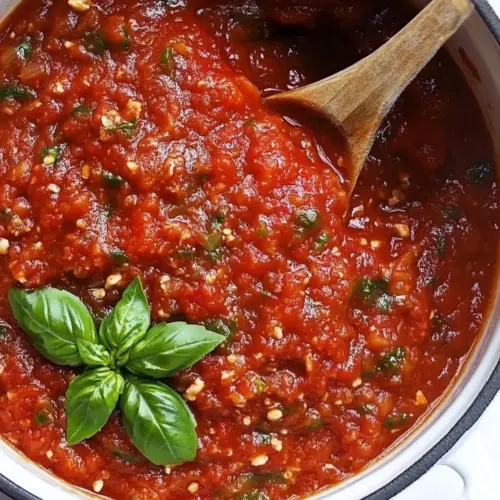
Italian Tomato Sauce
Italian Tomato Sauce brings rich, savory tomato flavor with a silky texture and bright herbal finish. This easy to make, pantry friendly sauce is perfect for an easy weeknight dinner or batch cooking for busy days. The smoky notes from fire roasted tomatoes and the soft sweetness of sautéed onion create a comforting, versatile sauce worth making again and again.
Equipment
- Large Pan
- Blender
- Wooden Spoon
Ingredients
- 2 tablespoons olive oil Heat in a saucepan to provide the cooking medium for sautéing aromatics and developing flavors; adds a fruity, silky base that carries seasonings throughout the sauce. Use at medium heat to prevent burning and to gently soften onions and peppers. Choose extra-virgin for finishing or regular olive oil for higher-heat sautéing.
- 1 large onion (diced small (about 3 cups)) Dice small and sauté until translucent to build sweet, savory depth and natural sweetness that balances tomato acidity. Cook slowly in oil to release moisture and break down cell walls, which creates a smooth mouthfeel. Use a large diced onion to ensure even distribution and consistent texture in the finished sauce.
- 1 green bell pepper (diced small (about 1 1/2 cups)) Dice small and cook with onions to introduce a bright, vegetal sweetness and slight crunch that complements tomatoes and herbs. Sauté until softened to meld flavors and reduce raw bitterness, adding color and complexity to the sauce. Remove seeds and membranes for milder taste if desired.
- 4 teaspoons Italian seasoning Sprinkle evenly to contribute a blend of dried herbs—typically basil, oregano, rosemary, thyme, and marjoram—that impart classic Italian aroma and savory depth. Add during cooking to allow the herbs to rehydrate and release essential oils, enhancing overall flavor balance. Adjust quantity to taste for a subtly herbed or more pronounced profile.
- 6 medium cloves garlic (minced (about 2 tablespoons)) Mince finely and add to the aromatics to deliver pungent, aromatic heat and savory complexity that lifts the sauce. Add after onions and peppers have softened to avoid scorching, and cook briefly to mellow raw sharpness while preserving garlic’s characteristic flavor. Fresh garlic gives brighter, more nuanced notes than pre-minced varieties.
- 128 -ounce can whole fire-roasted tomatoes (diced fire-roasted tomatoes will work too) Pour from the can as the primary liquid and tomato base, providing rich body, smoky sweetness, and acidity that define the sauce. Break up whole tomatoes as they simmer to create texture and allow flavors to concentrate; fire-roasted adds a subtle charred depth. Long, gentle simmering melds tomato flavor with other ingredients for a cohesive sauce.
- 16 -ounce can tomato paste Spoon in to thicken the sauce, intensify tomato flavor, and add concentrated umami and sweetness for a robust consistency. Stir in early to incorporate and dissolve fully, then simmer to blend with the canned tomatoes and aromatics. Use the full amount specified for a hearty, clingy sauce suitable for pasta or braises.
- 1 tablespoon honey or granulated sugar Stir in to tame acidity and round out the tomato flavor with subtle sweetness, balancing tartness without overwhelming other flavors. Add gradually and taste as the sauce reduces to achieve the desired level of brightness and harmony. Honey provides floral notes while granulated sugar offers neutral sweetness.
- 1 1/2 teaspoons kosher salt Sprinkle to season the sauce and enhance all other flavors while helping proteins and vegetables release their tastes. Use kosher salt for its clean salinity and ease of measurement, and adjust to taste during simmering since flavors concentrate as liquid reduces. Add in stages to avoid over-salting.
- 1/4 teaspoon freshly ground black pepper Grind freshly to add a sharp, warm, and slightly pungent counterpoint that brightens the sauce and refines the seasoning. Add toward the end of cooking to preserve volatile oils for a fresher peppery note, and adjust amount to personal preference. Freshly ground black pepper has more complexity than pre-ground.
- 1/2 cup minced fresh parsley Chop finely and stir in near the end of cooking or off heat to provide bright, herbaceous freshness and a pop of color that lightens the rich tomato base. Use as a finishing herb to preserve its grassy aroma and slightly bitter, clean flavor that balances the sauce. Parsley also adds mild texture and visual appeal.
Instructions
- Add the olive oil to a large pan over medium heat. When hot, add the onion, bell pepper, and Italian seasoning. Cook, stirring occasionally, until the onions are soft and translucent and the pepper is tender, about 8 minutes. Add the garlic and cook, stirring frequently, for one more minute.: When the oil warms you will notice it shimmer and become slightly aromatic, which is the right cue to proceed. The oil acts as a flavor conductor for the onion and green bell pepper , creating a glossy surface that helps aromatics soften evenly. If the oil smokes, the pan is too hot and you'll risk bitter or burnt flavors, so reduce the heat promptly. Listen for a gentle sizzle when you add the first pieces of onion , that sound means the pan is at the correct temperature. A common mistake is rushing with high heat which browns too quickly instead of allowing sweetening.
- Add the tomatoes, tomato paste, honey or sugar, salt, and pepper. If you’re using whole tomatoes, break up the tomatoes with a spoon. To save time, I like to give the tomatoes a quick spin in the blender to break them down a bit, then add them to the pot.: As the diced onion and green bell pepper hit the pan, stir to coat with oil and herbs. You should see the vegetables soften and become translucent in texture, and the scent of the Italian seasoning will become more pronounced as the herbs bloom. Stir every minute or two so nothing sticks, and watch for any dark browning which indicates heat too high. If the pieces brown unevenly, lower the heat and give them a little more time to tenderize.
- Continuing to cook, stirring occasionally, over medium heat, until it comes to a boil. Turn the heat to low, partially cover, and simmer for 30 minutes.: During this period the aroma will deepen and the pan will release a gentle, sweet smell. Visual cues include the onion turning glossy and the green bell pepper losing its raw sheen. Stirring occasionally prevents any bits from sticking and burning, which can add an undesirable bitter edge. If after 8 minutes they still feel firm, continue cooking a few more minutes, because undercooked aromatics can leave a raw vegetal taste in the final sauce.
- Add the parsley, then remove from the heat.: The moment you add the minced garlic , a bright, pungent aroma will rise, and you should stir constantly so it warms evenly. Garlic cooks quickly and can go from fragrant to bitter in seconds, so this brief minute is critical for mellowing its edge while keeping a fresh profile. If you see any browning, remove the pan from heat immediately to prevent bitterness. A typical pitfall is adding garlic too early or letting it brown, which dominates the sauce.
- Serve over pasta, in lasagna, or use it as a dipping sauce. I like to make double (or triple!) batches and freeze it in freezer bags.: When the canned tomatoes and tomato paste meet the softened aromatics, the pot will steam and the scent of tomato will rise. Stir to distribute the paste so it dissolves into the liquid and thickens the mixture. The sweetener and seasonings help balance acidity and lift flavors. If using whole tomatoes, break them up by hand or pulse briefly in a blender before adding, which gives a pleasing texture. Avoid dumping the paste in one clump without stirring, as that can leave concentrated pockets that stick and scorch.
- If you’re using whole tomatoes, break up the tomatoes with a spoon: As you break them apart the sauce releases a torrent of fresh tomato aroma and juices, and you will visually notice chunks softening and integrating. The action helps create an even consistency while preserving some tomato texture. One trick I use is to pulse whole tomatoes in a blender briefly to save time, but blending too long removes the pleasant chunkiness. Avoid overworking the tomatoes if you want a rustic texture.
- To save time, I like to give the tomatoes a quick spin in the blender to break them down a bit, then add them to the pot: Blending short bursts produces a smoother body while retaining a bit of texture, which shortens overall cook time. When you pour the blended tomatoes in, the sauce will look more cohesive, and your spoon will move through a silky mixture. Be careful not to overblend into complete purée unless that is your intention, because that yields a uniform texture without any tomato pieces. A common misstep is blending for too long, which removes the contrast that makes the sauce interesting.
- Continuing to cook, stirring occasionally, over medium heat, until it comes to a boil: As the sauce warms, you will see rising steam and occasional bubbling around the edges, which signals it is approaching a boil. Stirring occasionally prevents sticking and encourages even heating. Once you see steady bubbling across the surface, reduce the heat to low to proceed to the simmer. A trap is to let it roll at a heavy boil which can toughen flavors and cause excessive evaporation.
- Turn the heat to low, partially cover, and simmer for 30 minutes: During the simmer the sauce will thicken, the aroma will deepen, and small, gentle bubbles will punctuate the surface. Partially covering helps control splatter while allowing moisture to escape slowly, concentrating flavor. Stir every so often to prevent a skin from forming on top and to keep any bits from clinging to the bottom. Over simmering without checking can reduce the liquid too far, so set a timer and taste toward the end to adjust seasoning.
- Add the parsley, then remove from the heat: Adding minced parsley right at the end brightens the sauce with fresh herbal notes and a lively color contrast. The final stir should distribute the herbs evenly and refresh the pot's aroma. Removing the pan from heat preserves the delicate parsley tone, which fades if exposed to long cooking. A common mistake is adding delicate herbs too early where prolonged heat will mute their brightness.
- Serve over pasta, in lasagna, or use it as a dipping sauce: The finished sauce will be glossy and fragrant, and you can spoon it over hot cooked pasta where it will cling and coat each strand. For lasagna, layer confidently, using the sauce to add moisture and depth, or pour into bowls as a dipping sauce for warm bread. If freezing, let the sauce cool before portioning into freezer bags, and remove excess air to prevent freezer burn. Do not pack the sauce into containers while hot, as that can raise the freezer temperature and harm texture.
- I like to make double (or triple!) batches and freeze it in freezer bags: When cooled and properly portioned, the sauce freezes well and maintains its flavor, making it invaluable for quick meals. Label bags with dates so you can rotate through them, and thaw slowly in the refrigerator overnight for best texture. A mistake is freezing in very large lumps which take too long to thaw and can encourage uneven reheating.
Notes
- Swap roasted tomatoes: Use diced fire roasted tomatoes for a subtle smoky nuance that deepens the final flavor profile, which works especially well if you enjoy a slightly charred tomato note.
- Sweeter finish option: Replace the tablespoon of honey with granulated sugar if you prefer a neutral sweetener that does not introduce floral notes, and adjust gradually while tasting.
- Smoother texture: If you prefer a smoother sauce, blend a portion of the finished sauce briefly with an immersion blender, which mellows texture while preserving freshness.
- Make extra for freezing: Double the recipe and portion into freezer bags so you always have sauce on hand for quick dinners or last minute lasagna assembly.
- Herb finish: Stir in minced parsley at the end for brightness, or use it as a platform for adding fresh basil if you have it on hand for a fragrant finish.