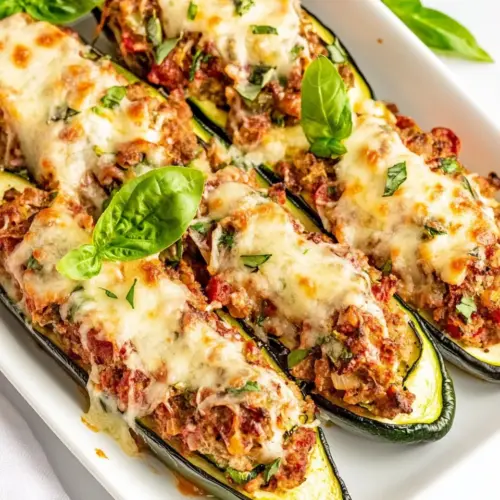
Italian Stuffed Zucchini Boats
Italian Stuffed Zucchini Boats are a savory, herb scented weeknight dinner that combines tender baked zucchini with a rich tomato and meat filling. The texture is creamy where the sauce meets soft squash, and the optional melted mozzarella adds a gooey finish. This easy weeknight dinner is flavorful, family friendly, and a great way to showcase summer produce, making it worth trying tonight.
Equipment
- Rimmed Baking Sheet
- Large high-sided saute pan
- Spoon or melon baller
- Oven
Ingredients
- 4 medium to large zucchini washed and dried Washed and dried to ensure a firm base and prevent sogginess when hollowed; medium to large zucchinis provide ample cavity for stuffing and even cooking. Act as edible boats that hold the filling, soften during baking, and add a mild, slightly sweet vegetable flavor to the dish.
- 1 tablespoon extra-virgin olive oil Used to sauté vegetables and meat, imparting a smooth, fruity richness; extra-virgin olive oil also helps prevent sticking and promotes even browning. Adds Mediterranean aroma and enhances mouthfeel while carrying fat-soluble flavors throughout the stuffing.
- 2 cloves garlic minced Minced finely to release sharp, pungent aroma and infuse the filling with savory depth; garlic adds complexity and warmth when sautéed with onions. Contributes aromatics that round out the meat and tomato flavors without overpowering the dish.
- 1 onion finely chopped Finely chopped to soften and sweeten as it cooks, providing a flavorful base for the filling when caramelized slightly. Balances acidity from tomatoes and adds texture contrast inside the zucchini boats.
- 3 large carrots peeled and finely diced Peeled and finely diced so carrots blend smoothly into the stuffing, contributing natural sweetness, color, and slight crunch when not overcooked. Helps bulk up the filling with nutrients and a tender bite that complements the meat.
- 1 pound grass-fed beef or ground turkey Provided as the primary protein—browned and broken up to create a hearty, savory filling; grass-fed beef or ground turkey brings different flavor profiles and textures. Supplies richness, umami, and satiety while absorbing seasonings and tomato flavors.
- 1 -15 oz. can diced tomatoes Added from the can to introduce bright, tangy tomato pieces and liquid that meld with the meat and seasonings; diced tomatoes contribute acidity and texture. Helps form the saucy component of the filling, preventing dryness during baking.
- 16 oz . can tomato paste Incorporated to thicken and concentrate tomato flavor, giving the stuffing a rich, cohesive sauce that clings to the other ingredients. Tomato paste deepens color and umami while balancing moisture from canned tomatoes.
- 1 tablespoon Italian seasoning Stirred in to season the mixture with an herb blend of oregano, basil, thyme, and rosemary, lending classic Italian flavor. Provides aromatic complexity and ties together the tomato, meat, and vegetable components.
- 1/4 teaspoon red pepper flakes more to taste Sprinkled in sparingly to introduce heat and a subtle chili kick, adjustable to taste for desired spiciness. Enhances overall flavor contrast and liveliness without dominating the herb and tomato notes.
- 1 teaspoons ea salt more to taste Added to season the filling and enhance all other flavors; salt levels can be adjusted to preference and to account for canned ingredients. Helps draw out moisture from vegetables slightly and balances acidity from tomatoes.
- 1/2 teaspoon freshly ground pepper more to taste Freshly ground to provide bright, sharp peppery notes and a mild pungency that complements salt and herbs. Adds a warming finish and subtle complexity to the savory profile of the stuffing.
- 1 cup fresh baby spinach optional Torn or chopped and mixed in optionally to add a tender leafy texture and mild, slightly earthy flavor that wilts into the filling. Boosts nutritional value and freshness while softening into the sauce.
- 1/4 cup fresh basil minced Minced and stirred in to infuse the filling with fragrant, sweet, and peppery basil aroma; fresh basil brightens the overall taste. Acts as a finishing herb that complements tomatoes and cheese if used.
- cups shredded mozzarella optional Sprinkled on top as an optional melty garnish to add creamy, stretchy texture and mild, salty dairy flavor when melted; shredded mozzarella creates a gratin-like topping. Quantity is adjustable based on preference for cheesiness.
Instructions
- Preheat oven to 400ºF: As the oven warms, you should feel the steady hum of heat building, and the air will begin to feel drier, which helps the zucchini roast rather than steam. This temperature encourages the boat edges to become tender while keeping structure. A common mistake is inserting the boats into an underheated oven, which leads to soggy centers. Make sure the rack is centered and the oven has reached a full temperature before baking.
- Cut zucchinis in half down the middle so you have two pieces. Using a spoon or a melon baller, scoop out some of the flesh from the center to make a boat. Set aside for another use or discard.: When you hollow the zucchini , listen for the quiet scrape as you scoop, and notice the pale, slightly moist flesh exposed. Leaving a consistent wall thickness ensures even bake and prevents collapse. Save the scooped flesh for another recipe or freeze it as suggested, but avoid scooping too deep, which weakens the boat. If the boats look uneven, trim the bottoms slightly so they sit flat on the pan.
- Place zucchini on a rimmed baking sheet and lightly brush with olive oil, and a sprinkle of salt and pepper and place in the oven for 10 minutes.: After brushing, the zucchini surface should glisten and smell faintly of oil. Ten minutes in a hot oven starts to soften the flesh and concentrates the flavor without turning it mushy. You will see edges begin to wrinkle and a light color change. Avoid overcrowding the pan, or the boats will steam instead of roast, leaving a watery texture.
- Meanwhile prepare the filling: In a large high-sided saute pan, heat 1 tablespoon olive oil over medium heat. Add garlic, onion and carrots. Let cook, stirring occasionally, for 5 minutes until onions are translucent and the carrots begin to soften.: In a large high-sided saute pan, heat 1 tablespoon olive oil over medium heat. Add garlic, onion and carrots. Let cook, stirring occasionally, for 5 minutes until onions are translucent and the carrots begin to soften. : The pan should give a soft sizzle as the garlic , onion , and carrots hit the oil, and the aroma will bloom into sweet and savory notes. Translucent onion and yielding carrot pieces indicate readiness to accept the meat. Stir occasionally to avoid browning too fast, which can create bitter spots. If aromas smell sharp and raw, continue cooking gently until softened.
- Add ground beef to the pan and cook until no pink remains, about 5 minutes.: As the beef browns, you will hear a deeper sizzle and notice little browned fond forming on the pan bottom, which adds immense flavor when deglazed. Break the meat into small pieces for even browning. A typical pitfall is crowding the pan, which steams the meat rather than browning it, losing that caramelized depth. Ensure pieces are cooked through with no visible pink remaining.
- Add diced tomatoes, tomato paste, italian seasoning, red pepper flakes and salt.: Once the tomatoes and tomato paste hit the pan, a fresh, acidic scent will rise and the mixture will turn glossy as the paste integrates. The seasoning will begin to bloom in the hot liquid, creating layers of herb and heat. Stir thoroughly so the paste dissolves into the juices to avoid concentrated pockets. If the mixture seems too thick immediately, a splash of water will help; if too thin, simmer to reduce.
- Bring to a boil over high heat. Reduce heat to medium and let rapidly simmer for 10 minutes.: You'll see lively bubbling that softens into a steady rolling simmer as the sauce concentrates. This step reduces excess liquid, intensifies flavor, and allows the aromatics to marry with the meat. The sauce should coat the back of a spoon when ready. A common error is skipping this reduction, which leaves the filling watery and prevents clinging to the zucchini .
- Stir in the spinach, if using, and the fresh basil. Taste and adjust seasoning.: When the spinach wilts, its volume collapses and the sauce darkens, signaling integration. Fresh basil will perfume the pan immediately, giving a bright finish. Taste and tweak salt, pepper, or flakes to balance acidity and heat. Overcooking the herbs will dull their aroma, so add them at the end for a fresher profile.
- Add filling to each zucchini boat, and sprinkle with mozzarella cheese, if using.: As you spoon the hot filling into the hollowed zucchini , notice the steam and the way the sauce settles into the cavities. A gentle mound of filling is fine because it will compact slightly during baking. If using mozzarella , sprinkle evenly so each boat achieves a melty top. Avoid overstuffing which can spill and create a burnt edge on the pan.
- Place back into the oven for 10-15 minutes, or until you can easily pierce zucchini with a knife and the cheese is melty.: During this final bake the kitchen fills with a savory, tomato and herb aroma, and the cheese should turn silky and slightly golden at the edges if used. The zucchini should be tender when pierced yet still hold shape. If you find the edges are browning too quickly, tent loosely with foil. Underbaking leaves the center too firm; overbaking makes the boats collapse.
Notes
- Protein swap Use ground turkey instead of grass-fed beef for a lighter texture, and be mindful to brown it properly to build flavor.
- Cheese option If you prefer less dairy, omit the shredded mozzarella, the tomato and herb flavors still create a satisfying profile.
- Herb boost Fresh basil added at the end brightens the dish more than additional dried herbs, so rely on it when possible.
- Controlling moisture Remove excess liquid from the canned tomatoes or simmer the filling longer to prevent watery boats.
- Make ahead Prepare the filling a day ahead and refrigerate, then fill and bake when ready to serve for a time efficient meal.