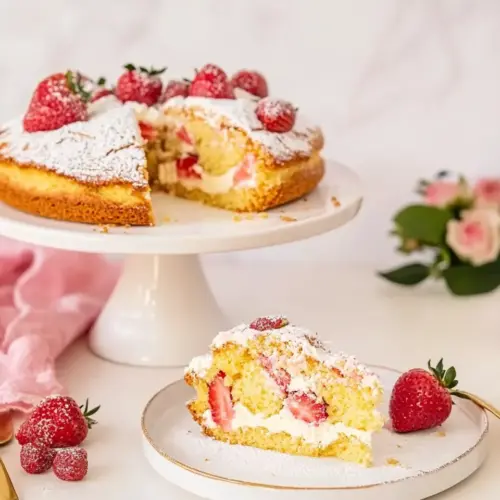
Italian Strawberry Cake
Italian Strawberry Cake is a tender, lightly sweet cake studded with juicy strawberries and brightened with lemon zest and juice. The texture is moist and delicate, with pockets of baked berry that give a pleasing contrast. This easy spring dessert is perfect for gatherings and weeknight treats, delivering bakery style results with minimal fuss.
Equipment
- Electric whisk
- 9 inch cake pan
- Sieve
- Spatula
Ingredients
- 300 g strawberries Adds bright, juicy sweetness and moisture to the cake; chop or halve depending on size and fold gently into batter or use as a topping for a fresh finish. Provides natural acidity that balances the cake’s richness and contributes color and texture when baked slightly. Can be macerated with a little sugar to enhance flavor and juiciness before incorporating or serving.
- 3 medium eggs Provides structure and lift by coagulating proteins when heated; beat eggs with sugar to create an aerated batter that yields a light crumb. Contributes richness and moisture while helping to bind dry and wet ingredients together for a cohesive cake. Use at room temperature for optimal emulsification with fats and liquids.
- 150 g sugar Sweetens and caramelizes during baking to add flavor depth and aid in browning; creaming with eggs helps dissolve granules and incorporate air. Balances the tartness of lemon and strawberries while contributing to the cake’s tender texture. Can be adjusted slightly for taste but influences overall crumb and moisture interaction.
- 65 ml lightly-flavoured extra-virgin olive oil, or 85 g/3 oz melted butter Moisturizes and enriches the crumb while promoting tenderness; use the oil for a lighter texture and buttery flavor if using melted butter for richness. A lightly-flavored extra-virgin olive oil adds subtle fruitiness compatible with strawberries, while butter adds a classic, creamy note. Incorporate gradually to ensure even distribution and proper emulsification with eggs and liquids.
- 1 teaspoon lemon juice Brightens flavor and enhances overall freshness by adding acidity; stir into batter to lift flavors and balance sweetness. Helps activate baking powder slightly and complements the strawberry’s natural tartness for a more vibrant taste. Use freshly squeezed lemon juice for the cleanest citrus aroma.
- 1 teaspoon lemon zest Concentrates citrus oils and aroma to intensify lemon character and fragrance throughout the cake; grate finely to avoid bitter pith. Balances sweetness and pairs especially well with strawberries, giving a fresh, aromatic lift to both batter and topping. Add at mixing stage to distribute flavor evenly.
- 180 g all-purpose flour Provides the primary structure and bulk as the cake’s flour; combines with liquids and eggs to form the batter’s matrix. All-purpose flour yields a tender yet stable crumb suitable for quick cakes when not overly mixed. Sift or whisk to remove lumps and ensure even incorporation with leavening agents.
- 1 tablespoon baking powder, (17 g / 1/2 oz) Creates lift and lightness by producing carbon dioxide bubbles during baking; measure accurately for predictable rise. A tablespoon provides reliable rising power for this scale of batter, contributing to an even, airy crumb. Mix with flour to ensure even distribution and avoid over-formation of pockets.
- 1 tablespoon powdered sugar Garnishes and adds a delicate, decorative sweetness when dusted over the finished cake; sprinkle lightly to accent appearance. Enhances perceived sweetness without altering texture significantly and provides a classic bakery finish. Use a fine sieve for an even, professional dusting.
Instructions
- Chop about 1/3 of the strawberries for the cake batter and set them aside. Slice or chop the remaining strawberries for the topping, and set them aside.: The moment you cut into the strawberries you will notice their floral, sweet aroma and a glossy sheen on the flesh, which tells you they are ripe. Reserve about a third finely chopped so the pieces disperse through the batter and give small jammy pockets, while keeping the larger slices for a decorative topping. A common mistake is chopping everything too small, which can release excess juice and make the batter soggy, so be intentional with sizes. If the berries seem overly soft, pat them gently with a paper towel to remove extra moisture; this reduces the risk of an overly wet crumb. Visually, the chopped pieces should look juicy but not falling apart, and you should be able to tell the difference between pieces meant for the batter and those meant to sit on top.
- Preheat oven to 180°C/360°F and adjust a baking rack onto the middle shelf. Grease and dust with flour (or line with parchment paper) a 9-inch cake pan and set it aside.: As the oven warms, you will begin to sense a faint warm smell from the preheating elements, and setting the rack in the middle ensures even heat circulation so the cake browns uniformly. Greasing the pan and dusting with flour creates a thin barrier between the batter and the pan, which helps release the cake cleanly; parchment is even more foolproof. A typical error is placing the pan too close to the top where the surface browns faster than the center cooks, so middle shelf is safest. Ensure the oven is fully up to temperature before placing the cake in; an oven thermometer can confirm this and avoid under or over baking.
- In a large bowl, place the eggs and sugar. Beat the mixture with an electric whisker until light and pale, then gently whisk in the olive oil, lemon juice and zest, and mix until all the ingredients are combined.: When you beat the eggs and sugar , you are creating an aerated base that will trap air and contribute to a tender, lifted crumb. Aim for a ribbon stage where the batter falls slowly from the whisk, pale and slightly thickened. Adding the olive oil or melted butter should be done gently so the emulsion stays intact; pour in a thin stream while whisking to integrate smoothly. You'll notice a glossy sheen and a citrus perfume from the lemon zest . Avoid rushing this step with very high speeds that can overheat the mixture, which may break the structure and cause poor rise in the oven.
- Place a sieve/strainer over the bowl. Add flour and baking powder, and sift into the cake batter. Whisk until just combined (do not overmix).: Sifting flour and baking powder into the batter helps prevent lumps and ensures even distribution. As you fold or whisk, watch for streaks of dry flour to disappear, and then stop; overmixing develops gluten, leading to a tougher texture. The ideal batter is uniform, slightly thick, and silky rather than stringy. A typical pitfall is vigorous mixing that makes the batter elastic; instead, use gentle strokes and prioritize a soft, cohesive mixture.
- Add the chopped strawberries to the batter and mix until just combined.: When you fold the chopped strawberries in, you will feel small resistance from the fruit as it disperses, and the batter will take on small pinkish swirls where juices mingle. Folding gently prevents breaking up the berries too much and avoids turning the whole batter pink and watery. If you notice too much liquid seeping out, fold briefly and then stop; overworking this stage can waterlog the cake. The visual cue to stop is when there are even pockets of berry without a complete color wash through the batter.
- Pour the cake batter into the prepared baking pan. Top the batter with the remaining strawberries.: As you transfer the batter, it should flow smoothly and settle into the pan without large air pockets. Use a spatula to level the surface lightly so the top bakes evenly. Arrange the reserved strawberry slices attractively on top, pressing them just a little so they stay put while baking. A mistake to avoid is piling fruit too densely in the center, which can create a wet spot and prevent even rising; space the slices so they sit evenly across the surface.
- Bake in the oven for approximately 40 minutes. During the last 10 minutes of baking time, cover the top of the cake with foil to prevent it from browning too much. To check if the cake is ready, insert a toothpick in the center, if it comes out clean, the cake is ready.: While baking, you will notice the aroma deepen into a warm, fruity perfume, and the edges will lightly color to golden. Covering with foil in the final minutes prevents the top from overbrowning while the center finishes cooking. The toothpick test is the most reliable: when it comes out clean or with a few moist crumbs, the internal structure is set. Overbaking dries the crumb, whereas underbaking leaves a gummy center, so watch the visual cues and check early if your oven runs hot.
- Remove the cake from the oven, allow to cool, then gently remove the cake from the pan.: Cooling allows the crumb to set so the cake keeps its shape when unmolded. You will feel the residual warmth and smell the concentrated fruit and lemon. Run a thin knife around the pan edge if needed, then invert carefully onto a rack or plate. If unmolding while too warm, the cake may break apart, so patience at this stage pays off. For sticky edges, a short cool and gentle coaxing with a spatula helps release the cake cleanly.
- Dust your Italian strawberry cake with powdered sugar and serve at room temperature. It's lovely topped with vanilla ice cream, fresh cream, or Greek yogurt.: The final dusting of powdered sugar adds a soft sweetness and lovely visual contrast to the ruby strawberries . Serving at room temperature brings out the best aroma and texture. A common misstep is adding the sugar too early if storing, which can melt into the fruit; dust just before serving. If you plan to add creamy toppings, serve them on the side so each person can personalize their portion.
Notes
- Swap oil and butter, use butter instead of olive oil if you prefer a richer, more traditional cake flavor; melt and cool the butter before adding to avoid cooking the eggs.
- Try a rustic flour mix, replace part of the all-purpose flour with whole wheat for a nuttier note, but keep proportions similar to prevent a heavy crumb.
- Chill very juicy strawberries, if your berries are especially ripe, briefly chill and pat them dry to reduce extra moisture that can wet the batter.
- Make smaller portions, pour batter into muffin tins for portable treats; reduce bake time and watch for a golden edge with a springy center to know when they are done.
- Freeze for later, wrap cooled slices tightly and freeze for up to three months; thaw in the fridge overnight and bring to room temperature before serving for the best texture.
- Add a citrus twist, increase the lemon zest slightly if you want a brighter profile, but avoid adding more liquid to keep the batter balanced.