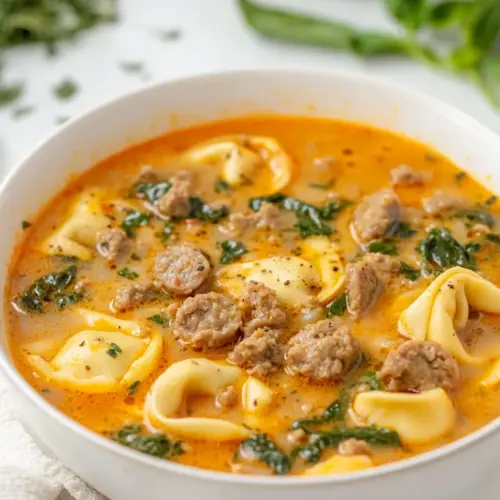
Italian Sausage Tortellini Soup
Italian Sausage Tortellini Soup is a creamy, savory bowl with tender cheese tortellini and hearty Italian sausage. Rich yet approachable, this easy weeknight dinner blends warm herbs, a silky broth, and quick cooking for maximal comfort in minimal time. Make it when you want a filling, crowd friendly meal that reheats beautifully and satisfies hungry diners with classic Italian flavors.
Equipment
- Large Pot
- Wooden Spoon
- Ladle
Ingredients
- 1 pound ground Italian sausage Brown and crumble to develop rich savory flavor and provide the hearty protein base for the soup, releasing rendered fat that seasons the broth. Cook thoroughly until no pink remains and drain excess fat if desired for a leaner soup. Season lightly during browning to layer flavors and combine with other aromatics later.
- 1/2 cup chopped onion Sauté finely to add subtle sweetness and aromatic depth, forming part of the savory base that balances the sausage. Cook until translucent to release natural sugars and help build a flavorful broth. Chop uniformly so pieces meld smoothly into the soup’s texture.
- 1 cup grated carrots Grate finely to contribute gentle sweetness, body, and a pleasant tender texture that complements the tortellini. Add with the onions to soften and integrate into the broth, enriching the soup without overpowering other flavors. Use freshly grated carrots to maximize natural sweetness and color.
- 1 teaspoon garlic powder Sprinkle to provide concentrated garlic flavor without adding moisture, enhancing the overall savory profile and complementing Italian seasoning. Distribute evenly so the garlic note is consistent throughout the soup. Adjust amount to taste, keeping in mind dried garlic is more potent than fresh.
- 1 tablespoon Italian seasoning Measure and add to introduce a balanced blend of Mediterranean herbs that lifts and harmonizes other savory elements in the soup. Stir in early to bloom the flavors in the hot oil or broth, ensuring the seasoning permeates the dish. Use the mix to echo classic Italian flavors.
- 64 ounces chicken broth Pour as the primary liquid to create a savory, comforting base that carries all flavors and hydrates the other ingredients. Choose low-sodium chicken broth if you want more control over salt levels and simmer gently to meld flavors. Use the stated amount to ensure sufficient broth for the tortellini and vegetables.
- 2 cups fresh baby spinach Fold in near the end of cooking to add fresh color, mild earthy flavor, and nutritional value, wilting down quickly into the hot broth. Toss in just until wilted to preserve tender texture and vibrant green appearance. Adjust quantity to taste for added leafy bulk.
- 10 ounce can condensed tomato soup Stir in to lend concentrated tomato flavor and a smoother, slightly sweet tomato body without adding extra liquid. Mix well into the broth to enrich color and round out the taste profile, complementing the cream cheese for a creamy tomato balance. Use the canned soup as a shortcut to thicken and unify the base.
- 8 ounces cream cheese, softened and cubed Cube and melt to create a luxuriously creamy texture and silky mouthfeel, enriching the broth and binding flavors together. Soften to room temperature before stirring in so it melts evenly into the hot soup without lumps. Add gradually while stirring until fully incorporated for a smooth finish.
- 20 ounces frozen cheese tortellini Add frozen to provide tender, cheesy dumplings that make the soup hearty and satisfying, absorbing and carrying the surrounding flavors. Cook directly in the simmering broth until heated through and tender, following package timings to avoid overcooking. Use to introduce a comforting pasta element without extra prep.
- Salt & pepper, to taste Season at the end to adjust and balance overall taste, enhancing savory notes and controlling saltiness to preference. Taste the soup before adding and add incrementally, remembering that broths and cheeses contribute significant salt. Grind fresh pepper for aromatic warmth and subtle heat.
Instructions
- Brown sausage: In a large pot over medium heat, add 1 pound Italian sausage and cook, breaking it up with a spoon, until lightly browned, about 4 minutes. Drain any excess fat if needed.: You will notice the pot begin to fill with a savory, meaty aroma as the Italian sausage heats. The sound will be an eager sizzle, and small beads of fat will appear around the edges, signaling Maillard reactions that deepen flavor. This step matters because those browned bits carry intense savory notes into the broth. A common mistake is overcrowding the pot which causes steaming instead of browning, so give the meat room and use medium heat. If you see the meat sticking heavily, loosen it by scraping with a spoon, and if there is too much fat, carefully drain a little to avoid an oily soup.
- Add in 1/2 cup onion, 1 cup grated carrots, Italian seasoning and garlic powder. Cook another 2 minutes.: As the onion and grated carrots hit the warm fat, you will smell a sweet, aromatic lift, and the vegetables will begin to soften, losing their raw edge. The powdered garlic and Italian seasoning bloom in the fat, releasing their scents. This technique matters because sautéing these aromatics releases sugars and oils that build complexity in the finished soup. Avoid cooking at excessively high heat, which can brown the onion too quickly and turn it bitter. Stir frequently so the vegetables soften evenly and the spices distribute fully.
- Stir in the broth, tomato soup and baby spinach. Bring to a simmer.: When you add the chicken broth and condensed tomato soup , the pot will hiss softly as the cold liquids meet the hot base, and the mixture will visually shift from greasy to a unified, simmering liquid. Add the baby spinach and watch it wilt almost immediately, turning a brighter green. This step is crucial because the liquids carry the browned flavors throughout the soup and the spinach provides a fresh counterpoint. A typical error is adding too much spinach at once; add in batches if needed so it wilts evenly and does not clump.
- Reduce heat to low, add the cubed cream cheese. Let sit a minute, then stir until completely melted and the broth turns creamy, about 2 minutes.: Lowering the heat prevents the dairy from splitting. As the cubed cream cheese warms, the broth will thicken and become glossy, and you may see little swirls where it dissolves, turning the soup creamy. The tactile cue is a velvety texture on your spoon and a mild tang in the aroma. This matters because gentle heat prevents curdling and ensures a silky finish. If the cream cheese seems resistant, give it a minute to soften in the residual heat before stirring and avoid boiling, which can separate the dairy.
- Simmer: Increase heat back to medium, stir in the frozen tortellini, and simmer 5 minutes, or until tender. Season with salt and pepper to taste.: Bringing the pot back to a gentle simmer, then adding the frozen cheese tortellini , you will hear a lower, steadier bubbling and see individual pasta pieces bobbing and swelling as they absorb liquid. The tortellini will become tender in a few minutes and begin to fill with hot, soft cheese. This step matters because the right simmer ensures even pasta cooking without falling apart. Avoid a vigorous boil which can agitate the delicate pasta and cause tearing; use a moderate simmer and stir occasionally to prevent sticking.
- Serve and ladle into bowls. Top with grated Parmesan and fresh basil.: After the tortellini are tender, taste the broth and adjust with salt & pepper . The flavors should feel balanced, with savory depth, creamy mouthfeel, and bright herb notes. Ladle into bowls where you can admire the steam rising, and if desired, finish with a garnish. A common mistake is over-salting early; always taste after the dairy and pasta are incorporated since they change perceived saltiness. Serve promptly so the tortellini maintains its texture and the soup is enjoyed at its peak temperature.
Notes
- Make it a slow cooker option: Brown the Italian sausage and soften the onion and carrots first, then add everything except the tortellini to the slow cooker for four to five hours on low, adding frozen tortellini at the end to cook through for an additional period; this yields deep melding of flavors, though the pasta should be added late to prevent disintegration.
- Swap broth with bouillon: If you are short on broth, dissolve about six teaspoons of a concentrated chicken bouillon in six cups of water as a fallback; this concentrates the savory notes but watch salt levels closely because bouillon can be salty.
- Prep ahead: Brown the Italian sausage and refrigerate the base up to two days; when ready, reheat, add the liquids, then finish with the cream cheese and tortellini; this saves time on busy nights while preserving flavor integrity.
- Adjust the herb intensity: If you prefer fresher herb tones, reduce the dried Italian seasoning and add chopped fresh basil at the end for a brighter finish; this changes the aromatic profile without altering technique.
- Control creaminess: For a silkier but lighter broth, use slightly less cream cheese and increase the amount of chicken broth by a cup to keep the texture smooth but less rich; taste as you go to keep the balance right.