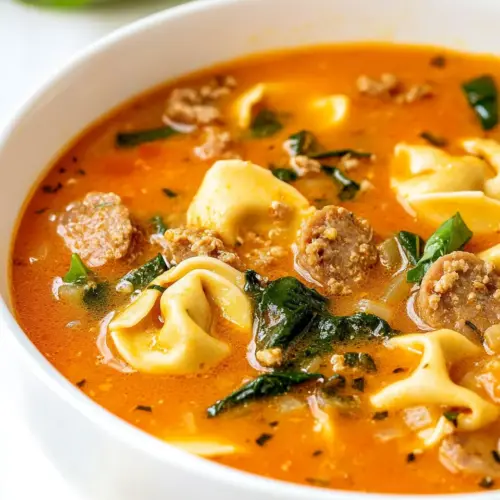
Italian Sausage Tortellini Soup
Italian Sausage Tortellini Soup is a creamy, savory bowl combining tender cheese tortellini, hearty Italian sausage, and a tomato scented broth. This easy weeknight dinner delivers rich umami from Parmesan and tomato paste, balanced by fresh basil for brightness. It’s comforting, quick to make, and perfect for meal prepping, promising satisfying leftovers and simple reheating for busy days.
Equipment
- 6 to 8 quart soup pot
- Wooden Spoon
Ingredients
- 2 tablespoons butter Melted in the pot at the start to create a flavorful cooking fat and help soften aromatics; butter adds a subtle richness and rounded mouthfeel to the soup. It helps carry fat-soluble flavors from garlic and onions, contributing to a silky broth texture.
- 1 pound ground Italian sausage mild or hot Browned and crumbled to provide the soup's primary savory protein and robust Italian seasoning base; ground Italian sausage contributes fat and spices that deepen the overall flavor. It releases flavorful juices during cooking that enrich the broth and complement the tortellini.
- 1 cup chopped onion Sautéed until translucent to add natural sweetness and aromatic depth; chopped onion builds the savory backbone of the soup. It balances acidity from tomatoes and enhances the complexity of the finished broth.
- 2 -3 cloves garlic minced Finely minced and lightly sautéed to give strong aromatic punch and savory warmth; garlic imparts a classic Italian flavor that complements the sausage and tomatoes. It should be cooked briefly to release fragrance without becoming bitter.
- 1 teaspoon dried thyme Sprinkled in for herbal warmth and subtle earthiness; dried thyme lends a gentle, slightly floral note that harmonizes with tomatoes and broth. It provides continuity throughout simmering and supports other savory herbs if used.
- 8 cups chicken broth Poured in as the liquid base to simmer ingredients and create the soup body; chicken broth supplies savory depth and saltiness. It carries the flavors of sausage, tomatoes, and aromatics while hydrating the tortellini during the final cooking stage.
- 15 ounce can diced tomatoes Added with its juices to contribute acidity, sweetness, and tomato texture; diced tomatoes brighten the soup and add a pleasing body. They balance richness from sausage and cheese, and their pieces provide a fresh tomato presence in each spoonful.
- 2 tablespoons tomato paste Stirred in concentrated to intensify tomato flavor and thicken the broth slightly; tomato paste deepens color and umami. It enhances the overall tomato profile without adding extra liquid, helping the soup achieve a cohesive taste.
- 16 -20 ounce package refrigerated cheese tortellini Cooked in the simmering broth to provide tender, cheesy dumplings that make the soup substantial; refrigerated cheese tortellini offers a soft, pillowy texture and rich filling. It absorbs some broth flavors while delivering a satisfying contrast to the savory liquid.
- 1/2 cup grated parmesan cheese Grated over or stirred into the soup to add salty, nutty umami and a creamy finish; parmesan cheese enhances savory complexity. It can be used as a finishing touch to boost richness and tie together the other flavors.
- 1/4 cup heavy cream optional Swirled in at the end optionally to add silky richness and mellow acidity; heavy cream softens the broth and creates a lusher mouthfeel. It can be omitted for a lighter soup but adds comfort and rounds sharp edges when included.
- 1 cup fresh basil leaves Torn or chopped and added at the end to infuse fresh, aromatic herbaceousness and bright flavor; fresh basil lifts the soup with peppery-sweet notes. It provides a final aromatic flourish that complements tomato and cheese components.
Instructions
- Set a large 6-8 quart soup pot over medium heat. Melt the butter in the pot. Then add the ground Italian sausage, onions, and garlic. Use a wooden spoon to break the ground sausage into small pieces. Cook for 5 to 10 minutes until the onions are soft and the sausage is fully browned.: The moment the butter melts you will smell its nutty aroma, which signals a rich starting point. As it foams gently, tilt the pot and swirl to coat the bottom which ensures even browning for the next additions. This step matters because the butter carries flavor and helps the onion and sausage develop color rather than steam. If the butter starts to darken too quickly, lower the heat to prevent burning, which would add a bitter edge. A common mistake is rushing with too high heat, so keep it steady and patient.
- Add the dried thyme, chicken broth, diced tomatoes, and tomato paste. Cover the pot and bring to a boil. Then lower the heat, if needed, and simmer for 10 minutes.: As the sausage sizzles you will hear a lively popping sound as the fat renders and the meat browns, releasing savory juices that coat the pot. The translucent onion and fragrant garlic will soften and perfume the kitchen. Breaking the sausage into small pieces ensures even distribution so every spoonful has meaty bites. If you skip breaking it up, you risk large clumps that cook unevenly. Watch for any burnt bits on the bottom, and deglaze gently with a splash of broth if needed to lift flavor.
- Stir in the tortellini and Parmesan cheese. Simmer for about 5 minutes, until the tortellini rises to the top of the pot.: You should see a golden crust on some pieces of sausage and the onion should be soft to the touch, almost melting into the fat. These browning reactions create deep savory notes called Maillard flavors, which give the soup its backbone. Stir occasionally to prevent sticking, and ensure the garlic does not overcook, because burnt garlic will make the broth bitter. If the mixture looks too dry, add a splash of broth to maintain moisture.
- Then turn off the heat and stir in heavy cream and basil leaves. Taste, then salt and pepper if needed.: When the herbs hit the warm pot they release their oils and a brief lift of perfume rises up. Pouring in the chicken broth will loosen browned bits, unlocking concentrated flavor from the bottom of the pot, while the diced tomatoes and tomato paste bring acidity and color. Stir well so the paste dissolves into the liquid for an even taste. The reason this mixing matters is it forms a cohesive broth, rather than separate components. A mistake here is dumping everything at once without stirring, which can leave paste clumps and uneven seasoning.
- Cover the pot and bring to a boil. Then lower the heat, if needed, and simmer for 10 minutes.: As the pot approaches a boil you will see steady bubbling and steam rising, and the aromas will intensify. Lowering to a gentle simmer lets flavors marry without over reducing the liquid too quickly. Simmering for the recommended time tenderizes components and melds the tomato with the broth. If you simmer too vigorously you risk evaporating too much liquid and concentrating salt, so keep it gentle. One troubleshooting tip is to skim any excess foam for a clearer broth.
- Stir in the tortellini and Parmesan cheese.: When you add the tortellini , the soup changes visually as the pasta softens and absorbs some broth. The grated Parmesan cheese melts into the liquid, slightly thickening it and adding savory richness. I stir gently to prevent tearing the delicate pasta and to distribute cheese evenly. Timing is crucial here because overcooked tortellini becomes mushy, so watch for them to rise to the surface. A common mistake is adding too many pieces at once which can drop the pot temperature too far, making the cooking uneven.
- Simmer for about 5 minutes, until the tortellini rises to the top of the pot.: As the tortellini cooks you will see them swell and float when they are done, a perfect visual cue. The broth will take on a silkier texture as the pasta releases a little of its filling, and the kitchen will smell particularly inviting. This simmer is brief but important to avoid over softening. If the liquid looks too thin, a brief uncovered simmer will reduce it, but be careful not to dry out the soup. Avoid stirring vigorously which can split the pasta pockets.
- Then turn off the heat and stir in heavy cream and basil leaves.: With the heat off, adding the optional heavy cream keeps it from curdling and produces a velvety finish, while fresh basil wilts gently into the soup, releasing a sweet, herbal perfume. The residual heat is enough to incorporate these ingredients without breaking them down. This technique matters to preserve the bright green of the basil and the smoothness of the cream. A common error is adding cream while the pot is aggressively boiling, which can cause separation, so always remove from heat first.
- Taste, then salt and pepper if needed.: The final taste test is where you calibrate balance. A quick sip will tell you if the soup needs more seasoning, a squeeze of brightness, or a touch more cream. Salt enhances all other flavors, so add sparingly and taste in between. If you oversalt, a small splash more broth can correct it. Avoid heavy handed seasoning; slow adjustments yield a well balanced bowl.
Notes
- Pick your sausage wisely. Choosing mild versus hot Italian sausage changes the soup’s personality, so match it to your audience and appetite.
- Don’t skip browning. Properly browning the sausage and onion creates depth through Maillard reactions, which enrich the broth significantly.
- Stir the tomato paste into fat first. Blooming the tomato paste in the hot fat before adding liquid deepens its flavor and removes any raw edge.
- Reserve pasta water idea. If you’re worried about thinning, reserve a small cup of hot broth before adding the tortellini to adjust consistency later.
- Add herbs at the end. Fresh basil is best stirred in off heat to preserve color and aroma, while dried herbs should be added earlier for full infusion.
- Use quality Parmesan. Freshly grated Parmesan cheese melts more smoothly than pre grated varieties and brightens the soup’s umami.