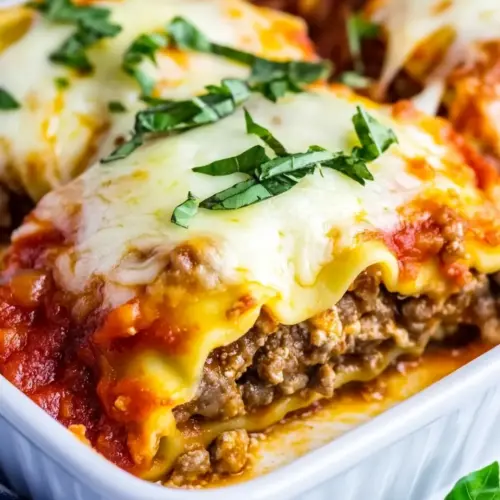
Italian Sausage Lasagna Roll Ups
Italian Sausage Lasagna Roll Ups bring creamy cheese, savory browned Italian sausage, and bubbling mozzarella cheese together into individual, elegant rolls. This easy weeknight dinner offers crispy edges, saucy interiors, and crowd pleasing flavor that works for family meals and casual entertaining. Make ahead friendly and comforting, it is a perfect dish to serve when you want something hearty and shareable.
Equipment
- Pasta Pot
- 9x13-inch Baking Dish
Ingredients
- 9 lasagna noodles Boil until al dente and provide the flat pasta surface needed to roll fillings; trim edges if necessary to fit baking dish and prevent tearing during rolling.
- 1 pounds sweet or Hot Italian sausage, removed from casings if in casings Brown and crumble to build rich, savory flavor and provide meaty texture throughout the filling; remove casings if present for even cooking and better integration with other ingredients.
- 1 medium onion, diced Sauté until translucent to add sweet, aromatic depth and a subtle crunch contrast to the filling; dice uniformly for even distribution and balanced bites.
- 3 garlic cloves, minced Mince finely and cook briefly to release pungent, fragrant oils that enhance the sauce and meat; avoid burning to prevent bitterness and maintain a bright garlic note.
- 1 (16-ounce) container cottage cheese, or ricotta cheese Creamy binder that adds moisture and a tangy, soft texture to the filling; spoon or beat smooth to ensure even spreading inside each noodle before rolling.
- 2 large eggs Whisk and fold into the cheese mixture to help bind the filling, add richness, and give a slightly firmer texture after baking; beat until evenly incorporated for consistent results.
- 1 teaspoon dried oregano Sprinkle dried herb flavor through the filling to lend Italian seasoning character and subtle earthy notes; crush lightly between fingers to wake the oils before mixing.
- 1/2 teaspoon crushed red pepper flakes Add a controlled spicy kick to the filling or sauce to elevate overall flavor complexity; adjust the amount to balance heat with other savory components.
- 1/2 teaspoon black pepper Season to taste to provide a mild heat and enhance savory flavors throughout the filling and sauce; freshly ground varieties give brighter pepper flavor.
- 1/4 teaspoon salt Add a touch of salt to amplify and balance flavors in the filling and sauce; use sparingly if canned sauce or cheeses are already salty.
- 32 ounces pasta sauce, I use Rao's roasted garlic Pour over rolled noodles to keep them moist while baking and to add concentrated tomato and garlic flavors; use a marinara or roasted garlic sauce for depth.
- 3 cups shredded mozzarella cheese Layer shredded cheese on top and inside rolls to create gooey, melty texture and a mild milky flavor; distribute evenly for uniform browning and stretchiness.
- 1/2 cup freshly grated or finely shredded Parmesan cheese Sprinkle finely for salty, nutty umami and to enhance overall savory profile; grate freshly for best melting and bright flavor contribution.
- 1 teaspoon chopped fresh parsley Garnish chopped to add a fresh, slightly peppery herbal finish and brighten the rich, baked components; stir into filling or scatter on top before serving.
Instructions
- Cook lasagna noodles in a large pot of salted water until al dente. Drain and spread out on parchment paper so they don't stick together.: When the pot reaches a lively boil, you will hear a steady rolling sound, and the noodles will soften in about the suggested time. The salted water seasons the pasta from within, which matters for the final profile. Drain and lay each noodle apart on parchment, feeling for a slight resistance in the center when you bite it, that al dente texture means the noodle will hold its form during rolling. A common mistake is overcooking, which yields fragile noodles that tear while rolling, so test one a minute earlier than the package time. Visually, the noodles should be uniformly cooked with no raw, opaque streaks, and they should not stick together when separated on the paper.
- While noodles are cooking, brown and crumble Italian sausage. Add onion and cook 2 minutes. Add garlic and cook 1 more minute. Let cool.: Browning the Italian sausage creates those small, caramelized bits that carry deep savory flavor and a pleasant toasted aroma. As you crumble the meat in the hot pan, you will hear a confident sizzle and smell a rich meaty perfume, which tells you the Maillard reaction is happening. Add the diced onion and cook until it becomes translucent and slightly sweet, about the indicated time, then add the minced garlic for a brief minute until fragrant, being careful not to burn it or it will taste bitter. Let the mixture cool so it doesn't scramble the eggs when mixed into the cheese; pressing warm meat into the dairy will alter texture. One trap is adding garlic too early or at too high heat, which leads to darkened, bitter bits, so add it later and watch closely.
- Preheat oven to 350 degrees and spray a 9×13-inch baking dish with cooking spray.: A properly preheated oven ensures even baking and predictable timings, while spraying the dish prevents sticking and helps serve clean slices. You will notice a faint warmth in the air as the oven reaches temperature and a steady glow from the heating elements if your oven has a visible interior. Spraying the pan is a small step that prevents the bottom rolls from adhering and tearing when you serve. Avoid skipping this or using too little spray because the sauce can glue the rolls down and make plating messy.
- In a large bowl, stir together cottage cheese and eggs until eggs are mixed in. Mix in oregano, red pepper flakes, pepper, and salt.: As you stir, the mixture will become creamier and slightly glossy, the eggs emulsifying with the cottage cheese to form a cohesive binder. The dried oregano and crushed red pepper add flecks of color and pockets of flavor; blend them thoroughly so each bite has balance. Proper mixing also prevents pockets of raw egg when baking. A pitfall here is under-mixing, which can leave streaks of egg white or uneven seasoning, so stir until uniform and season carefully because the cheeses and sausage already contribute salt.
- Add sausage mixture, half the mozzarella and all of the Parmesan cheese and stir to mix.: Folding in the browned sausage, melted in spots, along with shredded mozzarella cheese and grated Parmesan cheese , changes the texture to a hearty, cohesive filling. You should see flecks of meat and cheese throughout, and the aroma will deepen into a comforting, layered scent. Stir gently to keep some structure while ensuring even distribution. Be mindful of temperature; if the sausage is too hot it can loosen the cheese excessively, making the mixture runny. One mistake is adding cold cheese to a hot mixture which can create clumps, so allow the sausage to cool slightly.
- Spread sausage mixture on lasagna noodles, dividing it evenly. Roll each noodle up.: As you spread, feel the creamy resistance of the filling against your spatula, and aim for an even layer to promote uniform baking and slicing. Rolling should be done gently but firmly so the noodle encloses the filling, and you will notice the roll holding its shape with a satisfying tactile firmness. If the filling is too wet it will ooze during rolling, so keep a light hand and wipe away excess to avoid messy assembly. A frequent error is overfilling, which makes rolling unwieldy and causes the rolls to burst in the oven; portioning carefully keeps each roll tidy.
- Spread about 1/2 cup of pasta sauce in the bottom of the prepared baking dish. Place lasagna rolls in baking dish, seam side down.: The sauce on the bottom acts as a cushion and prevents sticking while adding flavor to the underside of each roll. As you nestle the rolls in the dish, keep them snug but not overcrowded so heat can circulate and sauce can bubble between them. The seam side down helps the roll keep its form, and you will hear quiet settling sounds as each roll touches the dish. Avoid piling them too tightly, or they will steam rather than bake, resulting in softer edges and less attractive browning.
- Pour remaining sauce over lasagna rolls. Sprinkle with remaining mozzarella cheese.: Pouring sauce evenly ensures every roll gets moisture and a glossy finish, and sprinkling the reserved mozzarella cheese sets up that irresistible golden topping. Look for even coverage, the sauce gliding over the rolls and collecting slightly in the seams. The cheese will begin to meld with the sauce as it heats, creating pockets of creamy pull. A misstep is adding sauce unevenly which leads to dry spots or overloaded areas that bubble too vigorously, so distribute carefully.
- Spray the underside of a piece of foil with cooking spray and place it on top of baking dish. Bake 15 minutes. Uncover and bake another 15 minutes.: Tenting the dish with foil traps steam so the filling heats through without the cheese burning, and the spray prevents the melted cheese from sticking to the foil. After the initial covered bake, uncovering lets the top bronzed and the sauce reduce slightly, producing a bubbly, golden finish. You will hear soft bubbling from the sauce and see the edges taking on color when ready. A common mistake is skipping the covered bake, which can dry out the filling or scorch the cheese, so be patient and follow the two stage approach.
- Sprinkle with parsley. Let sit 10 minutes before serving.: After baking, the aroma will be rich and inviting, but the ten minute rest is critical for the sauce to settle and for cleaner slices. The fresh parsley adds a bright green contrast and a mild herbal lift. As the dish rests, you will feel the surface cool slightly and the juices thicken, which makes serving easier. Cutting too soon will cause the rolls to lose shape and the sauce to run, so resist the urge to slice immediately.
Notes
- Swap the cheese style Use ricotta cheese instead of cottage cheese if you prefer a silkier, denser filling that slices with a creamier mouthfeel and a milder tang.
- Adjust the heat Reduce or omit the crushed red pepper flakes if your Italian sausage is already spicy, or increase them slightly if you want a livelier kick that complements the richness.
- Make it ahead Assemble rolls up to a day in advance, cover tightly, and refrigerate. Bring to room temperature before baking for more even heating and consistent texture.
- Cheese on top For a browned, bubbly crust, add the final layer of shredded mozzarella cheese during the last five to ten minutes of baking instead of at the start, which helps avoid excessive browning.
- Use a robust sauce Choose a thick, flavorful pasta sauce like a roasted garlic variety so it clings to the rolls and concentrates flavor rather than thinning too much during baking.