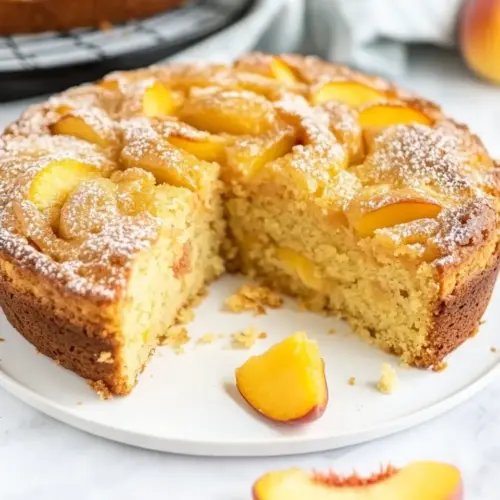
Italian Peach Cake
Italian Peach Cake is a tender, fruity summer dessert with juicy peaches, a moist crumb from olive oil, and bright notes of lemon zest. This easy, rustic cake is perfect for warm afternoons or casual gatherings, offering a light slice that pairs beautifully with tea or whipped cream. Try it for an effortless, crowd pleasing treat that highlights ripe fruit at its best.
Equipment
- 8 inch cake pan
- Electric whisk
- Mixing Bowl
Ingredients
- 3 large free-range eggs Whisk vigorously to incorporate air and provide structure and richness in the cake batter; eggs also help bind the dry and wet ingredients together. Use large free-range eggs for deeper flavor and better texture, and bring to room temperature for more even mixing.
- 140 g sugar Sweeten evenly throughout the cake batter and assist in browning during baking; sugar also tenderizes by inhibiting gluten formation. Measure 140 g precisely for balanced sweetness and proper crumb development.
- 120 ml lightly-flavoured extra-virgin olive oil Contribute moistness and a subtle fruity olive flavor that keeps the cake tender; lightly-flavoured extra-virgin olive oil can withstand gentle heating without overpowering the peaches. Pour 120 ml gradually while mixing to create an emulsion with the eggs and sugar for a uniform batter.
- 1 teaspoon vanilla extract Enhance overall aroma and add a warm, familiar vanilla note that complements the peaches; vanilla extract deepens perceived sweetness without adding sugar. Use one teaspoon for a gentle yet noticeable flavor presence in the finished cake.
- 1 teaspoon lemon zest Brighten flavor with citrus oils and add a zesty lift that balances the cake's sweetness; lemon zest also complements stone fruit nuances. Zest one teaspoon finely to distribute fragrant citrus compounds evenly through the batter.
- 200 g sifted all-purpose flour Provide the primary structure and bulk of the cake, supplying gluten to form the crumb when mixed with liquids; sifted all-purpose flour ensures lightness and removes lumps. Measure 200 g and sift to incorporate air and achieve a tender, uniform texture.
- 1 tablespoon baking powder Leaven the cake by producing carbon dioxide when heated, creating a lighter, airier crumb; baking powder also helps balance acidity from the peaches. Use one tablespoon and ensure it is fresh for reliable rising throughout baking.
- 600 g peaches, about 3-4 peaches, peeled and pitted Offer juicy fruit pockets, natural sweetness, and texture contrast that define the cake's character; peeled and pitted peaches add moisture and seasonal flavor. Use 600 g (about 3–4 peaches) and slice or chop evenly to distribute fruit through the batter without sinking.
- 1 tablespoon apricot jam Provide a glossy finish and intensified fruit flavor when warmed and brushed over the cake surface; apricot jam also seals in moisture and adds sweetness. Warm one tablespoon slightly to make it brushable for glazing pooled juices or the top of the cake.
- 1 tablespoon confectioner sugar Dust lightly to add a delicate, sweet finishing touch and a visually appealing contrast on the cake's surface; confectioner sugar also melts slightly into warm glaze for a subtle sheen. Sprinkle one tablespoon just before serving for an elegant presentation.
Instructions
- Preheat oven to 180°C/360°F and adjust a baking rack onto the middle shelf. Grease and dust with flour (or line with parchment paper) an 8-inch cake pan and set it aside.: When you step into the kitchen and set the oven to 180°C or 360°F , you will notice the air in the oven gradually warming, a steady promise that the environment will be even for baking. Placing the rack in the middle ensures balanced heat circulation, allowing the cake to rise evenly and brown gently on top. If the oven is not fully preheated the cake can take longer to set, leading to an uneven texture. A common issue is opening the oven too early, which can cause a collapse in the center, so resist peeking until the final stages.
- In a large bowl, place the eggs and sugar. Beat the mixture with an electric whisker until light and pale, then gently whisk in the olive oil, followed by the vanilla, lemon zest, and mix until all the ingredients are combined.: Rubbing the pan with a thin coat of fat and dusting with flour , or lining with parchment, creates a nonstick surface so the cake slips out smoothly. You will notice the pan is easier to work with when the edges release cleanly; this keeps the sliced presentation tidy and prevents tearing. Skipping this step can lead to parts of the cake sticking and tearing, which is frustrating when you want perfect slices. If you worry about sticking, use both parchment and grease for insurance.
- Slowly incorporate the flour into the batter, mixing until just combined. Sprinkle the baking powder over the batter and mix until just combined (do not overmix).: The moment you combine eggs with sugar and begin whisking, the mixture will thicken and turn pale, becoming glossy as it traps air. This aeration is essential to create lift without relying on heavy fats. You'll hear a faint increased resistance in the whisk as the foam builds and you can see ribbons forming when the whisk is lifted. Under-beating will yield a denser crumb, while over-beating may break the foam down, so aim for a light and pale texture.
- Fold into the batter 2 peaches cut into tiny chunks, and mix until just combined.: As you drizzle in the olive oil while whisking, the batter will re-emulsify and become silky, taking on a sheen. Adding vanilla and lemon zest at this stage releases aromatic oils, filling the kitchen with a bright scent that hints at the finished cake. Gentle folding keeps the aeration intact. If you add the oil too quickly or stir aggressively, the batter can break and become greasy; go slowly for a smooth, integrated texture.
- Pour the peach cake batter into the prepared baking pan. Top the batter with the remaining 2 peaches cut into thin slices.: When you add the flour , sprinkle it in and fold with care to avoid developing gluten, which would make the cake tough. The batter should look homogenous with no streaks of dry flour , but still slightly billowy. Overmixing at this point is the most common misstep, leading to a dense structure; stop folding once it appears uniform to preserve a tender crumb.
- Bake in the oven for approximately 30-40 minutes. To check if the cake is ready, insert a toothpick in the middle, if it comes out clean, the cake is ready.: Dusting in the baking powder and folding briefly activates its lift without giving it time to dissipate before baking. You might see tiny air pockets forming as the batter breathes, which will expand in the oven. Using too much force while mixing can knock out those pockets, so fold gently. If you notice clumps of baking powder , sift them in to avoid bitter tangs and uneven rising.
- Remove the peach cake from the oven, and lightly brush it with apricot jam. Allow to cool, then gently remove the cake from the pan.: The diced peaches will introduce moist pockets that perfume the surrounding crumb while lending texture. As you fold them in, you will see the batter studded with soft fruit, and the aroma will brighten. Be cautious not to overmix, which could bruise the fruit and release excess juice that makes the batter too wet. If the pieces are too large they will sink, so uniform small chunks are best.
- Dust the peach cake all over with confectioner sugar and serve at room temperature.: When you transfer the batter to the pan, it should pour slowly, settling into an even surface. Tap the pan gently on the counter to release any trapped air bubbles and to level the top. This helps the cake bake uniformly and prevents large holes. A common error is filling the pan unevenly, which can cause lopsided rising; take a moment to smooth the surface.
- Top the batter with the remaining 2 peaches cut into thin slices: Arranging thin peach slices on top creates a pretty, caramelized crown as the cake bakes. The slices will slightly sink and form a glossy layer when brushed with jam later. Aim for even spacing so each slice gets a bit of caramelization. If slices are too thick they may not soften fully, so keep them thin for the best texture.
- Bake in the oven for approximately 30 to 40 minutes: As the cake bakes you will notice the aroma intensify and the top turn a gentle golden color, with the peach edges caramelizing. A toothpick inserted into the center should come out clean when the cake is ready. If your oven runs hot, start checking closer to 30 minutes to avoid overbrowning. Opening the oven early can cause the cake to sink, so trust the visual cues and the toothpick test rather than strict timing.
- Remove the peach cake from the oven and lightly brush it with apricot jam: Brushing with warm apricot jam adds shine and concentrated fruit flavor while the cake's surface is still warm enough to absorb the glaze. The jam will melt slightly and create a soft, glossy finish. If you apply the jam when the cake is cold, it will not spread evenly; warm the jam for easier brushing. Overdoing the jam can make the top sticky rather than delicate.
- Allow to cool then gently remove the cake from the pan: Cooling lets the crumb set so slices hold their shape. You will feel a subtle firmness when the cake is ready to unmold. Removing it too soon risks breakage, while leaving it too long in the pan can result in slightly firmer edges. Use parchment overhangs if you want a fail safe for lifting the cake out without stress.
- Dust the peach cake all over with confectioner sugar and serve at room temperature: A light sift of confectioner sugar adds a soft, snowy finish and a touch of extra sweetness. Serving at room temperature allows the flavors and textures to be fully appreciated, with the crumb tender and the peaches juicy. Dust just before serving for the best presentation, as sugar can dissolve if applied too early.
Notes
- Weigh ingredients for accuracy, especially the flour and sugar. Baking scales remove guesswork, producing consistent texture and preventing dry or gummy results.
- Room temperature eggs incorporate more smoothly into the batter, helping the mixture emulsify and trap air for lift. Cold eggs can lead to a lumpy batter and uneven rise.
- Choose a light extra virgin olive oil so the oil enhances rather than overpowers the fruit. If your oil is very robust, it can dominate the delicate peach aroma.
- Peel and pit peaches carefully to preserve texture; a quick blanch and ice bath makes peeling simple. Removing the skin prevents chewy bits and keeps the cake smooth.
- Brush with warm apricot jam for a glossy finish and intensified fruit flavor. Warm jam spreads evenly and seeps into the peach edges, marrying flavors beautifully.