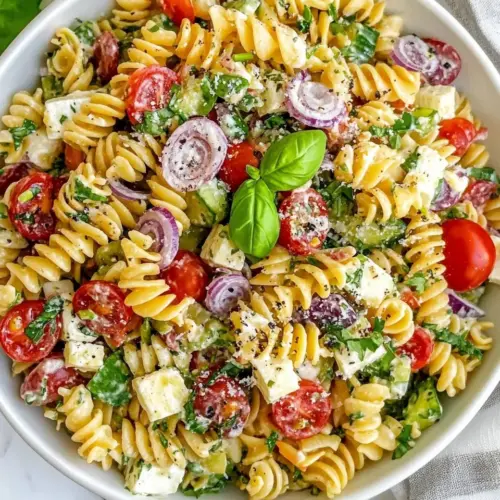
Italian Pasta Salad
Italian Pasta Salad is a bright and satisfying bowl of al dente rotini tossed with juicy tomatoes, crisp cucumber, creamy mozzarella, salty salami, and briny olives, finished with an herby Italian dressing. This easy make ahead salad shines for summer gatherings and quick weeknight sides, offering a pleasing mix of textures and bold Mediterranean flavors you will want to make again.
Equipment
- Large Pot
- Large Bowl
- Colander
Ingredients
- 16 oz rotini pasta Cooked until al dente, provides the hearty base and texture that holds the salad together while absorbing dressing flavors.
- 1 pint cherry (or grape) tomatoes, sliced Sliced and juicy, adds bright acidity and a burst of sweetness that balances richer components in each bite.
- 1 english cucumber, chopped Chopped and crisp, contributes refreshing coolness and a watery crunch that lightens the overall salad mouthfeel.
- 1/2 red onion, thinly sliced Thinly sliced for bite-size pieces, lends a sharp, slightly pungent bite that enhances savory and tangy elements.
- 8 oz fresh mozzarella balls, I used mozzarella pearls (or Bocconcini) Soft and milky, offers creamy, tender pockets of cheese that mellow sharp flavors and add a rich, satisfying contrast.
- 4 oz salami, sliced Sliced into bite-sized pieces, brings savory, spiced, cured-meat depth and a salty umami element to the salad.
- 3/4 cup kalamata olives, sliced Sliced and briny, supplies a pronounced salty, fruity tang that cuts through richness and adds Mediterranean character.
- 3/4 cup pepperoncini Whole or sliced, delivers a mild heat and tangy zip with a crunchy, pickled texture that brightens the dish.
- 1/2 cup fresh parsley and fresh basil, chopped Chopped finely, provides fresh herbal aroma and a bright, green flavor that lifts and ties the ingredients together.
- Italian salad dressing Used as the finishing flavor, dresses and seasons the salad by adding acidity, oil, herbs, and overall cohesion.
Instructions
- Bring a large pot of water to a boil, sprinkle in some salt, and cook the pasta according to the package directions until al dente.: The kitchen fills with a warm, starchy steam as the water comes to a rolling boil, and the addition of salt seasons the rotini pasta from the inside, which matters because it prevents blandness once the dressing is tossed in. You will hear the water change pitch as it gets hotter, and once the pasta is added you should stir gently to prevent sticking. For visual cues, look for the pasta surface to lose its raw sheen and take on a slightly swollen look, yet remain firm when bitten. The why behind this is simple, al dente texture keeps the pasta from collapsing when chilled and preserves bite contrast with vegetables. A common mistake is overcooking, which makes the pasta absorb too much dressing and become mushy; to avoid that, set a timer for the lower end of the package range and test early. When draining, reserve a small cup of the starchy cooking water if you need to loosen the dressing later.
- Mix together the cooked pasta, chopped veggies, mozzarella, salami, pepperoncini, olives and fresh herbs in a large bowl and drizzle the whole thing with the Italian dressing. Give it a good toss, season with additional salt and pepper, as needed.: As you combine the components, notice the variety of textures coming together, from the pillowy mozzarella to the briny snap of kalamata olives . Toss gently so the dressing clings to the pasta and ingredients rather than pooling at the bottom; this helps every forkful taste balanced. The scent will shift toward herb and vinegar, with little hits of salami fat that boost savory notes. This step matters because even coating prevents pockets of dry pasta and ensures the salad is enjoyable across the entire bowl. A typical error is tossing too vigorously which can bruise delicate ingredients like basil ; fold gently instead, and if the salad seems dry, add a tablespoon of reserved pasta water to help the dressing adhere.
- You can either serve this immediately or marinate for a few hours before serving. To marinate, cover the pasta salad and place it in the fridge allowing the flavors to marinate for a few hours or even overnight. I even like to reserve a little extra dressing to toss right before serving since the pasta really soaks up a lot of it.: After an initial toss, pause and taste a small spoonful, paying attention to acidity, salt balance, and herb presence. The sense of smell will guide you here, as salt enhances aroma and pepper introduces a background warmth. Seasoning at this stage lets you correct for stronger elements like salted salami or brined pepperoncini that may already push the salad toward saltiness. The reason this matters is that once refrigerated, flavors can mute slightly, so you want a confident but measured seasoning. Avoid oversalting; if you do add too much, a squeeze of fresh lemon juice or extra herbs can help balance it.
- You can either serve this immediately or marinate for a few hours before serving: Serving right away will showcase bright, fresh vegetable textures and the immediate contrast between warm pasta and cool add ins, while marinating gives the dressing time to soften edges and marry flavors. If you choose to marinate, cover the bowl and allow the salad to rest in the fridge; you will notice the aroma deepen and the pasta become more infused with dressing. The reason for resting is flavor integration, but be mindful that prolonged sitting will further soften veggies, so plan based on desired texture. One mistake is leaving it unrefrigerated for too long; always chill if marinating beyond an hour to keep ingredients safe and crisp.
- To marinate, cover the pasta salad and place it in the fridge allowing the flavors to marinate for a few hours or even overnight: When refrigerated, the salad quiets into a composed state where the Italian dressing gently penetrates the pasta and melds with salami oils and herb oils; the scent becomes rounder and less sharp. Overnight rest often produces a more cohesive taste profile that many people prefer at picnics or potlucks. The visual will shift as juices settle and small pools of dressing may appear, so give it a careful stir before serving to reincorporate. The important why here is patience improves depth, but the trade off is softened vegetables. Avoid leaving it for days; aim for up to twenty four hours for optimal texture and safety.
- I even like to reserve a little extra dressing to toss right before serving since the pasta really soaks up a lot of it: A fresh toss with reserved dressing brightens the salad and revives the glide you lose during refrigeration, producing a lively mouthfeel and renewed shine on the mozzarella and herbs. Before serving, add a small amount at a time, mixing gently and checking flavor, because you can always add more but cannot remove it. The sensory impact is immediate the dressing brings forward aromatics and adds pleasant slickness, making each bite more sumptuous. Do not skip this if the salad has been sitting, as it prevents a dry experience. A common slip is adding too much all at once, so drizzle and taste as you go.
Notes
- Boost the herb profile by increasing the ratio of parsley to basil for a brighter, greener finish that complements the briny olives.
- Adjust the tang by mixing half Italian dressing with a touch of fresh lemon juice for a livelier acidic punch without changing the oil content.
- Make it more pepper forward by adding a few more sliced pepperoncini if you prefer a zesty, piquant bite that cuts through creamy mozzarella.
- Swap salami texture by finely dicing the salami so it distributes in every forkful, useful if you want less dominant meat pockets.
- Layer marinating times by dressing half the salad immediately and reserving the rest undressed to compare fresh versus melded textures when serving.
- Chill strategy try serving part of the salad slightly chilled and part at room temperature to offer guests two textural experiences in the same dish.