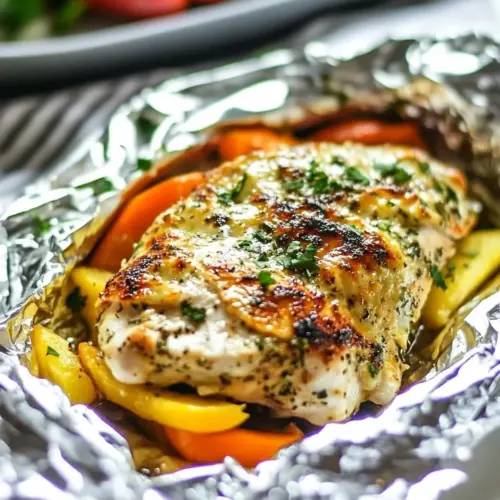
Italian Mozzarella Chicken Foil Packets
Italian Mozzarella Chicken Foil Packets are an easy weeknight dinner with juicy chicken, tender vegetables, and gooey mozzarella. Bright lemon and a savory herb marinade make each bite flavorful and satisfying, whether baked or grilled. This one pan style meal is perfect for busy evenings and casual gatherings, offering minimal cleanup and maximum comfort. Make it for a quick family meal that feels special.
Equipment
- Aluminum Foil
- Mixing Bowl
- Microwave-safe Bowl
- Baking Sheet
- Grill
- Instant read thermometer
Ingredients
- 28 oz . chicken breasts sliced horizontal to create 4 fillets OR 4 4 oz. chicken breasts pounded to an even thickness Sliced thinly to create even fillets that cook quickly and evenly in the foil packets; provides the primary protein and holds flavors from the marinade and seasonings.
- 1/4 cup olive oil Used to create the base of the marinade and add healthy fat; helps coat the chicken and vegetables for even browning and moisture retention while cooking in foil.
- 2 tablespoons lemon juice Added to brighten flavors and tenderize the chicken slightly; contributes a tangy note that balances the oil and complements herbs.
- 1 tablespoon Dijon mustard Whisked into the marinade for a sharp, savory depth and slight emulsifying effect; helps the marinade cling to chicken and vegetables.
- 1 tablespoon balsamic vinegar Included to add a subtle sweet-acid complexity to the marinade; enhances the umami and balances lemon and oil for a more rounded flavor.
- 3 -4 garlic cloves, minced Minced finely to infuse the packets with pungent, aromatic heat; releases savory compounds that permeate chicken and vegetables during cooking.
- 1 tsp EACH dried basil, dried parsley, onion powder, salt, dried oregano Combined as a dried herb and seasoning blend to deliver Mediterranean flavor and savory base notes; provides consistent seasoning throughout the packets.
- 1/2 teaspoon paprika Sprinkled sparingly for a warm, smoky undertone that complements the herbs and deepens the overall flavor profile of the dish.
- 1/4 tsp EACH pepper, red pepper flakes Added in small amounts to provide black pepper heat and a touch of chili warmth from red pepper flakes; heightens overall seasoning complexity.
- 1 1/2 cups zucchini, cut into 1/4” slices (approx. 2 medium zucchini) Sliced uniformly to promote even cooking; contributes a mild, slightly sweet texture and soaks up marinade, adding moisture and bulk to each packet.
- 2 cups potatoes chopped into 1/4-1/2” cubes Cut into small cubes to ensure it cooks through alongside the chicken; contributes heartiness, starchy balance, and a satisfying bite to the meal.
- 1 1/2 cups sliced carrots (3-4 medium carrots) Sliced to size for even roasting and natural sweetness; adds color, texture, and nutritional value while pairing well with the herbs and marinade.
- 1/2 small onion, chopped Chopped into small pieces to cook evenly and provide aromatic depth; adds a savory backbone and subtle sweetness that complements the other vegetables.
- 2 tablespoons butter chopped into 8 cubes (optional) Cubed and optionally added to each packet to enrich the dish with a silky finish; supplies extra fat for flavor and helps prevent ingredients from drying out.
- 1 cup shredded mozzarella cheese more or less to taste Shredded and sprinkled over the finished packets to melt into a creamy, cheesy layer; provides rich, stretchy texture and mild dairy flavor as a topping.
- fresh parsley Chopped finely and sprinkled over the finished dish to add fresh herbal brightness and a pop of color; balances richness with a clean, green note.
- fresh lemon juice Squeezed over the completed packets for a final bright, acidic lift; enhances overall freshness and ties together the marinade and melted cheese.
Instructions
- Whisk together all of the Marinade ingredients in a shallow dish or freezer bag (whatever you are going to marinate chicken in). Remove 1/4 cup Marinade for vegetables.: The aroma of olive oil, garlic, and herbs will come together immediately, and you will notice the mixture thicken into a cohesive emulsion. This matters because a properly emulsified marinade clings to the chicken and penetrates the surface, promoting even seasoning and improved browning. Listen for the gentle hiss when you sear later if you grill, which signals caramelization. A common mistake is under mixing, which can leave puddles of vinegar and uneven flavor distribution; whisk until homogeneous. Avoid using a very acidic ratio or marinating too long, or the meat texture can become overly soft. If you are using a bag, press out excess air so the marinade stays in contact with all surfaces.
- Add chicken to marinade in bag, remove excess air and turn to coat (it will thick like a Wet Rub). Marinate room temperature up to 30 minutes while you prep your veggies or up to 2 hours in the refrigerator.: As you massage the bag, you will feel the marinade coat the chicken fillets, and the scent of garlic and lemon will become more pronounced. This physical contact helps the flavors adhere and begin mild tenderization, and room temperature marination up to 30 minutes allows the surface to relax for quicker, even cooking. If you refrigerate for up to 2 hours, the flavors deepen but be mindful of the lemon content which can start to alter texture over long periods. A frequent error is leaving meat in the marinade at room temperature for too long; follow the time guidelines for safety. Pat the pieces slightly before assembling to prevent excess liquid pooling in the foil packet.
- Meanwhile, add potatoes and carrots to a large microwave safe bowl. Add 1 tablespoon water. Cover, and microwave 5 minutes. Drain well.: Microwave steaming the root vegetables for about 5 minutes softens them so they finish in step with the quicker cooking zucchini and chicken . You will hear the vegetables release steam, and the potatoes will smell earthy and toasty when drained. This partial cook is why the packets finish tender without overcooking the meat. A common misstep is skipping this step which can result in hard potatoes after the packet cooks, so do not rush it. Drain thoroughly to avoid watery packets, and toss gently to cool slightly before mixing with the reserved marinade.
- Add zucchini and onions to potatoes/carrots in large bowl. Add 1/4 cup reserved marinade. Toss to coat. Refrigerate if not using immediately.: The interplay of textures starts here, as the quick cooking zucchini and softer potatoes come together. Tossing everything with the reserved 1/4 cup of marinade ensures each piece is lightly coated and seasoned. You should notice a sheen on the vegetables and a fragrant lift from the herbs and garlic. Chill if not using immediately to keep the vegetables safe and crisp; leaving them at room temperature for too long can make them soggy. Avoid overcrowding when you assemble the packets, which can prevent even cooking.
- Lay out four 18×12-inch pieces of heavy aluminum foil on your counter (or double line if you don’t have heavy duty foil). Spray foil with nonstick cooking spray. Add one piece of chicken to each piece of foil. Evenly divide veggies between foil packets, placing around chicken. Evenly dot veggies and chicken with cubed butter (2 cubes each) (optional). Seal foil packets closed and transfer to a baking sheet.: As you spray the foil with nonstick cooking spray, the surface will shimmer slightly, making it easier to lift the packets later. Place one piece of marinated chicken on each sheet and evenly distribute the vegetable mixture around it, dotting with cubed butter if using. The foil seals the steam, concentrating the aromas and creating tender results. Make sure you do a tight seal to trap juices, or the packet can leak and dry out the contents. A mistake I see often is using flimsy foil or not sealing edges well, which leads to steam escaping and uneven cooking.
- Preheat oven to 400 degrees F. Bake at 400 degrees F for 20-25 minutes OR until veggies are tender and chicken is cooked through (internal temp of 165 degrees F).: The oven's steady radiant heat will gently cook the packets, producing even doneness and a mild concentrated sauce within each foil parcel. Bake for 20 to 25 minutes until the vegetables are tender and the chicken registers 165 degrees F on an instant read thermometer, at which point juices will run clear and meat will feel springy to the touch. The smell in your kitchen will be a warm mix of garlic, herbs, and roasted vegetables. Common errors include opening the oven too frequently which lets heat escape and lengthens cooking time; check by feel and a reliable thermometer rather than guesswork.
- Carefully open foil and sprinkle each chicken breasts (and surrounding veggies if desired) with mozzarella. Leave foil open and broil until cheese is melted. Garnish with fresh parsley, lemon juice and freshly cracked salt and pepper if desired.: When you peel back the foil a puff of savory steam will rise and the cheese will sit on the warm surface ready to melt. Leaving the foil open while broiling allows the cheese to achieve a smooth, slightly golden top without steaming away. Broil briefly until the cheese bubbles and develops light color; watch closely to prevent burning. A typical mistake is leaving the packets under the broiler too long, turning strings of mozzarella into hardened crust. Garnish with fresh parsley and a squeeze of lemon for bright contrast.
- Heat grill to medium-high heat. Add foil packets, CLOSE LID, and grill at 400 degrees F for 15-20 minutes OR until veggies are tender and chicken is cooked through (internal temp of 165 degrees F).: On the grill, the packets receive direct heat and a hint of smokiness that the oven cannot replicate. Place packets on the grates, close the lid, and maintain roughly 400 degrees F so the contents cook through in about 15 to 20 minutes; you will hear a subtle sizzle as juices heat and the foil puffs slightly with steam. The aroma of grilled herbs and garlic will be more pronounced, and the edges of the vegetables nearest the foil may caramelize slightly. A mistake is placing packets over too high direct flame which can scorch the foil and dry the contents; aim for steady medium-high heat.
- Carefully open foil and sprinkle each chicken breasts (and surrounding veggies if desired) with mozzarella. Leave foil open and close grill lid until cheese is melted. Garnish with fresh parsley, lemon juice and freshly cracked salt and pepper if desired.: As with the oven method, open the packets and let the steam dissipate briefly before adding the cheese, then close the lid until the cheese melts into a glossy topping. On the grill the cheese will get melty quickly while taking on a hint of the grill aroma, and the finished packet will feel tender and full of concentrated juices. Avoid opening the foil too soon during cooking, which will release heat and increase the time needed to reach a safe internal temperature. Finish with fresh parsley, lemon juice, and cracked salt and pepper to taste for a bright final note.
Notes
- Shorten the marinade time by letting the chicken sit at room temperature for 15 to 30 minutes if you are short on time, which will still let flavors adhere without prolonged refrigeration.
- Make it ahead by assembling foil packets and storing them in the fridge for up to 24 hours, then bake or grill straight from chilled, adding a few extra minutes to the cook time.
- Swap vegetables by using whatever you have on hand, keeping similar cook times in mind; cut vegetables to uniform sizes so they cook evenly with the chicken.
- Adjust cheese amount by adding more or less mozzarella to suit your taste, or skip it for a lighter, dairy free finish if desired.
- Use the grill for smoke when weather allows, as grilling adds a subtle char that deepens the overall flavor profile of the packets.