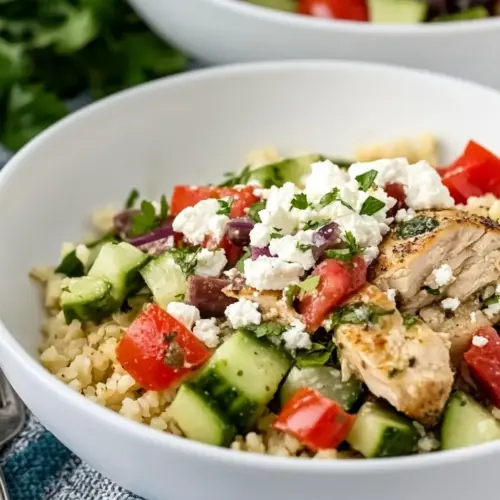
Instant Pot Greek Chicken Bowls
Instant Pot Greek Chicken Bowls deliver bright lemony chicken, savory herbs, and crisp Greek salsa for an easy weeknight dinner. Tender shredded chicken soaks up a zesty sauce while cauliflower rice keeps the bowl light and satisfying. This simple Mediterranean inspired meal is fast, flavorful, and perfect for busy evenings when you want something fresh and comforting.
Equipment
- Instant Pot
- Large non stick pan
- Food Processor
- Cutting Board
- Two forks
Ingredients
- 4 large chicken breasts, trimmed and cut into lengthwise strips Trimmed and sliced into lengthwise strips to ensure even cooking and easy shredding; provides the primary protein and substance for the bowls. Cooks quickly in the Instant Pot while absorbing seasonings and juices for tender, flavorful bites.
- zest and juice of 2 lemons Zested and juiced to add bright, citrusy acidity and aromatic oils that cut through richness; enhances overall flavor balance and tenderizes the chicken slightly. Lemon juice also helps lift other seasonings and provides freshness to the finished dish.
- 1 T Greek Seasoning (Check ingredients for Gluten-Free) Blended seasoning used sparingly to infuse Mediterranean herbs and spices; contributes a signature Greek flavor profile and savory depth. Check the blend for gluten-free status to accommodate dietary restrictions without altering the taste.
- 2 T extra-virgin olive oil Extra-virgin olive oil used to coat and help brown the chicken before pressure cooking; adds fruity, rich fat that carries flavor and keeps meat moist. Also helps distribute dry seasonings evenly and contributes healthy monounsaturated fats.
- 1/4 cup chicken stock Chicken stock added to the Instant Pot to create steam for pressure cooking and to develop savory umami in the cooking liquid; prevents dryness and supplies a base for pan juices or sauce. Using stock instead of water intensifies the overall savory character of the bowls.
- 1/2 tsp . Greek Oregano Greek oregano included as a warm, slightly bitter herb to reinforce Mediterranean notes and complement lemon and olive oil. Sprinkled in for aromatic depth and a traditional herbal finish that ties the dish together.
- 1/2 tsp . fresh-ground black pepper Fresh-ground black pepper used to provide pungent heat and aromatic sharpness; brightens flavors and balances acidity from the lemon. Added in small amount to season the chicken and enhance the overall spice profile without overpowering.
Instructions
- Take cauliflower rice out of the freezer and let it thaw on the counter while you cook the chicken.: At this point you will notice the faint cold, slightly vegetal aroma of semi-thawed cauliflower. Letting it sit brings it closer to room temperature which helps it heat through quickly in the pan, producing a better texture and preventing steaminess. If you skip this rest, you might end up with watery cauliflower rice that steams rather than sautés, diluting the flavors.
- Trim the chicken and cut each piece lengthwise into 2-3 strips, depending on how large the chicken breasts are. Put chicken strips into the Instant Pot.: Your hands will feel the cool, slightly slick surface of the chicken as you slice. Cutting into consistent strips ensures even pressure cooking, so the chicken becomes uniformly tender. A common mistake is leaving very uneven pieces which leads to some strips being dry while others are perfect, so take a moment to match sizes.
- Grate the zest from the lemons (using a Lemon Zester is easiest). Then cut lemons in half and squeeze the juice.: Fresh lemon zest releases a fragrant oil that smells citrusy and floral, a much brighter note than bottled juice alone. When you squeeze the lemons you will get a burst of tart juice that cuts through richness. Avoid zesting too deeply into the bitter white pith, which can add an undesirable bitterness to the sauce.
- Whisk the zest and juice together with the Greek Seasoning, olive oil, chicken stock, Greek Oregano, and black pepper to make the cooking sauce. Pour the cooking sauce mixture over chicken in the Instant Pot.: The combined liquid will look glossy, and the aroma will shift to herbaceous and lemony. This sauce is the secret to flavorful shredded chicken , because the pressure environment concentrates flavors into the meat. Pouring it evenly ensures every strip is seasoned. If you add the sauce unevenly, some chicken might taste bland.
- Set the Instant Pot to MANUAL, HIGH PRESSURE, 8 minutes. Then do NATURAL RELEASE for 10 minutes before you release the rest of the pressure.: As the pot seals, you may hear the faint hum of steam building, and later the gentle hiss during release. High pressure cooks the chicken quickly while keeping it moist, and the natural release helps the meat relax and retain juices. A common error is doing a quick release immediately, which can make the chicken tougher and cause sauce to splatter when you open the pot.
- When the pressure has all been released, use a slotted spoon to remove chicken to a cutting board, leaving the flavorful sauce in the Instant Pot. (If it seems like there's too much liquid in the Instant Pot, cook on SAUTE / HIGH HEAT for a few minutes to reduce the liquid.) Shred chicken apart with two forks, put it back in the Instant Pot, and stir gently so the chicken is coated with liquid. Keep chicken warm on the low setting while you prep the other ingredients.: The sauce left behind will glisten and smell concentrated. Removing the chicken gently prevents tearing and helps you work with intact pieces for shredding. If there is too much liquid, cook on SAUTE, HIGH HEAT for a few minutes to reduce it, watching for bubbling that thickens into glossy sauce. Overcooking at this stage could dry the meat, so reduce just enough to concentrate the flavor.
- To make Greek Salsa, chop the cucumbers, tomatoes, Kalamata olives (or black olives), and red onion. Put those chopped ingredients in a bowl, stir in the 1/4 cup Italian dressing, and then gently stir in the crumbled Feta.: Shredded chicken will steam slightly and soak up the sauce, giving each strand a bright, lemony coating. The texture should be tender and moist, not stringy. Avoid shredding while the meat is too hot to handle safely, and likewise avoid shredding so finely that the texture becomes mushy.
- Chop the yellow onion and green pepper.: The chopping should produce neat, bite sized pieces so each spoonful has multiple textures. The dressing will marry the vegetables and mellow the sharpness of the onion, while the crumbled Feta adds salty creaminess. A common mistake is over dressing the salsa which can make it soggy, so add the dressing gradually and taste as you go.
- If you're using fresh cauliflower, trim the cauliflower and discard the leaves. To use a food processor to chop up the cauliflower into 'rice,' first cut the cauliflower (including the stems) into small pieces. Then pulse the cauliflower pieces using the steel blade in the food processor until it's finely chopped. (This recipe has good photos and instructions for doing that.) You can also make the 'rice' by grating larger pieces of cauliflower with a large standing box grater.: These vegetables should be diced to a size that will soften quickly when sautéed. Freshly chopped vegetables will smell bright and slightly pungent, especially the onion. If the pieces are too large they will remain crunchy when you want them tender, so aim for uniformity.
- Heat the tablespoon of olive oil in a large non-stick pan over medium-high heat, add the green pepper and onion, and cook about 3 minutes or until the vegetables are softened and starting to brown.: As you process the cauliflower you will hear short bursts and see a coarse, snowy texture form. Properly pulsed cauliflower looks like grains and will cook quickly without becoming mushy. Overprocessing will create a puree that loses the pleasant rice like bite, so pulse in short bursts and check frequently.
- Add the Greek seasoning and cook 1 minute more; then add the chopped semi-thawed frozen cauliflower (or fresh cauliflower) and cook, turning a few times, until the cauliflower is heated through and some liquid has evaporated, about 3-4 minutes. (Taste cauliflower to see when it's hot and cooked through; fresh cauliflower will take a bit longer to cook.) Season the cauliflower rice with salt and fresh-ground black pepper.: The sizzle when the vegetables hit the pan signals good contact and flavor development, and the smell will shift to sweet and caramelized. Browning adds depth that complements the lemony chicken . If the pan is too crowded the vegetables will steam instead of browning, so give them space to color.
- To assemble the bowl, put some of the hot cauliflower rice in the bottom of a serving bowl. On top of the rice put a generous scoop of the shredded lemon chicken from the slow cooker, and then top that with a scoop of the Greek salsa mixture. Serve right away.: The seasoning will bloom and become more aromatic, and the cauliflower will hiss as moisture evaporates. The goal is a slightly toasted, nutty note on the cauliflower rice. A common pitfall is cooking at too low heat which leaves cauliflower limp, or too high heat which can scorch it, so keep a steady medium high and stir to prevent burning.
- You can keep the shredded lemon chicken in the fridge for a day or two and reheat in a pan or in the microwave. For the Cauliflower Rice and the Greek salsa mixture, I would make that fresh each time when you're eating the leftovers.: Tasting and seasoning at this stage ensures the base of the bowl is well balanced. Salt elevates the natural sweetness of the vegetables while pepper adds warmth. Avoid underseasoning the cauliflower because an under seasoned base makes the whole bowl feel flat.
- To assemble the bowl put some of the hot cauliflower rice in the bottom of a serving bowl on top of the rice put a generous scoop of the shredded lemon chicken and then top that with a scoop of the Greek salsa mixture. Serve right away.: The assembled bowl should have temperature contrast and visual appeal, with warm rice and chicken topped by cool, colorful salsa. Serving immediately preserves the crispness of the salsa and the texture of the rice. If you let everything sit too long the salsa may soften and the cauliflower can absorb moisture, dulling the contrasts.
- You can keep the shredded lemon chicken in the fridge for a day or two and reheat in a pan or in the microwave. For the Cauliflower Rice and the Greek salsa mixture I would make that fresh each time when you're eating the leftovers.: Stored chicken retains most of its flavor, though reheating gently in a pan brings back texture better than zapping in high heat. Freshly made cauliflower rice and salsa keep their ideal textures, so I recommend preparing them just before serving leftovers. The common mistake is reheating everything together which yields a limp salsa and soggy rice.
Notes
- Season assembly liquid: After pressure cooking, taste the cooking liquid and adjust seasoning before tossing with shredded chicken, because that liquid is your concentrated flavor carrier.
- Control cauliflower texture: If using frozen cauliflower rice, thaw slightly and pat dry to prevent excess steaming and sogginess when you sauté it.
- Brighten with more lemon: If the dish feels muted, add a splash more lemon juice just before serving to lift the flavors without adding heat.
- Mind the salt balance: Crumbled Feta adds saltiness, so season the cauliflower rice lightly and taste before serving to avoid over salting the bowl.
- Warm bowls: Heat the serving bowls briefly so the hot cauliflower rice stays warm longer when served, preserving the contrast with the cool salsa.