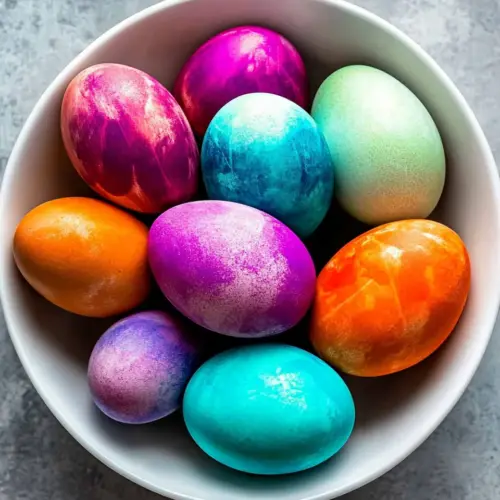
Instant Pot Easter Eggs
Instant Pot Easter Eggs yield vibrant, evenly dyed shells and tender whites with minimal effort. These colorful eggs are easy to make in mason jars, delivering consistent texture and bright hues, perfect for an easy weeknight prep or a festive brunch. Try them for a stress free holiday activity that doubles as a pretty centerpiece and a tasty snack to share.
Equipment
- Instant Pot 6 Quart
- 16 oz Mason Jars (5 pack)
Ingredients
- 4 cups water (or more if needed) Provide moisture and steam during pressure cooking to ensure eggs cook evenly and prevent burning; add enough water to reach Instant Pot’s minimum fill line and adjust if using multiple racks or additional space.
- 1/2 cup white vinegar Acidify the cooking water to help prevent egg whites from leaching through small shell cracks and to slightly alter shell pH for easier peeling after pressure cooking; pour into the pot before sealing.
- 20 drops food coloring (different colors, I used gel) Add concentrated color to create vibrant dye baths when cracking and soaking eggs post-cooking; use gel or liquid coloring sparingly to achieve desired hues and avoid staining hands excessively.
- 12 large white eggs (uncooked) Contain the raw egg contents and transform into firm, set eggs when cooked under pressure; select large white eggs for consistent size and predictable cooking times in the Instant Pot.
Instructions
- Prep the Instant Pot: Pour 2 cups of water in the instant pot liner. Place the trivet inside.: Pour 2 cups of water in the instant pot liner. Place the trivet inside. : As the pot warms you should smell a faint mineral steam from the water, and see small bubbles forming along the liner edge, which signals the unit is ready to build pressure. The trivet keeps jars elevated so heat circulates evenly, preventing direct contact with the hot base. If the trivet is omitted, jars might overheat and crack, so always set it in place. A common troubleshooting note is to double check that the sealing ring is clean and properly seated; a noisy or failed seal often comes from debris or a misaligned ring.
- Prepare Eggs: Place 3 eggs in each mason jar. You'll need 4 jars that will fit together in your Instant Pot. Pour about 1/2 cup of water in each jar, or enough to reach the top of the eggs. Add 2 tbsp of vinegar to each mason jar and combine different food coloring in each one. Next, place the mason jars into the Instant Pot. Secure the lid onto the pot and make sure to turn the vent at the top of it to the 'Sealing' position.: Place 3 eggs in each mason jar. You'll need 4 jars that will fit together in your Instant Pot. Pour about 1/2 cup of water in each jar, or enough to reach the top of the eggs. Add 2 tbsp of vinegar to each mason jar and combine different food coloring in each one. Next, place the mason jars into the Instant Pot. Secure the lid onto the pot and make sure to turn the vent at the top of it to the 'Sealing' position. : When you assemble jars, you will notice how the dye pools around the curved shells, making little crescents of color where bubbles and air pockets sit; gentle tilting or a quick swirl helps the pigment touch every inch of shell surface. The added vinegar immediately smells a bit sharp, that is normal and necessary for color adherence. Place jars snugly but not forced together, so steam can circulate around them. Avoid spilling dye on the outside of jars, which can create sticky residue; if a drop runs down the jar wipe it promptly to prevent staining the Instant Pot liner. Make sure each jar lid is screwed on loosely or left off to allow pressure to equalize, and double check the pot lid is locked correctly before pressing any buttons.
- Cook: Press the 'Manual' button on the Instant Pot then the '-' sign to lower the time to 5 minutes.: Press the 'Manual' button on the Instant Pot then the '-' sign to lower the time to 5 minutes. : Once the cooker begins, you will hear a soft beep and a steady hum as pressure rises, and small wisps of steam may escape around the seal until it fully engages. The sealed environment cooks the eggs evenly, so the whites set gently and do not become rubbery, while the yolks reach a perfect firmness. One thing I watch for is accidental selection of a different program, so confirm the display shows manual or pressure cook and that the time is set correctly. If you notice unusual rattling, pause and check the lid alignment before continuing.
- Pressure Release: Once the Instant Pot cycle is complete, wait 5 minutes for natural release then use quick release, change the valve to 'Venting' position and place a towel over the valve so steam doesn’t get everywhere. Carefully unlock and remove the lid from the pot.: Once the Instant Pot cycle is complete, wait 5 minutes for natural release then use quick release, change the valve to 'Venting' position and place a towel over the valve so steam doesn’t get everywhere. Carefully unlock and remove the lid from the pot. : During the natural release you will feel the pot relax and a gentle hiss as pressure reduces; after the quick release the steam will whoosh out, carrying that sharp vinegar note. Lifting the lid away from you prevents a face full of steam, and you will catch a warm, tangy aroma. If you do not allow any natural release you may experience vigorous sputtering of jar liquids, so follow the brief wait to reduce boil over. A common mistake is standing too close to the vent, which can cause a steam burn, so keep your hands and face clear.
- Shock: Use tongs to carefully remove the eggs from the jars, place the eggs in a bowl with ice water and let them sit for 5 minutes. Doing this stops the eggs from cooking further. After 5 minutes they are ready for you to serve!: Use tongs to carefully remove the eggs from the jars, place the eggs in a bowl with ice water and let them sit for 5 minutes. Doing this stops the eggs from cooking further. After 5 minutes they are ready for you to serve! : The ice bath is cold and pleasantly crisp against the warm shells, and it instantly halts residual cooking, preserving a creamy yolk texture without the grayish ring. I always listen for a small clink when eggs meet the ice, that moment confirms they have cooled and will not overcook. Be gentle when lifting eggs, as sudden banging can crack the shells and ruin the color. A frequent issue is insufficient ice, which leads to gradual cooling and a tougher yolk, so load the bowl generously with ice to maintain the chill throughout the five minute shock.
Notes
- Organize jars first so you can assemble dyes and eggs quickly, minimizing spills and ensuring jars fit snugly but not forced.
- Measure vinegar accurately since it affects color adherence, too little will result in faded shades and uneven dye uptake.
- Use gel coloring for intensity because it requires fewer drops and yields richer hues without diluting the dye baths.
- Keep a big ice bath ready to immediately stop cooking and prevent that green ring around yolks, which forms if eggs cool too slowly.
- Label your jars if you are mixing colors, this helps you repeat favorites and prevents accidental color blending.