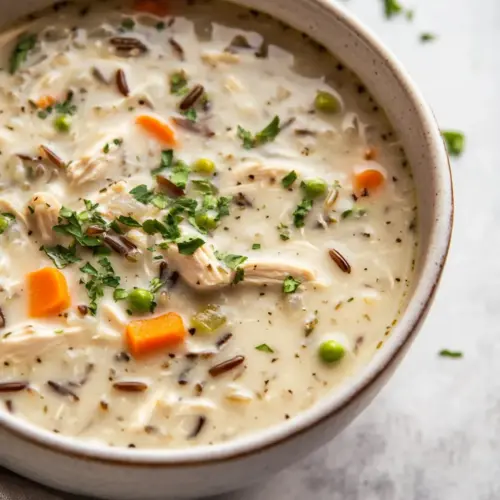
Instant Pot Chicken Wild Rice Soup
Instant Pot Chicken Wild Rice Soup is a creamy, hearty bowl with tender chicken and nutty wild rice, perfect for an easy weeknight dinner. The pressure cooking builds deep savory flavor while keeping prep simple, making it ideal for cold evenings or meal prep. It reheats beautifully and offers a comforting, satisfying reason to cook this tonight.
Equipment
- Instant Pot
- Ladle
- Mixing Bowl
- Two forks
Ingredients
- 1 cup wild rice uncooked Cooked to tender nuttiness and provide a chewy, toothsome base that soaks up savory broth and flavors throughout the soup. Wild rice adds rustic texture and hearty body, balancing creaminess from dairy ingredients while contributing whole-grain nutrition and earthy aroma.
- 18 ounces boneless and skinless chicken breasts Cooked thoroughly and shredded or cubed to supply lean protein and rich savory flavor while keeping the soup hearty and satisfying. Chicken breasts become tender when pressure-cooked, lending moisture and depth to the broth and acting as the principal source of protein.
- 1 cup yellow onion diced small Sautéed until translucent to add natural sweetness and aromatic depth, forming part of the savory flavor foundation. Diced yellow onion releases sugars and umami that enhance the complexity of the soup base during browning or sautéing.
- 1/2 cup carrot peeled and diced small Sweated or lightly sautéed to contribute mild sweetness, color, and tender bite that complements the onion and celery. Peeled and diced carrots add subtle earthiness and visual contrast while boosting nutritional value with beta-carotene.
- 1/2 cup celery peeled and diced small Softened to provide a slightly savory, aromatic backbone and pleasant crunch when cooked al dente, blending well with other vegetables. Peeled and diced celery introduces a fresh, herbal note and liquid contribution to the overall broth.
- 6 cups chicken broth low-sodium Simmered to form the liquid foundation that hydrates rice and vegetables while carrying and concentrating flavors from aromatics and seasonings. Low-sodium chicken broth allows controlled seasoning and supplies savory depth without overwhelming saltiness.
- 1/2 teaspoon dried ground sage Sprinkled sparingly to infuse warm, subtle sage flavor that pairs especially well with poultry and creamy components. Dried ground sage imparts an earthy, slightly peppery note that enhances the traditional profile of chicken and rice soups.
- 1/4 teaspoon ground dried thyme Added in small measure to contribute a delicate, slightly floral and minty-herbal note that brightens the overall flavor profile. Ground dried thyme supports the savory aromatics and complements both poultry and vegetables without overpowering.
- 1/4 teaspoon ground dried rosemary Used sparingly to lend a piney, resinous background flavor that enhances savory complexity when combined with other herbs. Ground dried rosemary gives a robust, slightly astringent aromatic quality that pairs with chicken and hearty grains.
- 1/2 teaspoon kosher salt Measured carefully to season and balance flavors without oversalting, ensuring the soup tastes well-rounded. Kosher salt enhances the natural flavors of ingredients, aids in extracting moisture from vegetables, and helps the broth season uniformly.
- 1/2 teaspoon ground black pepper Ground to provide pungent, warming heat and depth, enlivening the soup and balancing creamy elements. Black pepper contributes aromatic spice and subtle bite that complements herbs and cuts through richness.
- 2 cups Greek yogurt fat-free, plain Stirred in off-heat or tempered to add creamy body and tang while keeping calories lower than heavy cream, creating a velvety finish. Fat-free plain Greek yogurt offers protein and acidity that brightens the soup, so it should be tempered to avoid curdling in hot liquid.
- 1/4 cup parsley fresh, chopped Chopped and sprinkled at the end to introduce fresh, bright herbaceousness and color that lifts the finished soup. Fresh parsley provides a clean, grassy flavor and visual appeal, balancing richer, creamier components.
- 3 tablespoons cornstarch optional Mixed as a slurry to thicken the soup if desired, yielding a smoother, slightly glossy consistency without altering flavor significantly. Cornstarch is optional and should be dissolved in cold liquid before adding to hot soup to prevent lumps and achieve desired thickness.
- 3 tablespoons cold water optional Blended with cornstarch to create a cold slurry that prevents clumping and allows gradual thickening of the hot soup. Cold water ensures the cornstarch hydrates properly, creating a uniform texture when incorporated into simmering liquid.
Instructions
- Rinse the wild rice and place in the Instant Pot with the chicken, onion, carrot, celery, broth, sage, thyme, rosemary, salt, and pepper. Set the pot to manual mode with high pressure and set the timer for 35 minutes. Allow the pressure to release naturally for 10 minutes before releasing the pressure manually and removing the lid.: The first scents you notice will be herbaceous and slightly earthy as the raw wild rice and dried herbs mingle. Rinsing the rice removes dust and excess starch, which helps kernels remain separate and not glue together during pressure cooking. When you pile the ingredients into the inner pot, the colors are contrasting, and the broth should cover everything by about an inch; if not, gently press the chicken down so it is submerged. A common mistake is under rinsing the rice, which can leave a cloudy broth, so rinse until the water runs clearer. The mix at this stage feels cool and damp, and you should notice small pockets of herbs around the vegetables. Do not stir vigorously, just nestle components so steam circulates evenly.
- Remove the chicken and shred using a fork. Return the chicken to Instant Pot along with the Greek yogurt. Stir until the soup is smooth. Ladle into serving bowls and top with parsley. Serve and enjoy!: As the pot comes up to pressure you will hear a steady hiss and the display will count up until it seals, building internal steam that draws flavor out of the chicken and grains. This pressurized environment extracts deep savory notes more quickly than simmering on the stove. While it seals, check that the valve is set to sealing and that the lid sits flush. A typical error here is using low pressure for this rice variety, which can result in undercooked kernels; the high pressure helps the tough outer bran of wild rice soften properly. You will not smell much yet, but anticipate a fuller, rounder broth once the timer completes.
- If the soup needs thickening, combine the optional cornstarch and cold water. Stir until smooth and then gradually add to the soup until desired consistency is reached.: During the natural release the pot continues to gently cook, and flavors settle into the liquid. You will notice steam rising and a richer aroma escaping when you first open the lid. The chicken will be tender and the grains plump. Leaving it to natural release for ten minutes helps avoid sudden agitation that can break grains apart. A pitfall is releasing immediately, which can cause liquid to sputter and result in tougher meat. When you remove the lid, lift it away from your face so the steam goes upward, and take note of the color and clarity of the broth.
- Remove the chicken and shred using a fork: The chicken should pull apart easily into tender shreds with two forks. The texture will be moist and fibrous, and shredding by hand keeps larger pieces intact rather than turning it into mush. If your chicken feels rubbery, it may have been slightly overcooked or undercooked before being left to rest; aim for moist, stringy pieces that hold shape. Use a gentle tear motion across the grain so the strands remain varied in size and offer pleasant bites in the soup.
- Return the chicken to Instant Pot along with the Greek yogurt: When you stir the cool creamy Greek yogurt into the hot soup, do it off heat or on a low setting to prevent curdling. The yogurt softens the broth into a silky texture and adds a mild tang that brightens savory notes. Incorporate slowly and stir to unify the liquid; the mixture will become smoother and slightly thicker. A common mistake is adding yogurt straight into a rolling boil, which can cause separation. The aroma here is mellow and homogenous, and the soup should look glossy with visible rice and shredded chicken .
- Stir until the soup is smooth: As you stir, listen for a gentle, steady sound and watch the surface for a cohesive sheen. Smoothness indicates the yogurt has been integrated and the rice and vegetables have relaxed into the broth. If you see small curdled pieces, reduce heat and whisk briskly to reincorporate. Avoid over stirring which can break the wild rice grains and make the texture gummy. The finished stir should result in a soup that drapes from the ladle in a slow ribbon.
- Ladle into serving bowls and top with parsley: The final presentation is important for both flavor and contrast. A spoonful of bright chopped parsley adds freshness and a green pop against the creamy beige broth. The serving bowls should feel warm to the hand, and steam should rise gently from the surface. If the soup seems thin, it will still be flavorful, so save adjustments for the next step rather than overloading with thickeners now. Enjoy the aroma of herbs and the comfort of tender chicken and grains.
- Serve and enjoy!: The first spoonful should offer a mix of textures, the chew of wild rice , the silky broth from Greek yogurt , and soft shreds of chicken . Take a moment to taste for seasoning, adding a pinch more kosher salt or ground black pepper if needed. A common oversight is over seasoning before the rice fully swells, so always taste at the bowl stage to fine tune. The aroma will be herb forward with a creamy base.
- If the soup needs thickening, combine the optional cornstarch and cold water: Whisk the cornstarch with cold water until smooth to create a slurry. Adding this gradually while the soup simmers will thicken without clumping. The slurry should be completely dissolved before hitting the hot liquid, or you risk small gelatinous bits forming. Stir gently while adding, and allow a minute to see the final thickness; it will continue to thicken slightly as it cools.
- Stir until smooth and then gradually add to the soup until desired consistency is reached: After adding the slurry, keep the soup at a gentle simmer and stir to integrate. The texture will change from brothy to slightly velvety and will coat the back of a spoon when ready. Avoid adding too much at once, since over thickening can quickly turn the soup past the ideal mouthfeel. If you overdo it, thin with a splash of low sodium chicken broth to rescue the consistency.
Notes
- Swap dairy for texture If you want a dairy free finish, omit the Greek yogurt and warm a small amount of low sodium chicken broth with a touch of cornstarch to create creaminess instead. This keeps the soup smooth though the tang will be different. Be cautious adding cornstarch directly to hot liquid, always make a slurry.
- Control the thickness Use the optional cornstarch and cold water slurry to adjust body, adding gradually until the soup coats the back of a spoon. This is my go to when serving to guests who prefer a heartier bowl. Avoid over thickening in one go to prevent a gluey texture.
- Make it ahead Cook the full recipe, then cool and refrigerate; the flavors meld overnight and the wild rice remains pleasantly chewy. Reheat gently and add a splash of broth if it tightens up. Store in airtight containers for up to three days for best texture.
- Brighten before serving Stir in chopped fresh parsley right before ladling to preserve its fresh color and aroma. I always add it last to keep its flavor lively, not wilted. A small sprinkle transforms the presentation and freshens the palate.
- Scale easily The recipe scales up well for a crowd, just keep the same liquid to rice ratio and extend pressure time slightly if you double the quantity. Make sure your Instant Pot is not overfilled past the max line. Larger volumes need more time to come to pressure, so account for that when planning.