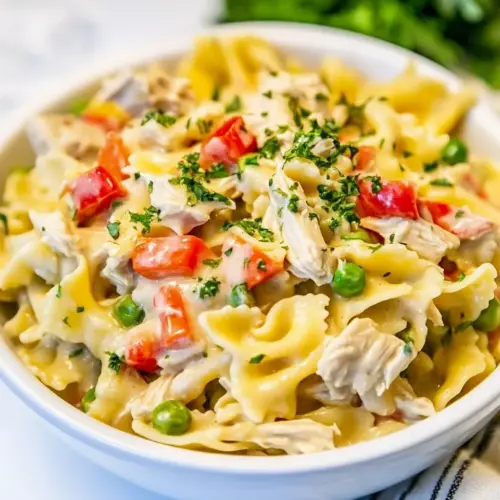
Instant Pot Chicken Pot Pie Pasta
Instant Pot Chicken Pot Pie Pasta is a creamy, comforting one pot meal with tender chicken, wide egg noodles, and mixed vegetables in a savory sauce. It's an easy weeknight dinner that delivers rich, homey flavors with minimal cleanup. Perfect for cold evenings or busy nights when you want something satisfying and quick to make.
Equipment
- Instant Pot
- Wooden Spoon
- Spatula
- Small Bowl
Ingredients
- 3 tablespoons canola oil or olive oil Heat with medium-high control to create a hot cooking surface for browning and sautéing; provides a neutral fat for even heat distribution and helps develop flavor in the base of the dish.
- 1 lb chicken breast meat or boneless chicken thighs cut into 1-2 inch cubes Cut into 1–2 inch cubes to ensure quick, even cooking under pressure; supplies the primary protein and hearty texture that makes the pasta dish resemble a classic pot pie.
- 1 small onion diced Dice finely to release natural sweetness and aromatic depth; forms part of the savory flavor foundation when softened during sautéing.
- 1 tablespoon minced garlic Mince finely to infuse the dish with pungent, aromatic notes; adds depth and enhances the overall savory profile when cooked briefly with the onion.
- 1/2 teaspoons salt optional Season sparingly to balance and enhance other flavors; helps bring out natural tastes in the meat, vegetables, and sauce when added during cooking.
- 1/4 teaspoon ground black pepper optional Grind to taste to add subtle warmth and complexity; helps round out savory flavors and can be adjusted for personal preference.
- 1/4 teaspoon red pepper flakes Sprinkle to introduce a touch of heat and a layered spicy note; enhances overall flavor without overwhelming the other components when used in small amounts.
- 1 1/2 cups chicken broth low sodium Pour as the cooking liquid to generate steam and pressure in the Instant Pot; contributes savory depth and prevents sticking while cooking the pasta and chicken.
- 3 cups wide egg noodles uncooked Add uncooked to absorb liquid and become tender in the finished dish; provides the starchy, comforting noodle component characteristic of pot pie pasta.
- 1/2 cup water Measure to adjust overall liquid volume for correct pasta doneness; used alongside broth to control consistency while cooking under pressure.
- 1 cup sour cream Stir in after pressure cooking to lend creaminess and tang; helps create a rich, silky sauce that mimics traditional pot pie filling.
- 10 ounces mixed veggies, frozen (I used a mix of beans, peas, carrots and corn) Include frozen to add color, nutrition, and textural contrast; thaws and heats quickly in the hot pasta, contributing sweet and earthy vegetable notes.
- 1/4 cup cornstarch Dissolve as a thickening agent when mixed with water; reacts with hot liquid to create a glossy, gravy-like sauce that coats the pasta and chicken.
- 1/4 cup water Combine with cornstarch to make a slurry for finishing the sauce; adds necessary liquid to activate the thickener and achieve the desired sauce consistency.
Instructions
- Set Instant Pot to Saute. Once the IP is hot, add the oil.: The oil will shimmer and you will hear a steady sizzle as it heats, which signals it is ready. The heat encourages browning, creating those caramelized bits that boost flavor when deglazed. If the pot is not hot enough, the chicken will steam instead of brown, producing less flavor. A common mistake is adding cold ingredients too early, which drops the temperature and prevents a good sear.
- Add the diced onion and minced garlic and cook for 1-2 minutes, stirring occasionally.: As soon as the pot is hot, the oil will spread and thin into a glossy sheet, and a small drop will dance when it is sufficiently hot. This visual cue shows the pan is ready for aromatics. Using too much oil can make the dish greasy, so measure carefully. If your oil smokes, reduce the heat and start again to avoid burnt flavors.
- Add the chicken cubes and cook until no longer pink on the outside, stirring occasionally—about 3 minutes. Add salt, pepper, and red pepper flakes. Stir to combine.: You will smell the onion soften and the garlic release a sweet, savory perfume; the pieces will turn translucent. This brief sauté builds foundational flavor, and it also removes raw sharpness from the garlic . Watch closely because garlic can brown in an instant, producing bitterness; keep stirring to avoid that.
- Add chicken broth and scrape the bits that stuck to the bottom of the pot using a wooden spoon.: The chicken edges will turn opaque and develop golden patches, and you will hear a firmer sizzle as moisture evaporates. This partial cook firms the meat and seals juices, helping it stay tender through pressure cooking. Overcooking here can result in dry chicken , so stop once the exterior changes color.
- Add uncooked pasta to the pot and gently push it using a spatula or wooden spoon so it's evenly distributed and submerged in the liquid.: As seasoning hits the hot surface, the aromas intensify and the spices bloom, deepening the overall flavor. I add them now so they can attach to the proteins and vegetables, enhancing each bite. Too much salt early can concentrate under pressure, so err on the lighter side and adjust later.
- Add 1/2 cup of water over the pasta.: Pouring in the chicken broth will steam the fond and release those browned bits, which dissolve into the liquid and enrich the sauce. Use a wooden spoon to dislodge any stuck pieces, ensuring the pot is deglazed to prevent a burn error during pressure cooking. If you skip this step, you risk an unpleasant scorched taste and triggering a burn warning.
- Cover and seal the lid. Make sure the valve points to Sealed. Change the setting to manual and adjust the time to 4 minutes on High Pressure.: The tactile action of pressing the egg noodles down ensures each strand touches the liquid, producing uniform cooking. Look for bubbles that indicate the pasta is surrounded by hot liquid. Leaving noodles exposed will give you unevenly cooked results, with some parts al dente and others underdone.
- Once the Instant Pot beeps to show that it's done, wait 4 minutes, and then do a quick release by changing the position of the valve to Vent. Carefully remove the cover and stir.: This extra water guarantees sufficient liquid for the pasta to absorb during pressure, helping avoid dryness. When you pour it, you may notice the surface level rise slightly, which is expected. Not adding enough liquid is a frequent error that leads to undercooked pasta or sticking.
- Remove the lid and set IP to Sauté.: Place the lid and ensure the valve points to Sealed, then change the setting to manual and adjust the time to 4 minutes on High Pressure: You will hear a steady hum as the pot comes to pressure, and the sealed environment cooks the pasta quickly and intensely. This step is what melds flavors and softens the noodles effectively. Forgetting to seal the valve will prevent pressure build up and lengthen cooking time unexpectedly.
- Add the frozen veggies and sour cream, stir to combine. Cook for about 2 minutes.: The post cook hiss and steam release is dramatic, and waiting a few minutes before venting lets residual cooking finish gently. Carefully move the valve to Vent and protect your hands from the hot steam. A common misstep is rushing to open the lid, which can spray hot liquid and create a safety hazard.
- In a small bowl, mix cornstarch and water until thoroughly combined, and add to the pot. Gently stir to combine and cook for 1-2 minutes, until it thickens.: When you lift the lid, you will see steaming, fragrant pasta. Stirring integrates the broth and loosens any noodles that stuck together, balancing texture across the pot. Use a gentle motion to avoid breaking the pasta. Vigorous stirring can turn noodles mushy, which compromises the final mouthfeel.
- Turn off the Instant Pot.: Switching to Sauté brings the pot back to a gentle bubble, allowing you to finish the sauce. The surface will show small rolling bubbles and the aroma will intensify, signaling readiness for the remaining ingredients. Leaving the pot off may cool the mixture too quickly, hampering the next steps.
- Serve topped with chopped parsley.: The ice cold mixed veggies will lower the temperature slightly, and as they warm you will notice bright colors and a fresh scent. Stir in the sour cream off heat or on low so it becomes creamy rather than curdled; the texture should be smooth and glossy. Overheating the sour cream can cause separation, ruining the silky finish.
- When reheating on the stovetop, consider adding milk, cream, or broth for a creamier texture.: During this short simmer the flavors meld and the veggies heat through, releasing a comforting steam that carries savory notes. The sauce will begin to coat the noodles more thickly, and you can assess seasoning at this point. Cooking much longer can soften the vegetables too much, diminishing textural contrast.
- In a small bowl, mix cornstarch and water until thoroughly combined, and add to the pot: The slurry should be perfectly smooth and glossy, and when added it will transform the sauce to a velvety thickness. Stir gently so the starch disperses evenly and avoid creating lumps. If the slurry is not well mixed, you risk gritty pockets of starch in the sauce.
- Gently stir to combine and cook for 1 to 2 minutes, until it thickens: You will see the sauce change from runny to clingy, coating the back of a spoon, which is the visual cue for correct thickness. The aroma will deepen as the sauce concentrates, and the mouthfeel will shift to creamy. Over-thickening can be remedied by whisking in a bit more chicken broth .
- Turn off the Instant Pot: Powering down allows the pot to cool slowly, preserving the final texture. The absence of active heat stops further cooking immediately. Leaving it on Sauté inadvertently will continue to reduce the sauce and may dry out the pasta.
- Serve topped with chopped parsley: The fresh herb will add a bright, green scent and a pleasant visual contrast against the creamy sauce, refreshing each spoonful. Sprinkle just before serving to keep it vibrant. Adding herbs too early causes them to wilt and lose their fresh impact.
- When reheating on the stovetop, consider adding milk, cream, or broth for a creamier texture: Reheating will revive the aromas and soften chilled sauce, and adding a splash of liquid restores creaminess. Heat gently while stirring to avoid curdling the sour cream and to get an even warmth. Reheating at too high a temperature can break the sauce and toughen the pasta.
Notes
- Use chicken thighs for extra richness if you prefer a slightly fattier, more flavorful bite; they stay tender under pressure and lend body to the sauce.
- Omit red pepper flakes when serving kids or heat sensitive guests, keeping the dish mild and crowd friendly.
- Try different pasta shapes but adjust pressure time accordingly, since thinner pastas cook faster and thicker shapes may need a minute more.
- Swap sour cream for Greek yogurt cautiously for tang and protein, but temper it by stirring in at low heat to prevent curdling.
- Add fresh herbs at the end rather than during cooking to maintain bright flavor and visual appeal.