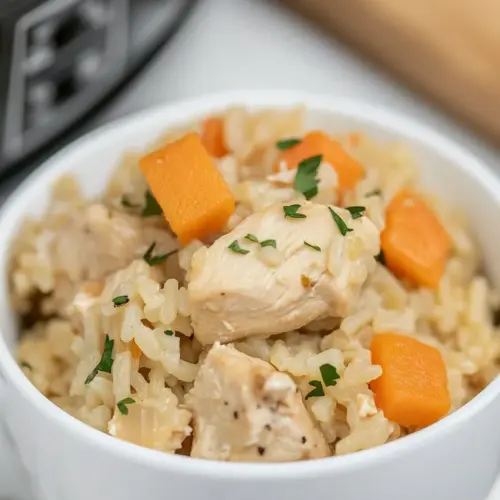
Instant Pot Chicken and Brown Rice
Instant Pot Chicken and Brown Rice is a cozy, easy weeknight dinner with tender chicken, nutty brown rice, and savory broth. Creamy soup and fresh thyme layer in comforting richness while carrots and mushrooms add texture. This one pot meal is ideal for busy evenings and meal prep, promising reliable flavors and minimal hands on time, so you can serve a soulful dinner without fuss.
Equipment
- Instant Pot
- Mixing Bowl
- Measuring Cups
Ingredients
- 1 medium onion chopped Chopped to provide a sweet, aromatic base that softens and melds with other flavors when sautéed at the start of cooking. Adds texture and moisture to the rice while enhancing overall savory depth. Balances the richness of chicken and cream components without overpowering the dish.
- 3 cloves garlic minced Minced to release pungent, savory oils that intensify the umami profile and complement the onion when browned briefly. Distributes flavor evenly throughout the rice and broth during pressure cooking. Helps build a fragrant backbone that lifts the entire recipe.
- 2 cups carrots, baby Kept small for tender bites that contribute mild sweetness and a pleasant crunch contrast to the soft rice and chicken. Releases natural sugars into the broth, enhancing caramelized notes and depth of flavor during cooking. Adds visual color and nutritional value.
- 2 cups mushrooms sliced Sliced to offer an earthy, meaty texture that absorbs broth and melds with the rice for rounded umami richness. Browning beforehand can deepen flavor, while pressure cooking makes mushrooms tender and flavorful. Complements the chicken and soup base to create a comforting profile.
- 2 cups brown rice, raw Raw and measured to provide hearty body and structure as it cooks and absorbs broth, producing a chewy, satisfying grain component. Releases some nutty flavors when cooked in the Instant Pot and soaks up surrounding seasonings and sauces. Forms the starch foundation that makes the dish filling and cohesive.
- 1 tablespoon olive oil Used to coat the pot and sauté aromatics, helping to develop color and flavor through gentle browning. Adds a subtle fruitiness and richness that carries fat-soluble flavors into the rice. Prevents sticking during initial sauté steps and contributes mouthfeel.
- 2 1/4 cups chicken broth, low-sodium Added as the primary cooking liquid to hydrate the brown rice and build a savory base; low-sodium choice allows better control of final saltiness. Imparts chicken essence and helps create a cohesive sauce when reduced slightly under pressure. Ensures proper rice texture by providing necessary liquid volume.
- 2 pounds chicken thighs boneless, skinless Provided boneless and skinless for tender, easy-to-shred protein that cooks evenly in the Instant Pot and melds with rice. Contributes richness and savory juices that infuse the rice and broth as it cooks. Offers substantial protein and keeps the dish hearty without excess fat from skin.
- 1 teaspoon salt Measured to season and enhance overall taste, helping to balance and brighten the flavors of rice, chicken, and soup. Controls seasoning level when combined with low-sodium broth and other salty components. Can be adjusted to taste but establishes a baseline savory note.
- 1/2 teaspoon black pepper, ground Ground to add mild heat and sharpen other savory elements without overwhelming the palate. Enhances complexity and complements aromatic herbs and Worcestershire sauce. Distributes easily through the dish to provide subtle warmth.
- 2 cups cream of chicken soup recipe Prepared as a creamy component to enrich the sauce, adding body, smoothness, and concentrated chicken flavor that binds the ingredients. Thickens the finished dish and lends comforting creaminess to the rice and shredded chicken. Helps create a cohesive, saucy texture.
- 2 tablespoons Worcestershire sauce Included to contribute deep, tangy umami and a slightly sweet, savory complexity that brightens the overall flavor profile. Balances richness from the cream of chicken soup and adds depth to the braising liquid. Acts as a seasoning booster that enhances meaty notes.
- 1 tablespoon thyme, fresh Used fresh and measured to impart bright, herbaceous aroma and subtle floral-citrus undertones that elevate the savory base. Adds a fragrant lift when stirred into the finished dish or cooked briefly to release oils. Complements thyme-friendly proteins and creamy textures with freshness.
Instructions
- Push “saute” button on Instant Pot. While it heats, dice onion, mince garlic, and chop veggies. Rinse and drain rice.: You will notice the pot display change and a faint warming hiss as it moves toward the sauté mode, a signal that the olive oil will soon shimmer. Preparing everything while it heats keeps the workflow smooth and prevents overcooking. Dice the onion into even pieces so they soften uniformly, and mince the garlic to release its aroma quickly. Rinsing the brown rice removes excess starch, ensuring separation of grains during pressure cooking. A common mistake is skipping the rinse, which can lead to gummy rice. Keep a bowl of cold water nearby to test rice clarity after rinses.
- When pot says “HOT,” add oil to pot and saute onions for 3 minutes. Then press “cancel” to turn the saute setting off.: You should see the oil shimmer and smell a faint fruity note, then add the onion . As it cooks, it will go from opaque to translucent and emit a sweet, savory fragrance that signals flavor development. Sauté for about the suggested time, stirring occasionally so the edges soften without catching. Pressing cancel stops the residual heat buildup, preventing the garlic from burning when added later. A typical error is rushing and letting the aromatics brown too much, which can introduce bitterness instead of sweetness.
- Add to the pot in this order garlic, rice, chicken, carrots, and mushrooms. NOTE: chicken breasts also work well, just make sure to cut them in half so they're not too thick.: chicken breasts also work well, just make sure to cut them in half so they're not too thick. : Adding ingredients in this sequence ensures the most delicate items do not become buried and overcompacted, and it helps flavors integrate. You will catch the bright pop of sautéed garlic aroma, followed by the dry nutty scent of rinsed brown rice . Nestle the pieces of chicken gently so they sit evenly, then layer the carrots and sliced mushrooms . Visual balance is key here, because an even layout encourages uniform pressure cooking. Avoid piling into a tight mound, which can trap steam and lead to uneven cooking.
- In a small bowl, combine broth, cream of chicken soup (homemade is preferable), Worcestershire sauce, salt and pepper. Pour over everything in the Instant Pot.: As you whisk this mixture, you will notice the soup smooth and the broth take on a slightly creamy texture. Pouring slowly ensures liquids reach all corners and settle among the grains, which helps the brown rice hydrate evenly. The Worcestershire brings a subtle tang that deepens the overall savory profile. A common pitfall is under-mixing, leaving clumps of soup that can create uneven pockets of thickness; a quick whisk prevents that.
- Place 8-10 small sprigs of thyme on top.: Placing the thyme sprigs on top allows the volatilized herb oils to perfume the steam as pressure builds, infusing the whole pot. You will notice a fresh, herbaceous scent rising from the opening when you later remove the lid. If you add the leaves too early or in too large a quantity, their flavor can dominate, so keep it light. Avoid tearing the sprigs now, so you can strip the leaves in at the end for a clean texture.
- Seal the Instant Pot, close the vent, and press 'manual.' Use the 'pressure' button to toggle to high pressure. For brown rice: set the time for 25 minutes. For white rice: set the timer for 20 minutes. After 10 seconds the pot should register that it has begun the pressurizing process.: set the time for 25 minutes. For white rice: set the timer for 20 minutes. After 10 seconds the pot should register that it has begun the pressurizing process. : As the machine seals, you may hear a soft hum and occasional ticking as the pressure builds. The chosen high pressure ensures the brown rice and chicken reach tenderness together. Setting the correct time is essential because brown rice needs more heat and time to soften fully. A frequent mistake is selecting a shorter time for convenience, which results in undercooked rice and tough pieces of chicken . Trust the preset and resist the urge to open the valve prematurely.
- Once the pot is done cooking open the vent (keep your hand out of the path of the steam) to quick release the pressure. This should take about 2 minutes. Once pressure has released completely (the pin drops) the pot is safe to open.: You will hear rushing steam and feel a burst of warm, herbaceous aroma as pressure releases. Quick releasing reduces carryover cooking, preserving the texture of the brown rice and preventing the chicken from becoming overly soft. Use a long utensil to flip the valve and keep your hand clear of the steam. A common error is staying too close to the vent, risking burns, or waiting too long to release, which can lead to mushy rice from extended steaming.
- Open the lid. Strip the leaves of the thyme sprigs into the pot. Stir to slightly shred chicken and mix in any extra liquid. Serve warm.: When you lift the lid, expect a warm, savory steam and a stewlike visual of tender chicken nestled among glossy brown rice . Strip the thyme leaves by running a fork along the sprigs and sprinkle them in for a bright herbal note. Stirring will gently pull apart the chicken into tender ribbons and fold the sauce into the grains, yielding a cohesive texture. If you see excess liquid, let it settle for a minute before serving so it thickens slightly; a common misstep is stirring too vigorously, which can break down the rice and make it pasty.
Notes
- Adjusting salt — If your chicken broth is not low sodium, reduce or omit the added tablespoon of salt and taste after cooking before adding more, because broths vary widely in salt content.
- Swapping protein — If you prefer leaner meat, you can use chicken breasts, halved so they cook through evenly; be mindful they will be slightly drier than thighs if overcooked.
- Rice texture — For slightly firmer grains, reduce the liquid by a few tablespoons, but keep in mind that under-hydrated brown rice will remain chewy; small adjustments go a long way.
- Thicker sauce — If the final pot is looser than you like, let it rest uncovered for 5 to 10 minutes after opening the lid so the sauce naturally thickens as it cools.
- Herb intensity — Fresh thyme is more subtle than dried, so if using dried, use about one third of the fresh amount to avoid overwhelming the other flavors.
- Vegetable variations — If you need to swap produce, choose vegetables that release similar moisture during pressure cooking to keep the overall balance steady.
- Leftover handling — Cool quickly and refrigerate within two hours, storing in a shallow airtight container to preserve texture and flavor for meals throughout the week.