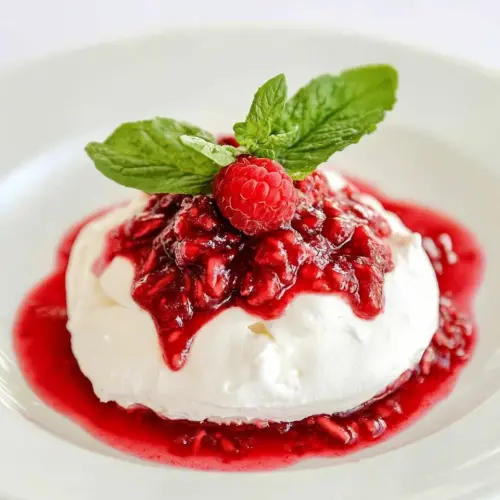
Individual Pavlovas with Cream Cheese Whipped Cream and Raspberry Sauce
Individual Pavlovas with Cream Cheese Whipped Cream and Raspberry Sauce is a light, elegant dessert featuring crisp yet marshmallow like meringue, tangy cream cheese whipped cream, and a bright raspberry sauce. Creamy, airy, and visually stunning, this dessert is perfect for summer gatherings and dinner parties. It’s an easy to assemble treat that delivers impressive results and a refreshing finish that guests will rave about.
Equipment
- Stand mixer
- Whisk attachment
- Mixing Bowls
- Medium Saucepan
- Baking Sheets
- Parchment Paper
Ingredients
- 1 1/2 cups granulated sugar Provide sweetness and structure to meringue; dissolves into egg whites to stabilize and create glossy peaks, contributing to crisp exterior and tender interior when baked.
- 2 tsp cornstarch Thickens and stabilizes the meringue; helps absorb excess moisture and creates a slightly firmer texture in the finished pavlova shells.
- 6 large egg whites Whip into stiff peaks to form the base of the pavlovas; proteins set during baking to create the airy, marshmallow-like interior and crisp outer shell.
- 1/4 tsp (heaping) cream of tartar Stabilize and lift whipped egg whites; increases volume and helps maintain structure, resulting in a more stable meringue that holds shape during baking.
- 1 pinch salt Enhance flavor balance and strengthen egg white structure subtly; a small amount reduces sweetness perception and can improve overall taste.
- 1 tsp vanilla extract Add aromatic flavor and depth to the meringue; contributes a warm, familiar note that complements the sweetness and fruit toppings.
- Fresh mint, for garnish (optional) Provide a fresh aromatic garnish and visual contrast when serving; optional mint leaves add a bright herbal note and enhance presentation.
- 3 tbsp sugar Contribute sweetness and slight texture to the raspberry sauce; dissolves when heated to help balance tartness and body.
- 2 1/4 tsp cornstarch Act as a thickening agent for the raspberry sauce; dissolves when cooked to create a glossy, slightly set consistency without affecting flavor.
- 18 oz fresh raspberries (frozen would work too) Supply tart, fruity flavor and texture for the sauce and topping; fresh raspberries provide bright acidity and natural pectin for body.
- 1/3 cup water Adjust sauce consistency and prevent burning while cooking; adds necessary liquid for extracting juice from berries to form a smooth sauce.
- 8 oz cream cheese Add creamy tang and body to the whipped cream filling; softens sweetness and contributes a richer mouthfeel and slight tang to balance fruit.
- 1 1/2 cups heavy cream Provide richness and airy volume when whipped; heavy cream creates the light, fluffy whipped cream that crowns each pavlova.
- 1 tbsp granulated sugar Sweeten the cream cheese whipped cream; small amount balances tang and helps achieve a pleasant sweetness without overpowering raspberries.
- 1/2 tsp vanilla extract Enhance the flavor of the cream cheese whipped cream; adds a warm, sweet aroma that complements the dessert's components.
Instructions
- FOR THE PAVLOVAS: Preheat oven to 250 degrees. In a mixing bowl, whisk together sugar and cornstarch. In the bowl of an electric stand mixer fitted with the whisk attachment, whip egg whites with cream of tartar and salt on medium speed until soft peaks form, about 3 minutes.: Preheat oven to 250 degrees : You will notice a faint warm, dry smell when the oven reaches temperature, which is perfect for gently drying meringues into crisp shells. A low oven avoids browning and allows moisture to escape slowly. If your oven runs hot, use an oven thermometer, otherwise the pavlovas may brown or crack prematurely. A common mistake is setting the temperature too high, which yields browned, tough exteriors instead of delicate crisp shells.
- Increase speed to medium-high and slowly add in sugar mixture (I just continuously added 1 heaping tbsp at a time one right after the other), then increase speed to high and whip until stiff glossy peaks form, about 5 minutes, adding in vanilla during last minute of mixing.: The dry sugar and cornstarch should look even and free of lumps, with the cornstarch lending a slightly powdery look. This pre mixing ensures the cornstarch disperses evenly when added to the egg whites , preventing localized thickening. If the sugar feels damp or clumpy, sift it first because undissolved sugar will make the meringue grainy when whipped.
- Spoon and dollop meringue into about 3 1/2-inch circles onto parchment paper lined baking sheets then use the back of the spoon to create slight dips in their centers.: You should hear a steady, airy whipping sound and see the foam develop from large bubbles to smaller, silkier foam. The egg whites will start to look glossy at soft peak stage, and lifting the whisk will create peaks that fold over gently. If the whites look oily or won’t foam, it may be due to fat contamination, so clean your bowl and utensils thoroughly before starting.
- Bake in preheated oven 60 minutes, then leave in oven with door closed, turn off oven and allow to rest in oven 45 minutes. Remove from oven and allow to cool completely.: The slow addition of the sugar mixture allows it to dissolve fully into the foam, creating a glossy, firm meringue. You will see the mixture thicken, become shiny, and form sturdy peaks that stand tall without collapsing. Test for dissolved sugar by rubbing a bit between your fingers; it should feel smooth. Over whipping at the end can make the meringue dry and grainy, so stop once peaks are glossy and hold shape.
- To assemble, top meringues with Cream Cheese Whipped Cream then Raspberry Sauce and garnish with mint. Assemble just before serving.: The mounds should be even and the slight indent in the center will cradle the topping later, visually appealing and practical. The surface should be smooth and glossy, and the edges slightly firm. If you make the circles too thin, they may crisp through entirely and lose the desired marshmallow interior, so keep them substantial for that soft center.
- FOR THE RASPBERRY SAUCE: In a medium saucepan, whisk together sugar and cornstarch. Stir in 1/3 cup water.: As they bake, you will notice a faint toasty sugar aroma and the meringues will harden on the outside while the centers remain tender. The slow cooling inside the turned off oven helps prevent sudden temperature changes that cause cracking. A frequent error is opening the oven during this time, which can lead to cracks and collapse, so resist checking until the full cool down is complete.
- Add half of the raspberries, then cook mixture over medium heat, whisking constantly until mixture has thickened.: Once cooled, the shells should feel crisp to the touch and peel easily from the parchment with minimal sticking. Cooling fully ensures the texture sets and prevents condensation when you store them. If you assemble while warm, the topping may cause the shell to soften and lose its crispness.
- Remove from heat and cool completely. Stir in remaining raspberries. Store in refrigerator in an airtight container.: The finished pavlova should present contrast between the crisp white shell, the creamy off white topping, and the vivid raspberry sauce. Add sauce sparingly so it does not oversaturate the shell. A common misstep is assembling too early, which allows moisture to migrate and soften the pavlova; assemble right before serving for best texture.
- FOR THE WHIPPED TOPPING: In a mixing bowl whip heavy cream until soft peaks form then add sugar and vanilla and whip until nearly stiff peaks form.: Wait to combine the components until you are ready to serve to maintain textural contrast and visual freshness. The whipped topping will hold shape and the sauce will look glossy when fresh. If you need to prepare ahead, store components separately in airtight containers and bring together at the last minute to prevent sogginess.
- In a separate mixing bowl, whip cream cheese until light and fluffy. Add cream cheese to whipped cream mixture and whip until stiff peaks form. Store in refrigerator.: In a medium saucepan, whisk together sugar and cornstarch : The dry mixture should be lump free, and it will make the sauce shine once cooked. This step ensures the cornstarch disperses evenly so the sauce thickens uniformly when heated. If you add it directly to liquid without whisking, you risk lumps forming during cooking.
- Stir in 1/3 cup water: Adding the water creates a slurry that will dissolve smoothly into the fruit, producing an even texture as it cooks. The small amount of water is just enough to activate the cornstarch without diluting the fruit flavor. Too much liquid here can make the sauce too thin and require longer reduction.
- Add half of the raspberries then cook mixture over medium heat, whisking constantly until mixture has thickened: As the berries break down, you will hear a soft bubbling and see the color deepen into a rich red, with the sauce turning glossy when the cornstarch activates. Whisking prevents sticking and ensures even thickening. A common problem is cooking at too high a heat which can cause bubbling over or scorching, so keep it at medium and stay attentive.
- Remove from heat and cool completely: Off the heat, the sauce will settle and the aroma of cooked raspberries will intensify. Cooling stabilizes the texture so it holds on the pavlova without running off. If you try to use it warm, it may soften the meringue shell or make the whipped topping weep.
- Stir in remaining raspberries: Folding in fresh berries after cooling adds texture and freshness, brightening the sauce with whole fruit. This creates contrast between the cooked base and juicy fruit bits. If the cooked sauce is too cold and thick, allow it to come close to room temperature for easier stirring and even distribution of the berries.
- Store in refrigerator in an airtight container: Proper storage keeps the sauce vibrant for several days, and chilling helps it thicken further. Use a sealed container to prevent absorption of other flavors from the fridge. Avoid freezing the sauce if you want the best fresh texture, though frozen raspberries can be cooked from frozen to make the sauce ahead.
- FOR THE WHIPPED TOPPING: In a mixing bowl whip heavy cream until soft peaks form then add sugar and vanilla and whip until nearly stiff peaks form : The cream should become airy and slightly billowy, with a soft sweet scent from the vanilla . This step builds the light structure so the cream cheese can be folded in smoothly. Over whipping this stage into very stiff peaks can create a less cohesive blend with the cream cheese.
- In a separate mixing bowl, whip cream cheese until light and fluffy: The cream cheese should lose any lumps and become creamy, emitting a tangy aroma. Room temperature cheese incorporates more easily, yielding a smoother finish. If it remains cold and lumpy, it will create lumps in the combined topping.
- Add cream cheese to whipped cream mixture and whip until stiff peaks form: The combined mixture should be smooth, stable, and hold shape when spooned. It will have a richer mouthfeel and a slightly tangy balance to the sweetness. Do not overbeat, as overbeating can lead to a grainy texture or separation.
- Store in refrigerator: Keep the topping chilled until assembly to preserve its structure and freshness. Chilling also helps it hold shape when piped or spooned onto the meringues. Leaving it out too long will soften it and make it harder to create neat portions.
Notes
- Clean equipment: Ensure your mixing bowl and whisk are spotless and free of grease, as even a small amount of fat will prevent the egg whites from forming proper peaks. I wipe my bowl with a little vinegar or lemon and dry it before starting to guarantee success.
- Room temperature eggs: Use large egg whites at room temperature for easier whipping and greater volume. I separate eggs while cold for cleaner separation, then bring the whites to room temperature for about 20 minutes before whipping.
- Slow sugar incorporation: Add the sugar mixture gradually so it dissolves into the foam, producing glossy stiff peaks. When I add it too fast, I feel the mixture tighten but remain slightly grainy, so patience here pays off.
- Low and slow baking: Bake at a low temperature and allow the shells to cool inside the oven to prevent cracking and to achieve that crisp exterior with a tender interior. I never open the oven during this time to avoid sudden temperature changes.
- Make sauce ahead: The raspberry sauce can be made a day ahead and keeps well refrigerated in an airtight container, letting the flavors meld while saving you time on the day of serving. Reheat gently if you prefer a warm sauce, but cool again before assembly so the meringue stays crisp.
- Stabilize the topping: Cream cheese plus whipped heavy cream creates a more stable topping than whipped cream alone, which makes assembly simpler for events. I always whip the cream cheese separately first to ensure it’s lump free before folding into the cream.
- Garnish last minute: Add mint or whole raspberries right before serving so they look fresh and vibrant. If you place them too early, they can wilt or bleed onto the topping.