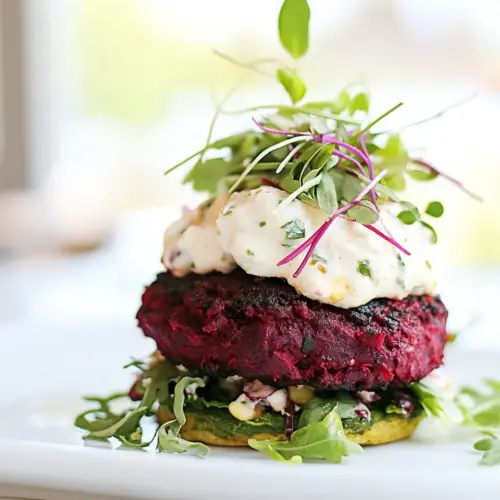
Indian Spiced Beet Veggie Burgers
Indian Spiced Beet Veggie Burgers are crispy edged, tender inside, and fragrant with curry and cumin. These vibrant, easy weeknight dinner patties pair with a bright lemon dill yogurt for a creamy, tangy finish. Perfect for light lunches or casual dinners, they deliver satisfying texture and bold flavor, making them a must try for anyone seeking a colorful plant forward meal.
Equipment
- Food Processor
- Cast-Iron Skillet
- Mixing Bowl
- Spatula
Ingredients
- 1 large red beet peeled and shredded (3 cups) Provide earthy sweetness and vibrant color while adding moisture and a tender texture when shredded; pairs well with spices and binds with rice for cohesive patties.
- 2 cups cooked brown rice Contribute chewy texture and body while supplying starch to help bind the burger mixture; offer nutty flavor and hearty substance.
- 1 tablespoon yellow curry powder Impart warm aromatic spice and bright curry flavor that defines the Indian-inspired profile; helps season the beet and rice mixture uniformly.
- 2 teaspoons ground cumin Add warm, slightly citrusy earthiness that deepens the savory spice profile and complements the curry powder.
- 1/2 teaspoon ground turmeric Introduce a gentle bitter warmth and golden color while supporting digestive benefits and enhancing the spice blend subtly.
- 1/2 teaspoon dill Offer a mild herbal brightness that lightens the overall flavor and pairs nicely with lemon and yogurt components.
- 1 teaspoon ea salt or to taste Season the mixture to enhance and balance flavors; salt also helps draw out moisture from grated beets for better texture control.
- 4 cloves garlic roughly chopped Provide pungent savory depth and aromatic pungency when minced; helps build savory backbone and melds with spices.
- 1/4 cup coconut oil for cooking Serve as the cooking fat to sauté or pan-fry patties, contributing richness and helping form a crisp exterior and even browning.
- 1 1/4 cups plain Greek yogurt Deliver creamy tang and cooling contrast to the spiced burgers when used as a sauce base or dollop; adds protein and richness.
- 1 tbsp dried dill Enhance the yogurt with concentrated herbaceous dill flavor when mixed into a sauce, reinforcing the fresh herbal notes.
- Zest of 1 lemon Contribute bright citrus aroma and oils that lift and brighten the yogurt sauce and salad components for freshness.
- 1 tablespoon lemon juice Add direct citrus acidity and brightness to the yogurt sauce and patties, balancing earthy beets and rich oil.
- 1 teaspoon honey Provide subtle sweetness to mellow the yogurt's tang and enhance overall flavor balance in the sauce.
- 1/4 teaspoons ea salt or to taste Season the yogurt sauce lightly to taste, ensuring the condiment complements the savory patties without overpowering.
- Butter Lettuce Act as a crisp, tender wrap or bun substitute that provides fresh crunch and a cool contrast to warm patties.
- 1 large avocado sliced Deliver creamy, buttery texture and healthy fats when sliced atop the burger; adds richness and smooth mouthfeel.
- Sprouts Supply crisp, peppery freshness and delicate crunch as a final garnish, adding visual appeal and textural contrast.
Instructions
- Combine all ingredients for the lemon-dill yogurt sauce in a small bowl. Stir well and refrigerate until ready to use.: The sauce should smell bright from the lemon zest and a savory herbal note from the dried dill , with a creamy tang from the plain Greek yogurt . Whisking until smooth releases the aroma of the oils in the lemon zest and helps the honey dissolve for a glossy texture. Chill tight in the refrigerator so the flavors meld and the sauce firms slightly, which makes it easier to spoon onto burgers. Common mistake to avoid is over-salting at this stage, since the patties and toppings will add sodium later.
- Wash, peel, and chop 1 large (or 2 medium) beet. Place in a food processor and pulse into small rice-sized pieces. Measure out 3 cups of grated beet and save the rest for other recipes.: You will notice the beet releasing a faint earthy scent as you pulse it, and the sound will turn from loud chopping to a softer, rice-like whir. The visual cue to watch for is uniform, small pieces about the size of coarse rice, which ensures even mixing and cooking. Too-fine processing turns the beet into a puree and risks adding too much moisture, while too-coarse shreds can prevent the patties from holding. A common slip is not draining excess beet liquid, which can make the mixture too wet to shape.
- Add the rice, yellow curry powder, cumin, turmeric, dill, salt, and garlic. Turn your food processor on and process until thick and sticky (you will need to stop and stir the mixture several times).: As you process, inhale the warm aroma of yellow curry powder and toasted ground cumin , a signal the spices are integrating. The texture will change from loose bits to a cohesive, tacky mass that clumps when pressed between your fingers, which is your visual and tactile sign to stop. Stirring intermittently ensures even distribution of spices throughout the beet and brown rice . A frequent error is over-processing, which makes the mixture pasty and reduces the contrast in texture that makes the patties appealing.
- Add enough oil to a cast iron skillet to generously coat the surface and heat to medium.: When the pan heats, the coconut oil will shimmer and release a faint sweet smell, and you may see the oil ripple across the surface. Medium heat is key because it allows the exterior to crisp and brown without burning, while the interior gently warms and binds. A good test is to carefully flick a drop of water into the pan; it should sizzle steadily. The most common mistake is using too high a heat, which browns the outside before the interior sets, or too little heat, which results in soggy patties.
- Form burger patties out of the beet/rice mixture and place on the hot cast iron skillet. Allow patties to cook 2 to 3 minutes (or until crispy). Carefully flip to the other side and allow them to cook another 2 to 3 minutes.: Listen for a confident sizzle when the patties hit the skillet; that sound means the exterior is searing and forming a crust. Visually, edges should turn a deeper color and develop small browned spots, indicating the Maillard reaction is happening, which adds savoriness. After flipping, check for a similar crispness on the second side. Use a thin spatula and gentle motion to avoid breaking the patties. A frequent mistake is turning too early; if the patty resists, give it more time to form its crust.
- Serve beet burgers on lettuce of choice with lemon-dill yogurt sauce, thick slices of avocado, and sprouts.: The final plate should have contrasts of texture and temperature, cool creamy plain Greek yogurt sauce against warm, crisp-edged patties, and silky avocado next to crunchy Sprouts and crisp Butter Lettuce . Spoon the sauce generously so each bite gets a balance of tang and cream. A visual cue of a finished plate is a vibrant pop of green from the greens and avocado set against the deep magenta of the patties. Avoid piling too many toppings which can make the burger unwieldy to eat.
Notes
- Use slightly dry rice, cooled or day old brown rice so the mixture is not overly wet and binds better when formed into patties.
- Control beet moisture by pressing shredded beet lightly if you notice excess liquid, this prevents soggy patties and helps formation.
- Moderate skillet heat keeps the exterior crisp without burning, medium heat is usually perfect for coconut oil in cast iron.
- Chill the sauce for at least 15 minutes so the flavors of lemon and dill meld and the texture firms slightly for easier plating.
- Make ahead and reheat, the patties can be refrigerated or frozen, reheat in a skillet to refresh the crisp exterior rather than microwaving.