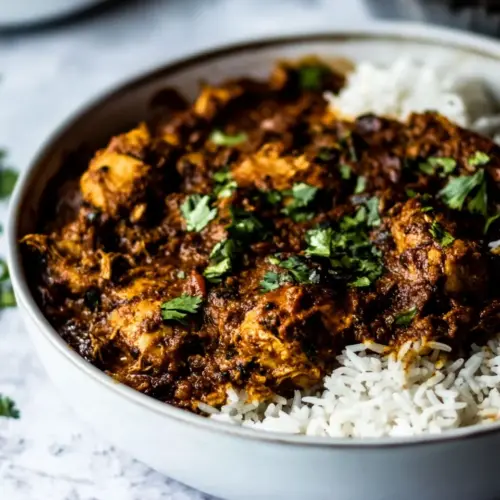
Indian Chicken Rice Casserole
Indian Chicken Rice Casserole blends creamy coconut and tangy yogurt with warm spices like garam masala and turmeric for a comforting, aromatic one pan meal. Tender chicken and fragrant jasmine rice soak up a rich tomato coconut sauce, creating a hearty, easy weeknight dinner that also shines for company. Try it for a stress free, flavorful family meal.
Equipment
- Large nonstick high sided pan
- Spatula
- Mixing Bowl
Ingredients
- 1/2 cup + 2 tablespoons plain Greek yogurt Add creamy tang to the dish and act as a tenderizing marinade component; Greek yogurt helps break down proteins in the chicken for juicier results and contributes a rich, slightly tart flavor that complements the spices.
- 1/2 tablespoon fresh garlic minced Provide a pungent aromatic base and deepen savory flavor in marinades and sautés; minced fresh garlic releases oils when cooked that enhance overall aroma and balance the dish's richness.
- 1 teaspoon fresh ginger minced Contribute a warm, zesty brightness and aromatic lift to marinades; minced fresh ginger adds a sharp, slightly sweet heat that complements garlic and spices while aiding digestion.
- 1/2 teaspoon chili powder Add a mild smoky heat and color to the spice blend; chili powder brings background warmth without overwhelming the other Indian spices and helps round out the flavor profile.
- 2 1/4 teaspoons garam masala Supply complex warmth and essential Indian flavor to the dish; garam masala layers in cinnamon, cloves, and other toasted spices that finish the casserole with aromatic depth.
- 1/4 teaspoon ground cardamom Introduce a sweet, citrusy floral note and subtle warmth to the spice mix; ground cardamom enhances fragrant complexity and pairs especially well with garam masala and yogurt.
- 1 teaspoon ground cumin Deliver earthy, slightly bitter spice and savory depth; ground cumin is foundational to many Indian dishes, helping to ground the brighter spices and citrus elements.
- 1 teaspoon turmeric Impart warm, bitter-sweet color and anti-inflammatory properties to the recipe; turmeric provides characteristic golden color and a subtle earthy flavor that melds with coconut milk.
- 1/2 cup lemon juice Offer bright acidity and tang to balance richness and cut through fat; lemon juice lifts the overall flavor, tenderizes proteins, and brightens the rice and tomato components.
- 1 1/4 teaspoons sea salt divided Season the dish for balanced saltiness and enhance overall flavor perception; dividing the sea salt allows control over seasoning during marination and final cooking adjustments.
- 2 1/2 pounds chicken thighs Provide substantial protein and rich, succulent texture as the main protein component; chicken thighs stay moist during long baking and absorb the spiced yogurt marinade well.
- 1 1/2 tablespoons ghee Bring a nutty, buttery cooking fat that adds depth to sautéed aromatics; ghee withstands higher heat and enriches the casserole with toasted, caramelized notes.
- 1/2 large onion thinly sliced Offer sweet-savory caramelization and a flavor base when thinly sliced and cooked; the large onion softens and becomes richly flavored, contributing sweetness and body to the sauce.
- 1 box strained tomatoes 26.46 ounces, about 1 1/3 cups Contribute a concentrated tomato flavor and body to the sauce; strained tomatoes create a smooth, slightly sweet acidity that melds with spices and coconut milk for a cohesive sauce.
- 1 cup + 2 tablespoons full-fat coconut milk Provide creamy richness and subtle coconut sweetness that balances spices; full-fat coconut milk adds silkiness to the sauce and helps create a luscious, cohesive casserole texture.
- 1 1/2 cups white jasmine rice Absorb flavors and provide a tender, fragrant starch base; white jasmine rice cooks into the sauce, taking on spice and aromatics while contributing a delicate floral note.
- 3/4 cup cilantro roughly chopped Add fresh herbaceous brightness and a burst of color when folded in; roughly chopped cilantro finishes the dish with citrusy, green flavors that lift richness.
- 1/2 cup golden raisins Introduce pockets of concentrated sweetness and chewiness to contrast savory elements; golden raisins soften during cooking and complement spices with fruity notes.
Instructions
- In a large bowl, whisk together the Greek yogurt, garlic, ginger, chili powder, garam masala, cardamom, cumin, turmeric, lemon juice, and 1/2 teaspoon of the salt, reserving the rest for later.: The air fills with bright citrus and warm spice as you whisk, and the mixture should look smooth and slightly glossy; this emulsion helps coat the chicken evenly and allows acid and dairy to begin tenderizing proteins. Sensory cues include a tangy aroma from the lemon juice and a spicy perfume from the garam masala . Stir until there are no clumps of yogurt left. Why this matters is simple, well combined marinade ensures consistent flavor penetration, and a lumpy marinade can lead to uneven seasoning. A common mistake is overwhisking causing separation, so mix just until homogenous.
- Roughly chop the chicken thighs and place them in the yogurt mixture, stirring so they are evenly coated. Cover and refrigerate at least 6 hours, up to overnight.: You will feel the cool, slightly sticky marinade adhere to pieces of chicken , and if each piece is well coated the spices will sear into the meat during cooking. Let the texture of the chicken be the guide, aim for uniform bite sized pieces so they cook evenly. The tactile cue is a glossy sheen on the meat, and visually you should see the spices distributed across the surface. Marinating allows flavors to penetrate, improving tenderness and depth. Avoid undercoating, which can leave bland pockets.
- Once the chicken has marinated, heat the ghee in a large, nonstick, high-sided pan over medium/high heat. Add the onion and cook until tender, about 3-5 minutes.: The waiting period is when transformation happens, the flavors deepen and the lemon juice and yogurt start breaking down connective tissue, making the chicken more tender. You will notice the marinade darkens slightly and the meat becomes softer to the touch. Patience here pays off in texture and flavor, but do not exceed the recommended time by too much or the acid may overly soften the meat. A common oversight is skimping on marinating time, which results in less flavorful chicken .
- Scrape the chicken and the marinade into the pan. Cook until the chicken is tender, stirring frequently, about 5-10 minutes.: When the ghee melts and shimmers, it will develop a warm, nutty aroma; this is your cue that the pan is hot enough. Use a pan with high sides so liquid and steam stay contained while you brown ingredients. The sizzling sound as you add the sliced onion should be audible but not violent. Heating the fat properly ensures better browning and a more complex flavor base. Avoid overheating until smoking, which can burn aromatics and ruin the pan flavors.
- Stir in the strained tomatoes, coconut milk, rice, and remaining salt until well combined. Bring the mixture to a boil. Stir constantly as it boils for 3 minutes to prevent the bottom from burning.: The onion will soften and start to turn translucent, releasing sweet aromas that mellow the spices. Stir occasionally so the pieces soften evenly, watching for light golden edges which indicate caramelization beginning. This step builds savory backbone; a properly softened onion integrates into the sauce and prevents sharp raw onion notes. A common mistake is rushing and leaving raw, crunchy slices.
- Reduce the heat to medium/low. Cover and cook an additional 20 minutes, or until the rice is tender.: The air will fill with intensified spice as the yogurt and marinade hit the hot fat; expect a gentle hiss. Use a spatula to scrape every bit of marinade into the pan so nothing is wasted, and spread the pieces into a single layer for even contact. The immediate smell will be tangy and spiced, a sign the marinade is searing into the surface of the chicken . This step matters because direct heat helps develop a deeper flavor profile. Avoid overcrowding the pan which can cause steaming instead of browning.
- Stir in the cilantro and golden raisins.: As the chicken cooks, you will hear a steady sizzle and see edges take on a light golden hue; the interior should lose its translucent pink. Stirring frequently ensures even cooking and prevents any scorched bits. The texture at the end of this stage should be just cooked through but not falling apart, since it will finish with the rice. A key reason for this technique is to lock in flavor and allow the marinade to reduce slightly. Avoid overcooking which yields dry, stringy meat.
- Remove from heat and serve immediately.: At this point the pan will look saucy and fragrant, and the aroma will shift to a rich tomato coconut blend. The rice should be submerged in the liquid so it can absorb flavors as it cooks. Stir gently to distribute ingredients evenly; you want the rice coated and not clumped. This matters because uniform liquid contact yields even rice doneness. A common error is adding rice unevenly, creating pockets that cook at different rates.
- Bring the mixture to a boil: Watch for lively bubbles breaking across the surface and a rising steam curtain, this signals the right point to transition to gentle cooking. Stir constantly as it boils for 3 minutes to prevent the bottom from burning, and you will notice the sauce thicken slightly as it reduces. Why this matters is that a controlled boil helps the rice begin absorbing liquid in a consistent way. Avoid leaving it unattended during this vigorous phase, as the bottom can scorch quickly.
- Reduce the heat to medium/low: After the boil, you should see a steady gentle simmer and soft steam wafting from the pan. Cover and cook an additional 20 minutes, or until the rice is tender: During this covered simmer the rice will plump and the flavors will consolidate. The sound becomes quieter and you may hear a subtle popping as grains swell. This low, steady heat is crucial to prevent the bottom from burning while allowing even absorption. Common mistake is setting the heat too high which causes drying or burning.
- Stir in the cilantro and golden raisins: With the dish off heat, folding in fresh cilantro releases a bright herbal scent and the golden raisins will plump slightly from the residual warmth, offering sweet pops against the savory backdrop. The visual contrast of green herbs and golden fruit makes the casserole inviting. This step finishes the flavor profile with freshness and bursts of sweetness. Avoid stirring too vigorously which can mash grains of rice .
- Remove from heat and serve immediately: The final moment is about texture and temperature, scoop the casserole so each serving has a balance of chicken , saucy rice, and raisins. The aroma should be warm and layered, with a creamy sheen on the surface. Serving right away preserves the ideal texture, as prolonged standing can make the rice denser. A common misstep is letting it sit covered for too long which leads to over softened grains.
Notes
- Marinating time matters Take the minimum six hours seriously, as the acidity and dairy in the marinade both tenderize and flavor the chicken, producing a more succulent result.
- Watch the boil closely Stirring during the three minute vigorous boil prevents the bottom from burning, which preserves both flavor and your pan.
- Ghee heats differently Heat the ghee until it shimmers but does not smoke, as overheating will impart a bitter edge to the dish.
- Layer flavors, do not rush Each stage builds on the last, so allow the onion to soften fully and let the rice absorb the sauce slowly for best texture.
- Add herbs at the end Fresh chopped cilantro is best folded in off heat to retain its brightness and color.
- Use a pan with high sides This reduces the chance of boil over, helps steam distribution, and makes stirring easier without spilling.