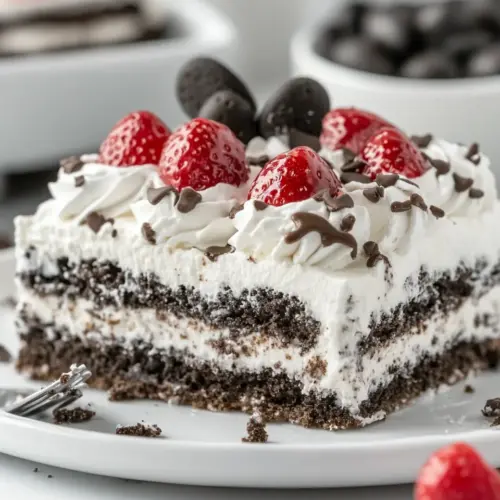
Ice Cream Sandwich Cake
Ice Cream Sandwich Cake is an easy no bake dessert that layers creamy whipped topping, fudgy sauce, crunchy Oreo pieces, and frozen ice cream sandwiches for a crowd pleasing treat. This simple assembly yields a rich, cool, and playful dessert perfect for summer gatherings or a quick celebration, making it an ideal easy entertaining option you'll come back to again and again.
Equipment
- 9×9-inch Cake Pan
- Pre-Cut Parchment Paper Baking Sheets
Ingredients
- 14 Oreo cookies chopped into small pieces Chopped into small pieces to add crunchy texture and deep chocolate flavor scattered throughout the cake; helps contrast the creamy layers and provides bites of cookie in every slice.
- 8 ounces frozen whipped topping Cool Whip or TruWhip, thawed Thawed and folded to create a light, airy layer that binds components and adds sweetness without melting; supplies stable creaminess and helps maintain the cake’s structure when sliced.
- 14 full-size ice cream sandwiches Layered whole to serve as the cake’s primary structure and frozen filling, providing uniform size and creamy vanilla-chocolate centers; forms neat, stackable layers that define the dessert.
- 1 jar hot fudge sauce 11-ounces Poured warm or at room temperature to create rich, gooey ribbons that add intense chocolate sauce and moisture; acts as a finishing sauce and decadent flavor enhancer between layers.
Instructions
- Line a 9 x 9 x 3-inch baking pan with parchment paper.: When you press your fingers on the parchment it should sit smoothly against the sides and bottom, creating a crisp neat edge for the cake after freezing. The cold metal or glass of the pan will help set the layers quickly. Make sure the parchment overhangs a bit on two sides so you can lift the frozen cake out like a little tray, that makes slicing tidy. A common misstep is not securing the parchment, which can slide when you add layers, so press it firmly into the corners.
- In a medium bowl, combine about 2/3 of the chopped Oreos with the whipped topping until just combined. Set aside. Reserve the remaining Oreos.: As you fold the Oreo cookies into the whipped topping , you should see ribbons of cookie throughout the cream, creating a marbled look. The cool scent of the topping will mingle with the cocoa aroma of the cookies, and the mixture should feel airy and slightly textured rather than dense. Stop folding when streaks remain, to avoid deflating the topping. Overmixing will flatten the cream and give you a denser layer that does not freeze as pleasantly.
- Place half of the ice cream sandwiches in an even layer in the baking dish. You will need to cut a couple of the ice cream sandwiches to fit them snugly into the dish.: As you lay the ice cream sandwiches down, listen for a faint scrape as they touch the pan, and feel for firm, cold blocks that line up neatly. Cut only what you need to fill gaps so the layer remains compact and uniform. Keeping them close together helps the cake hold its shape when sliced. A common error is forcing whole sandwiches into small spaces, which creates uneven thickness and unstable layers.
- Evenly spread half of the fudge sauce onto the ice cream sandwiches. Follow with a layer of Oreo whipped topping. Repeat layers. Sprinkle the top of the cake with the remaining chopped Oreos. Cover and freeze for at least 3 hours.: The hot fudge sauce should be slightly warm and glossy, so it spreads in an even, viscous sheet without running. Use the back of a spoon to gently coax the sauce across the frozen surface, performing quick, light strokes so you do not melt the ice cream below. You want a shiny coating that will set as it chills. Avoid using sauce that is too hot, as it will cause pockets of melted ice cream and a soggy texture.
- Follow with a layer of Oreo whipped topping: This layer should sit like a soft blanket, offering visual contrast and a forgiving surface for the next ice cream layer. Smooth it with a spatula but avoid aggressive strokes that would compress the air out of the whipped topping . You want to see peeks of cookie throughout the cream. Pressing too hard will produce a thin compressed layer that freezes rock solid rather than pleasantly scoopable.
- Repeat layers: Repeating the layers creates the cake's signature effect, alternating cold, creamy, and fudgy elements. As you add each level, glance at the sides to ensure even distribution and avoid high spots. The smell of warm fudge with cold cream is an inviting contrast, and seeing consistent layers guarantees tidy slices. Rushing this step can produce lopsided layers, so take a breath and align pieces carefully.
- Sprinkle the top of the cake with the remaining chopped Oreos: The final sprinkle provides crunchy texture and a decorative finish. Scatter pieces evenly and press lightly so they adhere to the top layer without sinking. The visual cue of dark cookie against white cream signals when the cake is ready to serve. Avoid dumping them in one place, which looks messy and gives some bites too much cookie.
- Cover and freeze for at least 3 hours: Freezing solid is essential so the cake slices cleanly and stays firm on warm days. The ice cream sandwiches will knit with the whipped topping and fudge as they chill, and the aroma will fade a bit as the cake sets. Plan ahead so you do not try to slice it too soon, because a partially frozen cake will smear and lose shape. A common pitfall is under freezing, which leads to sloppy slices and a melty presentation.
Notes
- Swap cookie style: Try different sandwich cookies to adjust sweetness and crunch, but keep the same quantity so layering remains balanced.
- Change the sauce: Use a thicker brand of hot fudge sauce warmed just enough to spread smoothly, which affects the chew and chocolate intensity of each bite.
- Whipped topping choice: If you prefer a lighter finish, choose a stabilized whipped topping brand that holds peaks after freezing for a slightly firmer texture.
- Make it portable: Freeze in a disposable pan with parchment overhang for easy transport to picnics or parties; just keep it frozen until serving time.
- Decorate creatively: Add extra chopped Oreo cookies or a drizzle of remaining warm sauce just before serving for dramatic visual contrast and shine.