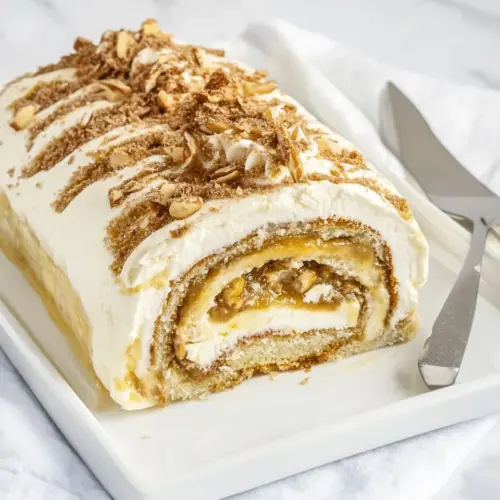
Hummingbird Roulade
Hummingbird Roulade is a tender, tropical rolled cake with mashed banana, ground pecans, and a bright pineapple syrup, finished with a browned butter cream cheese frosting. The combination feels creamy and nutty with a soft, springy sponge, making it an easy make ahead dessert for gatherings. Try it for an easy weeknight celebration or a light holiday finish that people will remember.
Equipment
- Stand mixer with whisk attachment
- Rimmed Baking Sheet
- Parchment Paper
- Offset Spatula
- Fine mesh sieve
- Wire Rack
- Pastry Brush
Ingredients
- 1 cup (133 grams) granulated sugar Sweeten the batter and help with structure by incorporating granulated sugar; creaming with eggs provides lift and fine crumb, balancing moisture from banana and fat in the roulade.
- 2 large eggs (100 grams), room temperature Beat until aerated to provide volume and structure; eggs also act as an emulsifier to bind sugar, flour, and mashed banana into a cohesive sponge.
- 1 teaspoon (4 grams) vanilla extract Enhance overall flavor with a warm vanilla note; vanilla extract deepens the sweetness and complements the banana and cinnamon in the roulade.
- 1/2 teaspoon (2 grams) almond extract Add a delicate nutty aroma with a hint of almond; almond extract brightens the flavor profile and pairs well with pecans and browned butter frosting.
- 1/2 cup (94 grams) all-purpose flour Provide the primary dry structure for the sponge; all-purpose flour gives body and stability while keeping the roulade tender when not overmixed.
- 1/4 cup (24 grams) ground pecans Bring a toasty nutty flavor and slight texture contrast; ground pecans contribute richness and echo the garnish while complementing the browned butter.
- 1/2 teaspoon (2.5 grams) baking powder Lighten the sponge slightly by creating small pockets of air; baking powder helps the roulade rise minimally and keeps the texture soft and springy.
- 1/2 teaspoon (1 gram) ground cinnamon Impart warm, aromatic spice to the batter; ground cinnamon enhances the banana and pecan flavors for a classic hummingbird profile.
- 1/4 teaspoon kosher salt Balance and enhance flavors while strengthening gluten development slightly; kosher salt sharpens sweetness and rounds out the overall taste.
- 1 medium banana (130 grams), mashed (about 1/2 cup plus 1 tablespoon) Provide natural sweetness, moisture, and banana flavor; mashed banana adds both liquid and texture, lending a characteristic hummingbird taste to the roulade.
- Confectioners’ sugar, for dusting Add a light decorative finish and a touch of extra sweetness; dusting with confectioners’ sugar also gives a finished, professional appearance.
- Pineapple Simple Syrup (recipe follows) Moisten the cake layers and infuse bright tropical flavor; Pineapple Simple Syrup adds concentrated pineapple sweetness to keep the roulade tender and flavorful.
- Browned Butter-Cream Cheese Frosting (recipe follows) Create a rich, tangy, and nutty frosting to spread on the roulade; Browned Butter-Cream Cheese Frosting offers depth from toasted butter and creaminess from cheese.
- Garnish: chopped toasted pecans Provide a crunchy, toasty finish and visual contrast; chopped toasted pecans garnish the roulade and reinforce the nutty flavor throughout the dessert.
Instructions
- Preheat oven to 350°F (180°C). Spray a 15 1/4×10 1/4-inch rimmed baking sheet with baking spray with flour. Line bottom of pan with parchment paper; spray parchment.: The moment the oven comes up to temperature the kitchen begins to smell faintly warm, and preheating ensures even rise and a quick set. Spraying the pan and lining it with parchment prevents sticking, which is essential for an intact sponge. When the batter goes into a properly prepared pan it will climb and set evenly, showing a pale golden hue at the edges within minutes. A common pitfall is skimping on the parchment spray, which can make the cake tear when you invert it. If your oven runs hot, rotate the pan halfway through baking to avoid overbrowned corners. Listen for a slightly hollow sound when you tap the pan center, and look for a spring back when pressed gently.
- In the bowl of a stand mixer fitted with the whisk attachment, beat granulated sugar and eggs at medium-high speed until pale, fluffy, and doubled in size, about 4 minutes. Beat in extracts.: As you whip the eggs and granulated sugar , the mixture lightens to a pale ribbon texture and carries a foamy, cloud-like appearance that traps air for lift. Adding the extracts at the end preserves their aroma, which rises with the warm batter. I gauge readiness by lifting the whisk and watching the stream of batter fall slowly, leaving a pale trail that blends back in, which indicates proper aeration. If underwhipped, the sponge will be dense and more likely to crack when rolled. Overwhipping can make the mixture collapse, so aim for the moment it doubles, and then stop. You should smell the vanilla blooming as you finish this step.
- In a medium bowl, whisk together flour, ground pecans, baking powder, cinnamon, and salt. Add flour mixture to sugar mixture alternately with banana, beginning and ending with flour mixture, gently folding with a balloon whisk just until combined after each addition. Pour batter into prepared pan, spreading with an offset spatula.: Combining the dry ingredients first ensures an even distribution of leavening and spices, and the ground pecans add body and toasty notes. Folding in the dry mixture alternately with mashed banana prevents deflating the whipped eggs while ensuring an even batter. The batter should look homogenous and glossy, with gentle streaks disappearing as you fold, and it will spread smoothly when nudged with an offset spatula. Resist overmixing, because that will develop gluten and make the cake tougher. If you see lumps of flour or streaks of banana, continue gentle folds until uniform. The batter should settle into the pan without large air pockets.
- Bake until lightly golden and cake springs back when lightly pressed in center, 9 to 11 minutes. Immediately run a thin knife or a small offset spatula around edges of cake. Using a fine-mesh sieve, dust top of cake with confectioners’ sugar. Place a clean kitchen towel on top of cake. Invert cake onto a baking sheet or a large cutting board; discard parchment. Starting with one short side, immediately roll up cake and towel together jelly roll style. Place, seam side down, on a wire rack, and let cool completely.: During baking the kitchen acquires a gentle, sweet aroma and the surface sets into a silky, slightly golden top. The spring back test tells you the cake is set, and acting immediately prevents cracks when rolling. Running a thin knife around the edges loosens the cake and helps it release cleanly. Dusting confectioners’ sugar provides a barrier between cake and towel, making the initial roll smooth. Rolling while warm shapes the cake without cracking, and placing it seam side down helps it hold form as it cools. A common mistake is letting the cake cool too long before the first roll, which can cause breaks. If you feel resistance while rolling, stop and ease the cake so it bends without tearing.
- Carefully unroll cooled cake. Using a pastry brush, brush cake with Pineapple Simple Syrup. (You will have some left over.) Reserve 1 cup (238 grams) Browned Butter-Cream Cheese Frosting. Spread remaining frosting on cake, leaving a 1/2-inch border on short side that is bottom seam. Gently reroll cake without towel, lifting, laying, and gently tucking roll on top of filling, making sure not to press hard. Using towel as a sling, place roulade, seam side down, on a wire rack or a baking sheet. Refrigerate until set, about 45 minutes.: As you unroll the cooled sponge, the surface should be cool to the touch and hold its shape. Brushing Pineapple Simple Syrup adds moisture and a bright tang that keeps the cake from drying, and you can hear a faint paper-thin sound as the syrup sinks in. Reserving frosting ensures you have enough to finish the outside and fill the inside evenly. When spreading the filling, leave the small border so the seam adheres without oozing. Reroll gently so the spiral stays neat; pressing too firmly squeezes out filling and compresses the texture. Refrigeration helps the filling set and makes slicing cleaner. A frequent error is skipping the chill step, which can cause the roulade to lose shape when slicing.
- Spread reserved Browned Butter-Cream Cheese Frosting on top of roulade, and garnish with chopped pecans, if desired. Serve immediately.: The final smear of Browned Butter-Cream Cheese adds a glossy, nutty sheen, and scattering chopped toasted pecans gives a crunchy contrast to the soft roll. The aroma of browned butter lifts from the surface, and the first slice should reveal a defined spiral filled with creamy frosting. Serve at a slightly chilled temperature so the frosting holds but the cake is not cold and heavy. One mistake to avoid is frosting a very warm roulade, which will make the frosting slip and become messy. A neat, decisive slice with a sharp knife gives the best presentation and maintains the roulade's structure.
Notes
- Adjust the fruit brightness Replace or supplement Pineapple Simple Syrup with a light citrus syrup for a tangier lift, brushing sparingly so the sponge stays pliable.
- Boost the nut texture Increase the chopped toasted pecans as a garnish or fold a few tablespoons into the filling for scattered crunch through the spiral.
- Control the sweetness Reduce the granulated sugar by a small amount if you prefer less sweet desserts, but keep the balance so the cake still browns and sets properly.
- Make frosting lighter Whip the Browned Butter-Cream Cheese slightly longer for an airier texture, but stop before it becomes too soft to hold on the roulade.
- Prep ahead smartly Assemble the roulade and refrigerate seam side down for up to 24 hours, then finish with the reserved frosting and pecans just before serving for a fresher look.