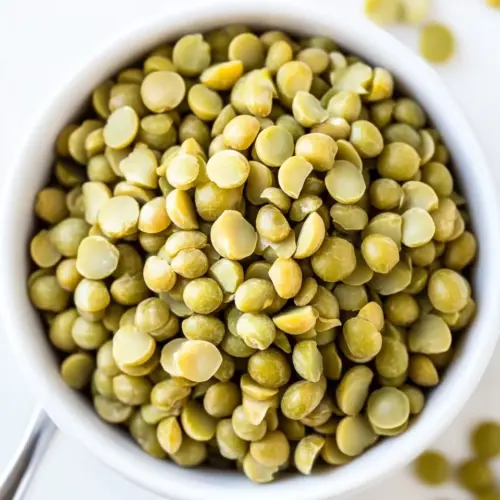
How to Cook Split Peas
How to Cook Split Peas yields creamy, tender legumes with minimal fuss. This easy method produces a versatile, savory base perfect for soups, stews, or spreads. It makes a great easy weeknight dinner foundation or a make-ahead pantry staple, delivering comforting texture and deep, earthy flavor worth trying this week.
Equipment
- Medium Pot
- Colander
Ingredients
- 1 cup dried green split peas Soak and simmer to become the creamy, starchy base of the dish; provides body and plant-based protein when cooked until tender, and helps thicken the soup naturally over low heat.
- 2 cups water or stock Boil and adjust to control cooking intensity and texture; contributes to hydration, allows peas to soften evenly, and infuses additional flavor when using stock instead of water.
- sea salt to taste Season and enhance to bring out natural flavors; balances and brightens the dish when added toward the end, and can be adjusted to taste for a finished savory profile.
Instructions
- Rinse the split peas in a colander under cold water.: You will notice the water running clearer as you gently agitate the split peas , and the initial dusty scent will fade, which helps prevent off flavors in the finished dish. Rinsing removes surface starch and dust, improving final texture and preventing excessive foam while boiling. A common mistake is skipping this step, which can leave grit in the pot, so inspect the rinse water and repeat until it runs mostly clear.
- Transfer the peas to a medium-size pot along with water, or stock, and salt.: As you add the split peas and liquid, notice how they begin to settle and absorb moisture at the edges. Using a medium-size pot gives them room to move and prevents boil-over. The choice of water or stock influences aroma immediately, with stock offering an early savory lift. Avoid crowding the pot, which can lead to uneven cooking, and be careful not to add too much salt at this stage if using a salted stock.
- Bring the peas to a boil over high heat.: The pot will transition from quiet to lively, with rapid bubbling and a rising aroma of cooked legumes. Boiling kick-starts the softening process and helps release starches that will thicken the cooking liquid. Watch for foaming, which is normal, and skim if it threatens to spill. A common error is leaving a vigorous boil unchecked, which can lead to foaming over and loss of liquid.
- Add on a lid and simmer over low heat for 25 minutes or just until tender.: When the heat comes down, you will hear a gentle, steady simmer and see smaller bubbles breaking the surface. Simmering tenderizes the split peas gently, helping them break down into a creamy consistency without falling apart completely. Check for tenderness after about 20 minutes and taste a pea for doneness, because age and variety can change timing. Avoid rapid boiling here, which can make peas burst unevenly and develop a mealy texture.
- Strain the cooked peas and use in a recipe, or chill to use in a recipe later. See reheating instructions.: After draining, the aroma should be warm and vegetal, and the peas will feel soft when pressed between fingers. Straining stops the cooking and helps you control final moisture; reserve cooking liquid if you want to adjust consistency later. A common oversight is letting cooked peas sit in hot water, which causes overcooking and a gummy texture, so cool promptly if you are not using them right away.
Notes
- Rinse until clear — Spend an extra minute rinsing your split peas in a colander and swirl them under cold water; this clears dust and reduces surface starch, which keeps the cooking liquid from foaming excessively.
- Choose your liquid wisely — If you want more depth, use a light vegetable stock; for a neutral base use plain water, both will yield creamy results, but stock adds immediate savory notes.
- Watch the simmer — Bring to a vigorous boil, then reduce to a low steady simmer; this gentle cooking helps peas break down uniformly without becoming gluey.
- Check around 20 minutes — Because dried split peas vary in age, start checking for tenderness at about 20 minutes so you avoid overcooking or undercooking.
- Cool quickly for storage — If you are not using them immediately, spread the cooked peas in a shallow container to cool faster before refrigerating to preserve texture and safety.