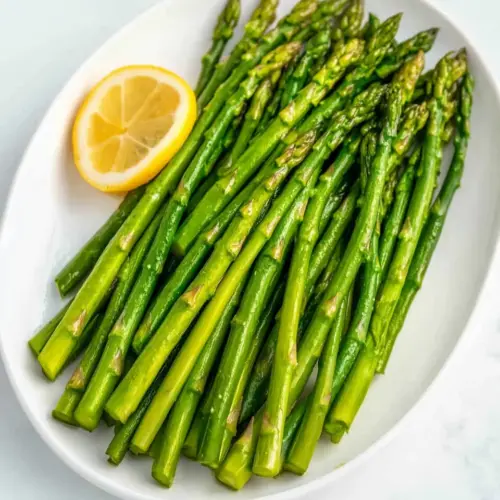
How to Blanch Asparagus
How to Blanch Asparagus yields crisp tender spears with bright color and clean flavor. This easy, fast method produces reliable results for simple sides, salads, or freezing, perfect for an easy weeknight dinner or spring entertaining. With minimal equipment and straightforward steps, it’s a technique that elevates fresh asparagus and rewards repeat practice.
Equipment
- Saucepan
- kitchen tongs
- Colander
- Large Bowl
Ingredients
- 1 pound Asparagus Trim and snap woody ends to ensure even cooking and tender texture; blanched asparagus retains bright green color and slight crunch. Use uniform stalks for consistent blanching times and transfer immediately to ice water to stop cooking.
- 4 quarts water Provide a boiling medium to cook asparagus quickly and evenly; sufficient water prevents temperature drop when asparagus is added, ensuring proper blanching. Bring to a rolling boil before adding spears so they cook in high heat for a brief period.
- 1 teaspoon salt Season the boiling water to enhance the vegetable's natural flavor and help maintain vibrant color; salt also seasons asparagus from the inside as it briefly cooks. Use measured salt so the asparagus isn't under- or over-seasoned during blanching.
- Ice water and ice cubes Create an ice bath to shock asparagus and halt the cooking process instantly, preserving crisp-tender texture and bright green hue. Prepare plenty of ice and cold water so the asparagus cools completely before draining and serving.
Instructions
- First, you'll need to trim the asparagus. Cut off about an inch from the bottom of the stalk. You can save the trimmings for vegetable stock.: The smell of fresh asparagus is green and slightly grassy as you slice the ends. When you bend a stalk near the bottom it should snap cleanly where the tender part begins, a visual cue that the woody portion is gone. Trimming saves unpleasant chewiness in the finished dish and removes fibrous texture that can mask sweetness. A common mistake is cutting too little, leaving a tough bite, so taste one trimmed stalk raw to check tenderness.
- In a saucepan or a large pot, bring water to a boil and salt it.: Listen for a rolling boil before you add the asparagus , the water should sound lively and produce steady steam. The salted water seasons the vegetable and raises the boiling point slightly, which promotes even cooking. If you under-salt, the spears may taste flat after blanching. Avoid adding the asparagus to water that is only gently simmering, because it will make timing unpredictable.
- Fill a large bowl with cold water, add ice cubes to it, and set aside.: The ice bath should be noticeably cold to the touch, with clinking cubes and a crisp chill that contrasts the hot pot. This immediate temperature reversal locks in color and texture. If the ice bath is too small or warms quickly, the cooling effect is lost and the asparagus will continue to cook. Keep extra ice nearby if you are blanching multiple batches.
- Add the prepped asparagus to the boiling water, and set your timer to 2-3 minutes. The broccoli should be bright in color, crisp and tender at the same time.: When the spears hit the boiling water you may hear a brief hiss, and the stems will deepen to a vivid green within a minute. The ideal feel is a crisp tender bite that still offers resistance, not limp. The statement about broccoli in the original text appears to be an oversight, but use the same visual cues for asparagus . Overcooking is common, which turns spears soggy and dull in color, so set a timer and sample one spear at the earlier end of the time window.
- Remove from the saucepan with a spider strainer, and plunge into the ice bath to stop the cooking process. Leave for 1 minute, then drain and use as desired.: You'll hear a soft splash as spears hit the ice water and see steam collapse into cold. Leaving them in the bath for about a minute chills them through and seals that bright green. Drain on paper towels or in a colander, then use as desired. A frequent error is skipping the ice bath or leaving spears in hot water; both cause continued cooking that ruins texture and color.
Notes
- Simple lemon finish Add a squeeze of fresh lemon and a sprinkle of salt after draining to brighten the natural sweetness of the asparagus.
- Olive oil toss Drizzle a little good quality olive oil over warm spears for a silky mouthfeel that complements grilled proteins.
- Chilled salad prep Use blanched and chilled asparagus in composed salads with hearty greens and a light vinaigrette for contrast.
- Freezing for later Flash freeze blanched spears on a baking sheet before storing to retain shape and prevent clumping in the freezer.
- Quick sauté finish After blanching and draining, quickly sauté spears in a hot skillet for color and a touch of caramelization.