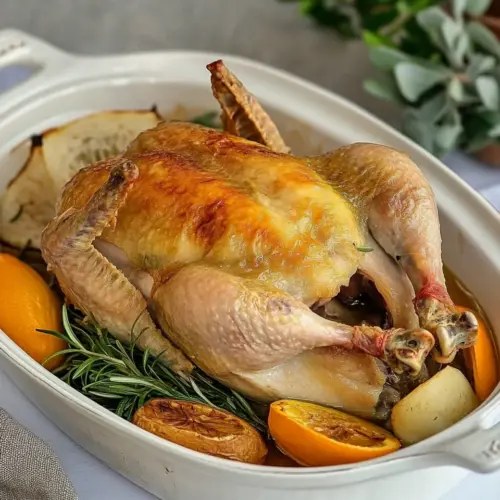
How Long to Boil a Whole Chicken For
How Long to Boil a Whole Chicken For delivers tender, shreddable chicken and rich, savory broth with minimal fuss. This easy, comforting method produces a versatile protein perfect for weeknight dinners and meal prep, while the strained stock becomes a flavorful base for soups and sauces. Make it for a hearty family meal, then use leftovers across several dishes to get the most out of one pot.
Equipment
- Large Pot
- Slotted Spoon
- Fine-mesh strainer
- Thermometer
Ingredients
- 1 whole chicken approximately 4 to 5 pounds Provide the primary protein and structure for the dish, yielding flavorful broth and tender meat when simmered slowly; adjust cooking time based on weight (about 1 to 1.5 hours for 4–5 pounds) and ensure internal temperature reaches 165°F. Allow to rest after cooking so juices redistribute, and use carcass for extended stock if desired.
- Water enough to cover the chicken Cover the chicken completely to ensure even cooking and sufficient liquid for broth extraction; use cold water to start and bring gently to a simmer to avoid toughening the meat. Monitor water level and skim foam for a clearer stock during the initial boil.
- 2 teaspoons salt Season the poaching liquid to penetrate and enhance both meat and broth; dissolve into the water early so flavors distribute throughout cooking. Adjust to taste afterward, keeping in mind that some will concentrate as the liquid reduces.
- 1 large onion quartered Contribute savory sweetness and aromatic depth to the broth when simmered; quartering increases surface area to release flavor without overcooking. Remove or strain before serving for a clear presentation and smooth texture.
- 2 carrots cut into large chunks Add natural sweetness and body to the stock while balancing savory elements; cutting into large chunks prevents them from disintegrating during the long simmer. Use cooked carrots removed from the broth as a flavorful garnish or mash for baby food.
- 2 celery stalks cut into large chunks Provide aromatic, slightly bitter notes that brighten the broth and complement other vegetables; large chunks retain texture and can be strained out after cooking. Consider saving cooked celery pieces for blending into soups or sauces.
- 1 bay leaf Impart subtle herbal depth and a mild, slightly floral aroma to the simmering liquid; add whole and remove after cooking to avoid overpowering the broth. Use fresh or dried bay leaf depending on availability, adding near the start of simmering.
- 10 whole black peppercorns Introduce warm, pungent heat and a faintly citrusy note to the stock when added whole; keep whole to ease removal and prevent excessive peppery intensity. Lightly crush for a stronger flavor or add as-is for a gentle background spice.
Instructions
- Prepare the chicken by removing any giblets from the cavity and rinsing the chicken inside and out.: As the bird comes into your kitchen you will notice the cool, damp skin and the faint scent of poultry; cleaning the cavity and rinsing with cool water removes loose bits that can make the broth cloudy, and it lets you pat the chicken dry so it sits in the pot without stray debris. You should feel the weight of the bird and check the cavity carefully, fingers tracing the inner curve to locate any packets of giblets, which I always tuck aside for later use or discard. A common mistake is rushing this step and leaving fragments inside, which can float and cloud the stock; take an extra moment to inspect and wipe the interior with a paper towel if needed. The tactile feedback of a clean cavity reassures you the broth will be clear, and the rinse should be brief and gentle so you do not bruise the skin.
- Place the chicken in a large pot and add enough water to cover it completely. Add salt, onion, carrots, celery, bay leaf, and peppercorns.: When you lower the chicken into the pot you will hear the soft splash of water and see the liquid curve around the skin, which signals even contact for cooking. Add cold water so the temperature rises gradually and flavors extract evenly, then stir in the measured salt and tuck the quartered onion , chunked carrots , celery , bay leaf , and whole black peppercorns around the bird; the broth will smell faintly vegetal at first, and those aromatics will bloom as heat increases. One thing to avoid is overcrowding the pot; if the water cannot circulate, the chicken may cook unevenly, so pick a pot that gives a little room around the bird. The visual of vegetables bobbing at the surface is your cue that everything is positioned for a slow, steady simmer.
- Bring the pot to a boil over high heat, then reduce to a simmer. Cover partially and cook for 90 minutes, or until the chicken is tender and the internal temperature reaches 165°F.: You will see vigorous bubbling as the liquid reaches a boil, and that boiling energy helps drive impurities to the surface; skim any foam with a spoon so the broth stays clear, then lower the heat so the surface moves in gentle ripples, a true simmer. Partially covering the pot traps warmth while allowing steam to escape, and over the next hour and a half the kitchen will fill with an inviting aroma of caramelized onion and warm spice. The chicken should yield near the joints and the meat will feel tender when probed; for safety check the thickest part with a thermometer to confirm it reads at least 165°F . A typical pitfall here is boiling too hard, which toughens proteins and makes the meat stringy; aim for a steady simmer so collagen breaks down slow and the texture becomes silky. Listen for a quiet hiss rather than a roar, and watch for the meat to slightly pull away from the drumstick bone as a visual sign of doneness.
- Remove the chicken from the broth, and let it cool slightly before handling. Strain the broth through a strainer or cheesecloth and reserve for use in soups and sauces.: When you lift the chicken out with tongs or a slotted spoon you will notice the broth is deeply colored and aromatic, and setting the bird on a tray to cool makes carving easier because the juices re-distribute. Straining the liquid captures the clarified stock, leaving behind the softened vegetables and any particulates; running it through a fine mesh strainer or cheesecloth yields a clean, translucent liquid perfect for future recipes. While handling the warm bird, wear mitts and let it rest so the meat firms up slightly for easier shredding, and be mindful not to plunge the chicken back into boiling liquid which can leach texture and dilute flavor. A common error is storing unstrained broth with solids, which can ferment faster; I always cool and refrigerate the clear stock separately for the best shelf life and clarity.
Notes
- Add more aromatics to deepen flavor, for example increase the onion or add extra carrots, but remember these will also sweeten the stock so balance with salt.
- Control the intensity by adjusting simmer time, a shorter simmer keeps a lighter broth, while a longer one concentrates flavor and yields more gelatinous stock.
- Use the reserved broth for sauces or soups, chilling it first makes removing fat easy, which refines the final texture and mouthfeel.
- Shred and store the cooked meat in bite sized portions for quick meals later, keep it in the broth or lightly salted water to retain moisture.
- Strain carefully through cheesecloth for crystal clear stock if you plan to serve it as a consomme or use it in delicate dishes.