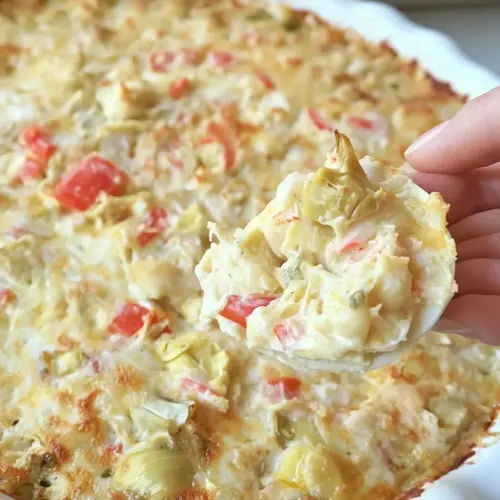
Hot and Cheesy Crab and Artichoke Dip
Hot and Cheesy Crab and Artichoke Dip is a creamy, bubbly appetizer with tender crab meat, tangy dairy, and melted cheddar cheese. Easy to assemble and oven baked to a golden top, it makes an ideal easy weeknight crowd pleaser or party starter. The bright notes from lemon juice and a dash of tabasco sauce balance the richness, giving you a compelling reason to make it tonight.
Equipment
- Oven
- Shallow baking dish
- Medium Bowl
- Rubber spatula
Ingredients
- 14 oz can artichoke hearts packed in water, drained (8.5 oz dry wt) Drain and chop to provide tender, slightly tangy artichoke pieces that add bulk and a subtle vegetal flavor to the dip; their soft texture helps create a creamy, cohesive mixture when mixed with dairy and cheeses. Preserve the water-packed artichokes' mild acidity by draining thoroughly to avoid thinning the dip, then gently fold into the base to distribute evenly.
- 1 lb crab meat, imitation or lump Flake gently and fold in to lend sweet, briny seafood flavor and meaty texture that defines the crab-forward character of the dip. Use lump or imitation as listed, handling carefully to keep chunks intact so bites retain visible crab and satisfying mouthfeel.
- 2 tbsp chives Chop finely and sprinkle through the mixture to contribute a mild onion-like freshness and gentle green color contrast, brightening the rich, cheesy profile. Use as a finishing element and mix-in to balance richness without overpowering the dip's delicate seafood notes.
- 6 tbsp reduced fat sour cream, or Greek yogurt Spoon and blend to create a tangy, creamy foundation that lightens the overall richness while adding smooth body to the dip; Greek yogurt can be substituted for a thicker, protein-rich option. Incorporate evenly with mayonnaise and cheeses to ensure a consistent, luscious texture and slight acidity that complements the crab and artichokes.
- 6 tbsp light mayonnaise, Hellman's Spoon and emulsify into the creamy base to add moisture, body, and subtle savory richness while helping bind cheeses and other ingredients together. Choose a light mayonnaise to reduce fat while maintaining the classic mayonnaise flavor and silky mouthfeel expected in a hot, baked dip.
- 1/3 cup parmesan cheese Grate and mix in to provide nutty, salty umami that enhances overall savory depth and promotes a browned, flavorful crust when baked. Incorporate evenly with other cheeses to boost meltability and deliver a sharp, slightly granular texture contrast.
- 3/4 cups shredded reduced fat sharp cheddar cheese Sprinkle and fold through for a rich, melty sharp-cheddar component that contributes creamy stretch and pronounced cheddar flavor when warmed. Use reduced fat shred for lower-calorie option while ensuring it melts into a smooth, gooey consistency that defines the dip's indulgent character.
- 2 tsp tabasco sauce Measure and stir in to introduce a focused, vinegary heat that wakes up the flavors without overwhelming the seafood; adjust to taste for desired spice level. Disperse evenly to infuse the dip with subtle piquancy that complements the creamy and cheesy elements.
- 1 tsp lemon juice Squeeze and add to brighten flavors with fresh citrus acidity that cuts through richness and enhances seafood notes. Use sparingly to lift the overall profile and provide a clean finish that balances the dip's creamy components.
Instructions
- Preheat the oven to 400°.: As the oven warms you will start to smell the faint warm breath of toasted air, an early hint that the top will soon blister and brown. This preheat ensures an even bake and a crisped top, rather than a slow, soggy melt. One reason this matters is that cheeses need immediate consistent heat to form that golden skin rather than simply melting into the dish. A common mistake is skipping full preheating, which can result in uneven bubbling and longer bake times.
- Drain the artichoke hearts and chop fine.: When you chop the drained artichoke hearts , the sound is soft and damp, and the visual cue is small, irregular pieces that will distribute through the dip. Drying them well prevents excess moisture from watering down the final texture, and finely chopped pieces give pleasant bites without big fibrous chunks. The why here is texture harmony, so the artichokes disappear into creamy pockets. Avoid leaving them too large, which can throw off mouthfeel.
- Chop the crab meat fine.: Flaking or chopping the crab meat reveals tender pink and white strands that promise briny sweetness in each scoop. Work gently so you keep some intact flakes for texture, but break larger lumps into manageable pieces. This ensures consistent distribution so each bite gets crab presence. Overworking the crab can make it pasty and reduce the perception of quality.
- Add them to a medium bowl and add remaining ingredients.: As you combine the chopped artichoke hearts and crab meat with the measured dairy and cheeses, you'll notice the mixture start to look cohesive, with flecks of green from chives and the cream taking on a pale golden sheen. This stage is crucial for flavor integration, allowing the tangy elements like lemon juice and tabasco sauce to knit with the dairy. A frequent error is adding cold ingredients unevenly, which can leave pockets of unmixed mayonnaise or sour cream, so fold gently for an even blend.
- Mix well using a rubber spatula, then transfer into a shallow baking dish.: The rubber spatula is perfect because it scrapes the bowl clean and folds ingredients without crushing them. The texture will feel thick and luxurious, with visible strings of shredded cheddar cheese peeking through. Transferring to a shallow dish promotes a pleasing amount of surface area for browning. If you use a too deep dish the center may stay molten while the surface struggles to brown, so choose a dish that allows even heat exposure.
- Bake until the cheese is melted and the top becomes golden, about 30 minutes.: During baking, the dip will shift from opaque to glossy, then start to bubble and emit savory aromas. The top will turn a rich golden brown and you may hear soft bubbling sounds as moisture escapes. This step develops both texture and flavor as Maillard reactions introduce nutty, toasty notes. Avoid opening the oven frequently, which can prolong baking and prevent a uniform crust. If the top browns too quickly, lower the oven temperature slightly and tent with foil to prevent burning.
- Serve hot with baked chips.: Bringing the dish out warm makes the cheese string and the aroma swell, encouraging immediate dipping. Serving with baked chips gives a crisp contrast to the creamy interior and provides sturdy vehicles for scooping. Consider the texture of your dippers, because flimsy crackers will fold under a hearty scoop and may frustrate guests. A typical slip is letting the dip cool too long, which firms it and reduces the luscious mouthfeel.
Notes
- Make ahead advantage - You can assemble the dip up to a day in advance and keep it covered in the refrigerator, then bake just before serving to preserve freshness and reduce last minute work.
- Even mixing - Use a rubber spatula to fold ingredients so the crab meat and cheeses are evenly distributed without getting mashed into a paste.
- Check moisture - After draining the canned artichoke hearts, press them lightly with a paper towel to remove excess water which can make the dip runny during baking.
- Watch the top - If the surface reaches deep golden quickly, lower the oven by 10 to 20 degrees and tent with foil to prevent burning while the center finishes bubbling.
- Serve smart - Offer sturdy dippers like baked chips or thick slices so guests can scoop without the cracker bending and breaking.