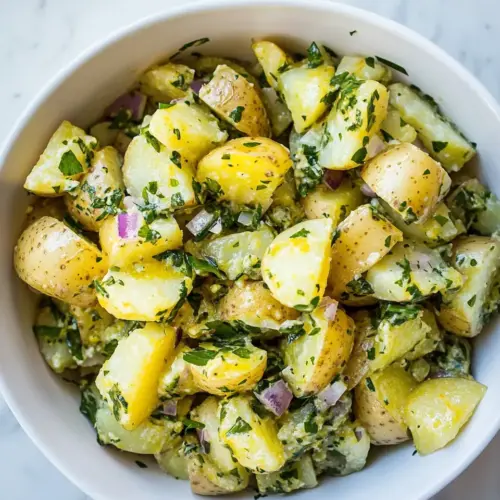
Honey Mustard Potato Salad
Honey Mustard Potato Salad is a creamy yet bright side dish with tender baby yellow potatoes, soft hard boiled eggs, and a zesty lemon mustard dressing. It’s easy to make, perfect for spring picnics and weeknight dinners, and offers a delightful balance of textures and flavors that keep everyone coming back for seconds. Make it ahead for even better flavor.
Equipment
- Medium Pot
- Large Bowl
- Small Bowl
- Whisk
- Knife
Ingredients
- 1 -1/2 pounds baby yellow potatoes Boil or steam until fork-tender, then halve or quarter to provide a creamy, tender base that soaks up dressing and balances textures in the salad.
- 3 hard-boiled eggs, diced Dice finely after cooling to add rich, custardy texture and protein, helping to bind the salad and offer savory pockets throughout each bite.
- 2 green onions, thinly sliced green part only Slice thinly and use only the green part to lend a mild onion flavor and bright color while avoiding overpowering raw sharpness in the dressing.
- 1 medium shallot, minced Mince finely to contribute a delicate sweet-onion aroma and subtle pungency that enhances depth without overwhelming the other fresh flavors.
- 2 tablespoons minced fresh parsley Chop into small pieces to deliver fresh herbal brightness and a clean, grassy note that lightens the richness of the potatoes and eggs.
- 1 lemon, juiced Squeeze fresh juice to provide bright acidity that brightens the overall flavor, helps balance fat, and adds a zesty lift to the dressing.
- 1 lemon, zested Zest finely to contribute concentrated citrus oils for aromatic brightness and a fragrant lift that complements the lemon juice without adding more acidity.
- 2 tablespoons olive oil Drizzle and whisk into the dressing to add smooth mouthfeel and a fruity, slightly peppery fat that helps emulsify flavors together.
- 1 tablespoon whole grain mustard Stir into the dressing to provide tangy, grainy texture and acidic sharpness that anchors the honey and balances the salad's creaminess.
- 1 tablespoon honey Whisk in to add natural sweetness and floral notes that mellow the mustard's bite while creating a harmonious sweet-tangy dressing.
- Kosher salt, to taste Season to taste to enhance and round out all flavors; use sparingly at first to avoid over-salting the potatoes and dressing.
- Black pepper, to taste Grind freshly to taste to add subtle heat and aromatic complexity, finishing the salad with a gentle spice that lifts the other ingredients.
Instructions
- Quarter or halve baby potatoes based on their size. You’re looking for a chunky potato salad but you want each potato chunk to be about bite size.: The aroma of freshly cut baby yellow potatoes is subtle and earthy, and you should aim for pieces that are roughly bite sized so they cook evenly. Using uniform pieces ensures consistent doneness, and visually you get an appealing bowl with similar sized chunks. A common mistake is leaving some pieces much larger than others, which causes uneven cooking where some are underdone while others fall apart. Take your time to cut them thoughtfully and feel the weight of each piece as you assess size.
- Add the potatoes to a medium-sized pot and fill with cold water. Set over high heat and boil until just tender. Drain and let cool slightly.: Starting the baby yellow potatoes in cold water lets them heat gradually so the exterior and interior cook at the same rate, which prevents the outside from overcooking before the center is tender. You will hear a gentle rolling simmer as they approach doneness, and the smell will be faintly starchy. A frequent slip up is adding potatoes to already boiling water, which can cause the outside to break down before the center cooks. Make sure the pot is large enough so the potatoes move freely while boiling.
- Add potatoes to a large bowl.: Listen for a steady boil and watch for a fork to glide into a piece with slight resistance but not mushiness, that is your cue. The potatoes should keep their shape with a glossy surface when drained, and they will still feel slightly firm to the touch. Overcooking yields mealy, grainy pieces that will fall apart when tossed, so check early and often starting around the shorter end of the expected time.
- To the potatoes add diced egg, green onions, shallot, and parsley, and set aside.: Draining releases the hot steam and you will notice a warm, faintly sweet potato scent. Letting them cool briefly makes them easier to handle and prevents the dressing from wilting the other ingredients. If you dress piping hot potatoes, the eggs may overheat and break down, and the herbs can lose vibrancy. Avoid rinsing under cold water unless you need to stop cooking immediately, since that can wash away some flavor.
- In a small bowl whisk together lemon juice, lemon zest, olive oil, whole-grain mustard, honey, kosher salt, and black pepper.: The large bowl gives you room to toss without splashing, and as you transfer the warm baby yellow potatoes you will see steam rise, carrying citrus and starch notes. This is a good moment to check for any overcooked pieces and remove them if needed. Crowding in a small bowl can make it hard to fold in other ingredients consistently, leading to pockets of undressed potato.
- Pour dressing over the potato mixture and toss to combine. If it looks dry add a few more drizzles of olive oil.: When you fold in the diced hard boiled eggs and minced shallot , the contrast of textures becomes obvious, and the chopped green onions and parsley add visual brightness and a fresh scent. Mixing them while the potatoes are still warm helps the dressing cling later, without cooking the eggs. A typical error here is overmixing which can mash the potatoes and make the salad gummy; fold gently instead.
- Give it a taste and season with more kosher salt and black pepper if needed.: As you whisk the lemon juice with olive oil and whole grain mustard , you will notice the dressing emulsify into a silky, fragrant sauce with visible mustard seeds. The zest releases aromatic oils that will perfume the dressing. Whisking well ensures the honey disperses evenly, preventing sweet pockets. If you skip a vigorous whisk, the dressing may separate and fail to coat evenly.
- At this point, you can either let it sit and eat the salad at room temperature OR let it chill in the refrigerator until cold (or even overnight!) and you’ll salad will be super flavorful since it was able to rest in the fridge to really absorb all the flavors.: When you pour the dressing you will see it sheen over the potatoes and vegetables, and tossing helps it cling into every crevice. The salad should look glossy rather than oily, and you can add a few extra drizzles of olive oil if it appears dry. A common oversight is adding all the dressing at once without tasting; add most, then adjust to preference.
- If it looks dry add a few more drizzles of olive oil: The extra olive oil brings silk and helps the dressing coat better, giving a luxurious mouthfeel. You will notice the texture shift from matte to slightly glossy, and the oil will carry the aroma of the lemon and mustard . Be cautious not to overdo it, as too much oil can weigh down the salad and mask the bright flavors.
- Give it a taste and season with more kosher salt and black pepper if needed: Tasting at this stage is crucial; adjust with kosher salt and freshly ground black pepper until the flavors sing in balance. Salt enhances the savory notes while pepper introduces a mild heat. Many cooks forget to taste before serving, which leads to bland results, so take a spoonful and refine seasoning to your liking.
- At this point you can either let it sit and eat the salad at room temperature OR let it chill in the refrigerator until cold: Allowing the salad to rest will let the dressing penetrate the potatoes and mellow the sharp edges of the shallot and lemon . Chilling overnight intensifies the flavors, producing a more cohesive taste where the mustard seeds and honey have time to blend. A mistake to avoid is leaving it out too long in hot weather; if you plan to serve later, refrigerate to maintain food safety and texture.
Notes
- Choose small waxy potatoes: Using baby yellow potatoes ensures you get creamy interiors that hold their shape, which is ideal for chunkier salads that do not turn mushy.
- Don’t overcook the eggs: Cook hard boiled eggs just until done to avoid a gray ring and sulfur smell; immediate cooling improves texture and color.
- Use fresh lemon zest and juice: Fresh lemon zest adds aromatic oils that bottled juice cannot replicate, boosting the dressing’s brightness.
- Adjust honey to taste: The spoonful of honey balances acidity, but sweetness preference varies, so add incrementally and taste between additions.
- Fold gently: When incorporating the diced hard boiled eggs and herbs, fold gently to preserve the potatoes shape and avoid a mashed texture.
- Make ahead advantage: This salad often tastes better the next day after chilling, as the dressing permeates the potatoes, making it a great make ahead side.