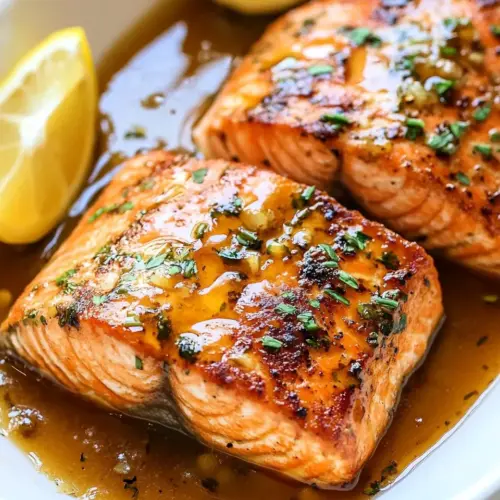
Honey Garlic Salmon
Honey Garlic Salmon is a glossy, easy weeknight dinner that balances sweet honey, savory soy sauce, and bright lemon. The seared salmon gets a buttery, caramelized coating that is both tender and slightly crisp, perfect for busy evenings when you want impressive flavor without fuss. Make it for a quick family meal or a relaxed dinner with friends.
Equipment
- 12-inch Non-Stick Skillet
Ingredients
- 4 salmon fillets 8 ounces each (225 g) skin on or off, patted dry with paper towels Pat dry and cook gently to achieve a crisp exterior while preserving moist, flaky flesh; contributes the primary protein and rich texture to the dish and carries the sauce flavors well.
- 1/4 teaspoon paprika or smoked paprika Add smoky warmth and subtle color to the fish without overwhelming other flavors; sprinkle lightly to enhance visual appeal and provide a mild earthy note.
- 1/2 teaspoon salt Season the fillets to enhance natural flavors and balance the sweetness of the sauce; use sparingly to avoid oversalting and to bring out savory depth.
- 1/4 teaspoon ground black pepper Provide a sharp, aromatic contrast that lifts the overall profile and balances sweet elements; grind fresh for best result and distribute evenly before cooking.
- 2 tablespoons butter Brown to add nutty, savory richness that helps create a glossy sauce base; melt gently with garlic to infuse butter with flavor and coat the salmon.
- 4 cloves garlic finely minced Release pungent, aromatic intensity when sautéed to form the flavor backbone of the glaze; mince finely to distribute aroma and meld into the sauce.
- 3 tablespoons honey Deliver concentrated sweetness and sticky glaze that caramelizes on contact with heat; balance with acid and salt to avoid cloying results and create a lacquered finish.
- 1 tablespoon water Thin the honey slightly and help adjust glaze consistency for even coating; stir into warm sauce to loosen and allow better absorption into the fish.
- 5 teaspoons soy sauce Impart salty, umami depth and savory complexity to complement honey; add to the glaze to enhance overall savoriness and balance sweetness.
- 2 tablespoons lemon juice Introduce bright acidity to cut through richness and elevate flavors; squeeze fresh for best brightness and stir into the sauce to harmonize sweet and salty notes.
Instructions
- Season the salmon fillets with paprika, salt, and pepper. Use your hands to gently press the seasonings into the flesh.: Right away you should smell a faint earthy paprika and the bright scent of black pepper . Use your fingertips to feel that the spices are evenly distributed, this tactile step ensures every bite has seasoning. The pressure helps the rub stay put when the salmon hits the pan, promoting an even crust. A common mistake is using damp fish, which causes the spices to clump and steam the flesh rather than sear it. If you notice the seasonings sliding off, pat the fillets dry again and reapply a light dusting.
- In a pan, melt butter over medium-high heat and sear the salmon skin-side down first. Use your spatula to lightly press the filets for full contact with the pan. Flip after a few minutes, then let them rest on a plate when done.: You will hear an immediate sizzle as moisture evaporates, and the aroma of butter hitting hot metal should be nutty and inviting. Pressing the fillets creates full contact, encouraging an even golden surface. Watch for the edges turning opaque as a visual cue to flip. Letting the salmon rest off the heat allows carryover cooking and keeps the interior tender. Avoid flipping too early, which prevents proper browning, and resist poking the fillets which can release juices and dry the fish.
- Keep the melted butter in the pan, and add the garlic, honey, water, soy sauce, and lemon juice. Cook for a couple minutes until it begins to thicken.: As the garlic hits warm fat, a heady, savory aroma will bloom, signaling flavor development. The honey will dissolve into glossy streaks, and the soy sauce will deepen the color. Stirring gently helps the liquids emulsify into a cohesive glaze. You want to see small bubbles form and the sauce coat the spoon. If the mixture becomes too dark quickly, lower the heat, because burnt sugars will create bitterness. Another misstep is adding the lemon juice too early which can prevent the sauce from reducing properly.
- Return the cooked salmon filets to the pan, and cover them with sauce. Cook a couple more minutes until everything is incorporated with the glaze. Garnish with lemon slices, parsley, and serve!: When the fillets go back into the pan, you should hear a soft sizzle as the glaze hugs the surface, and the aroma will be sweet, savory, and bright. Use a spoon to baste the tops, ensuring the sauce clings and forms a glossy finish. The final few minutes let the flavors marry and the sauce set slightly so each bite has that lacquered coating. Watch for the sauce bubbling gently rather than roaring, which indicates the right temperature. A common error is leaving the fish in the pan too long, which overcooks the center and makes it chalky instead of flaky. When finished, a fork should break the flesh into moist flakes with a sheen of glaze.
Notes
- Control the heat: Start with medium high to get a good sear, then lower slightly for the glaze so the sugars do not burn, preserving a glossy finish.
- Dry the fish thoroughly: Patting your salmon dry prevents steaming and helps the surface caramelize, giving you that desirable contrast of textures.
- Use fresh lemon: Fresh lemon juice brightens the sauce in a way bottled juice cannot, adding a lively lift to each bite.
- Taste as you go: Because soy sauce varies in saltiness, taste the glaze before finishing, and adjust with tiny additions of water or honey if needed.
- Don’t overcrowd the pan: Give each fillet space to sear; overcrowding lowers pan temperature and leads to uneven cooking.
- Watch the garlic closely: Aim for fragrant and slightly golden, not brown, since burnt garlic becomes bitter and will ruin the glaze.