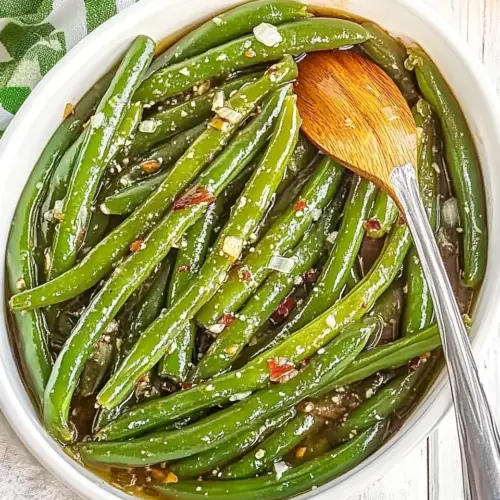
Honey Garlic Green Beans
Honey Garlic Green Beans are a quick, glossy side dish with crisp green beans coated in a sticky sweet soy and garlic glaze. Bright, slightly sweet, and savory, this easy weeknight side brings texture and big flavor to dinners. Make it for gatherings or a weekday meal when you want a vegetable that tastes special without extra fuss.
Equipment
- 10-inch Skillet
Ingredients
- 2 pounds fresh green beans, cut into bite-sized pieces Provide crisp texture and fresh vegetal flavor while delivering the base bulk of the dish; cut into bite-sized pieces to ensure even cooking and easy eating. Help absorb the sauce and caramelize slightly when sautéed for added depth.
- 2 tbsp butter Add richness and a silky mouthfeel while helping to brown and carry flavors; melt in the pan before adding other ingredients to create a glossy coating. Contribute subtle savory notes that balance the sweetness of the honey.
- 4 tbsp honey Impart pronounced sweetness and a sticky glaze that helps the sauce adhere to the green beans; add during cooking to create caramelization and shine. Offer a mild floral note that complements garlic and soy in the sauce.
- 2 tbsp soy sauce Bring umami depth and salty balance to the glaze while enhancing savory complexity; incorporate with honey to create a harmonious sweet-salty profile. Act as a seasoning that deepens flavor and helps thin the sauce for even coating.
- 4 garlic cloves, minced Deliver pungent aromatics and savory bite that brighten the dish; mince finely so the garlic disperses and infuses the sauce evenly. Provide a fragrant foundation that contrasts the sweetness and enhances overall flavor.
- 1/4 tsp salt Provide gentle seasoning to enhance and balance flavors without overpowering; measure carefully to avoid oversalting given the soy sauce. Help highlight natural sweetness and savory components when added toward the end of cooking.
- 1/4 tsp crushed red pepper flakes Introduce subtle heat and a touch of smoky spice to lift the flavor profile; sprinkle sparingly to control the level of spiciness. Add visual interest and a mild lingering warmth that complements the sweet and savory glaze.
Instructions
- In a large skillet, melt butter. Add green beans; cook, stirring constantly, over high heat until slightly blistered, 2-3 minutes.: The moment the butter hits the hot skillet you should hear a soft sizzle, and the aroma will become nutty as the milk solids warm. This sizzling cue tells you the pan is hot enough to sear the vegetables rather than steam them. Visually, the butter will foam and then calm down, leaving a glossy sheen across the surface. Why this matters, the melting fat forms a flavor base and helps everything brown slightly, which deepens the overall taste. Troubleshooting tip, if the butter smokes immediately, lower the heat briefly and wipe the pan clean to avoid a burnt flavor. Keep your tools ready because once the beans hit the pan you move quickly.
- Whisk together honey, soy sauce, garlic, salt, and pepper. Pour over green beans. Continue cooking and stirring until beans are coated and the sauce starts to evaporate slightly, 2-3 minutes.: When you add the green beans , scatter them so they have room to touch the hot surface, and you should hear lively sizzling and occasional pops as moisture escapes. Stirring constantly encourages even contact and prevents scorching, while the blistered spots will show as darker flecks against the bright green. The smell will shift toward a roasted vegetable aroma, slightly sweet and toasty. This quick high heat keeps the interior snappy and the exterior slightly charred which creates texture contrast. A common error is overcrowding the pan which leads to steaming instead of blistering, so cook in batches if needed.
- Whisk together honey, soy sauce, garlic, salt, and pepper: As you combine the honey and soy sauce , the mixture should look glossy and pourable, and the minced garlic will infuse it with a sharp, fragrant aroma. Whisking ensures the sweet and savory elements emulsify so the sauce will cling to the beans rather than pool in the pan. This step matters because a cohesive glaze yields even flavor distribution. If the honey seems too thick, warm the mixture briefly to loosen it, but avoid overheating which can caramelize the honey too much and introduce bitterness.
- Pour over green beans: When you pour the sauce over the hot green beans , you will hear a brief hiss as the liquid hits the pan, and the aroma of soy and garlic will immediately lift. Seeing the glossy sauce coat each bean is a satisfying visual cue that they are absorbing flavor. This interaction allows the heat to reduce the sauce just enough so it clings rather than runs. The why, this step creates the signature glaze and integrates the garlic throughout. Avoid dumping cold sauce into a tepid pan because it will not reduce properly and the beans may become soggy.
- Continue cooking and stirring until beans are coated and the sauce starts to evaporate slightly, 2 to 3 minutes: As you stir, watch the sauce transform from runny to syrupy while the pan emits a concentrated toasty-sweet scent. Gently toss so each green bean gets glossy coverage, and look for tiny bubbles along the edge of the sauce which signal the right thickness. The beans should still snap when bitten, but their surface will be tacky and shiny. This finishing step intensifies flavor and helps the sauce adhere, which makes every forkful balanced. If the sauce reduces too aggressively and begins to char, remove from heat and toss quickly to cool it, preventing bitterness.
Notes
- Use fresh green beans: Fresh green beans give the best texture and color. If you substitute canned or frozen, adjust cooking so they do not become mushy, and drain or pat dry to prevent a watery sauce.
- Watch the heat: High heat is important to blister the beans quickly, but if the butter or sauce begins to smoke, lower the pan momentarily. Controlling the temperature prevents a bitter, burnt flavor.
- Measure the soy sauce: Because soy sauce contributes most of the salt, taste as you go before adding extra salt. Start with the stated amount and fine tune at the end for balanced seasoning.
- Customize sweetness: The amount of honey can be reduced for less sweetness or increased slightly for a more glazed finish. Remember that honey intensifies as it reduces, so tweak conservatively.
- Add aromatics carefully: If you like a ginger note, add it sparingly to the sauce so it complements the garlic rather than competing. Fresh grated ginger will brighten the profile without overpowering it.