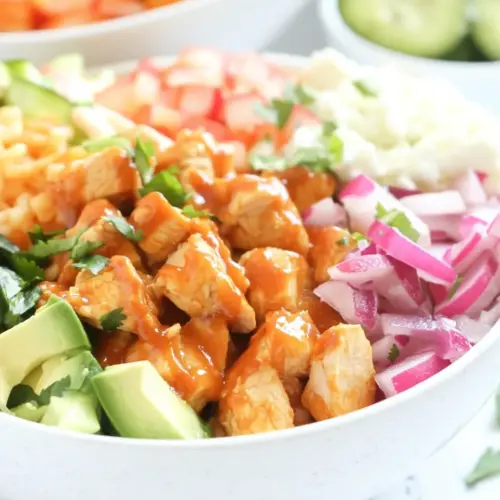
Honey BBQ Chicken Bowls
Honey BBQ Chicken Bowls are a sticky sweet and smoky weeknight favorite with tender chicken, fluffy rice, and crisp romaine. This easy weeknight dinner balances honey glazed chicken with beans, corn, and tangy pickled onions for a crunchy creamy bite. Make it for quick family meals or batch prep for lunches, it always delivers satisfying texture and bold flavor.
Equipment
- Large Skillet
- Rice pot or rice cooker
- Mixing Bowl
- Measuring Cups
Ingredients
- 2 pounds chicken breast Cook evenly and shred or slice into bowls as the primary protein source; provides hearty texture and absorbs barbecue flavors well. Marinate or season before cooking to enhance overall dish taste and moisture. Ensure cooked to safe internal temperature for food safety.
- 2 tablespoons olive oil Sear or sauté to prevent sticking and promote browning; acts as the cooking fat to help crisp the chicken edges. Drizzle over rice or vegetables for subtle fruitiness and smoother mouthfeel. Use sparingly to control calories while maintaining flavor.
- 1/2 teaspoons salt Season liberally to enhance the chicken and other savory elements; brings out natural flavors and balances sweetness from honey and BBQ sauce. Dissolve into marinades or sprinkle over rice for overall seasoning consistency. Adjust to taste if using reduced-sodium components.
- 1/2 teaspoon pepper Season to add mild heat and contrast; enhances savory profile without overpowering other spices. Sprinkle during cooking to create a balanced peppery finish across the bowl. Use freshly ground for best aroma.
- 1/2 teaspoon paprika Add warm, smoky undertone to the chicken and vegetables; complements the barbecue flavors and deepens color when searing. Mix with other spices to create a cohesive dry rub for consistent seasoning. Toast briefly in a pan to intensify aroma if desired.
- 1/2 teaspoon garlic powder Impart a subtle pungent depth and rounded garlic flavor when used in the rub or seasoning mix; helps bridge savory and sweet elements. Sprinkle onto chicken before cooking to distribute flavor evenly. Use powdered form for convenience and even coverage.
- 1 cup bbq sauce Coat and glaze the cooked chicken to provide sweet, tangy, and smoky barbecue character; serves as the central flavor driver of the dish. Simmer briefly with honey for a stickier finish that clings to the meat. Stir into rice sparingly if you want extra saucy bowls.
- 1/4 cup honey Sweeten and balance the acidity of BBQ sauce while creating a glossy glaze on the chicken; enhances caramelization during cooking. Drizzle into sauce and adjust amount to reach desired sweetness and stickiness. Warm slightly before glazing for easier mixing.
- 1 cup long grain rice Cook until fluffy to provide a neutral, comforting base for the bowls; soaks up sauce and juices from the chicken. Season lightly while cooking to infuse background flavor and prevent blandness. Serve warm to contrast chilled toppings like pickled onions and lettuce.
- 1 cup black beans, drained and rinsed Add creamy texture and protein to the bowls while contributing a mild, earthy flavor; provides a satisfying contrast to sweet and smoky elements. Rinse and drain to remove canned liquid and reduce sodium. Spoon onto rice for even distribution.
- 1 cup corn, (canned or frozen) Provide sweet pop and color while contributing a crisp, slightly starchy bite; pairs well with beans and cheese to create a balanced bowl. Use fresh or thawed frozen corn heated briefly to maintain tenderness. Scatter over rice and beans for texture contrast.
- 1 head romaine lettuce, chopped Introduce crisp, cool freshness and a crunchy base to balance saucy and rich components; works as a vessel for toppings in each bite. Chop uniformly for easy tossing and consistent mouthfeel. Keep chilled until assembly to retain crunch.
- 1/2 cups shredded cheddar cheese Add sharp, creamy richness and melty texture when sprinkled over warm ingredients; complements smoky and sweet flavors. Use freshly shredded for better melting and flavor intensity. Sprinkle sparingly to avoid overwhelming lighter ingredients.
- 1/4 cup pickled onions, see note Provide tangy, acidic contrast and bright color to cut through sweet and savory flavors; enhances overall brightness of the bowls. Use thinly sliced, pickled onions to add bite and preserve shelf life. Drain excess pickling liquid before serving to prevent sogginess.
- 1/4 cup chopped cilantro Add a fresh, herbal lift and lingering citrusy notes that brighten each bite; pairs well with smoky BBQ and sweet honey. Chop finely to distribute flavor evenly across the bowl. Sprinkle last to preserve aroma and visual appeal.
- 1/4 ranch dressing Deliver creamy, cool acidity to balance smoky, sweet, and spicy components; ties together textures and flavors in the assembled bowl. Drizzle or serve on the side for dipping flexibility. Choose a lighter or thicker ranch depending on desired coating level.
Instructions
- Prepare the rice per package instructions.: Warm, perfectly cooked rice should be fluffy with distinct grains, not sticky. You will notice a gentle steam rising and a mild, nutty aroma when it is done. Properly cooked rice soaks up sauce without becoming mushy, which is essential when building bowls. A common mistake is over stirring which causes gummy texture, so avoid vigorous stirring after it begins to steam. If the rice seems underdone, add a splash of water and continue gentle cooking to finish evenly. The reason this matters is texture contrast; fluffy rice supports the saucy chicken and prevents the bowl from becoming heavy.
- Cut the chicken breast into bite-sized pieces, about 1 inch. Season the chicken with salt, pepper, paprika, and garlic powder.: The cut determines how the chicken sears and how it sits in the bowl. You should see even sized cubes that brown uniformly, releasing a toasted savory scent as the spices hit heat. Seasoning ahead helps the flavors penetrate the surface for a better crust during searing. Avoid leaving pieces wildly inconsistent in size, which yields uneven cooking and dryness in smaller bits. The why here is simple, even pieces cook at the same rate so the interior hits a juicy 165 degrees while the exterior gets a pleasant color and texture.
- Heat a large skillet over medium high heat. Add the oil. Once hot, place the seasoned chicken in the skillet and allow to cook without stirring for 3-4 minutes. Then stir the chicken and continue to cook stirring occasionally until the chicken is cooked through, about 3-5 additional minutes. Chicken should be 165˚F internal temperature. Once done, remove the skillet from the heat.: When the oil shimmers and you hear a low sizzle as the chicken hits the pan, that sound signals good contact and Maillard reactions beginning. After the initial undisturbed sear you will notice browned edges and a fragrant, roasted aroma. The additional stirring lets the pieces cook through evenly while protecting the crust. A common error is crowding the pan which traps steam and prevents browning, so use a large skillet. This technique locks in juices and creates flavor pockets where the glaze will cling, yielding a satisfying contrast between caramelized exterior and tender interior.
- Once done, remove the skillet from the heat.: Pulling the skillet off heat immediately stops aggressive cooking and prevents overcooking the chicken . You might feel residual heat continuing to work on the meat, which is why resting briefly matters, as it allows juices to redistribute. If you skip this pause and immediately douse with sauce at high heat, you risk thinning the glaze and slightly toughening the exterior. Resting produces a juicier bite and ensures the glaze will adhere rather than sizzle away.
- Mix the honey BBQ sauce up by whisking together BBQ sauce and honey until smooth. Pour the honey BBQ sauce over the chicken bites in the skillet and stir until all chicken bites are evenly coated in the sauce.: The moment you whisk bbq sauce with honey , the aroma brightens and the texture turns glossy, signaling the glaze is ready. Pouring it over the slightly cooled chicken helps the sauce cling rather than evaporate, and stirring distributes the coating so each piece shines. A frequent slip is adding sauce while the pan is too hot, which can burn sugars and create a bitter edge, so tempering the heat is key. This finishing move delivers sticky, caramelized pockets of flavor that make the bowl crave worthy.
- Pour the honey BBQ sauce over the chicken bites in the skillet and stir until all chicken bites are evenly coated in the sauce.: As the sauce envelops the chicken , you will notice a thicker glossy surface and a sweet smoky perfume rising. That sheen indicates proper adhesion, which is crucial for flavor distribution when building the bowls. If the sauce looks too thin, simmer briefly to reduce, but avoid prolonged high heat which can darken the sauce and taste burnt. The why here is about mouthfeel, sticky glazed surfaces carry flavor across the rice and into every forkful.
- Heat the corn and beans.: Warming the corn and black beans softens them and brings out their natural sweetness and savory notes. You should hear a gentle steam and smell a mild toasted scent if you sauté them briefly, or simply warm them in the microwave until hot. Avoid overheating which can dry beans and make corn shriveled. Warm components help integrate temperatures in the bowl so each bite is comforting and cohesive.
- Place a scoop of rice on one side of the bowl. Add romaine lettuce to the other side of the bowl.: Building the bowl with a warm base and a cool green creates a pleasing temperature contrast. The rice will steam gently against the bowl and the chopped romaine will remain crisp. Arrange elements so they do not sit in pools of sauce, which keeps textures distinct. The arrangement matters because it allows diners to combine bites as they prefer, preserving crunch where desired.
- Add a scoop of black beans and a scoop of corn to the bowl, then top with pickled onions and cheese.: Layer the warmed black beans and corn adjacent to the chicken and rice so colors and textures are visible. Scatter the pickled onions and shredded cheddar cheese on top, and you will see a bright contrast of hues and a mix of creamy and tangy notes. One mistake is adding too much cheese which can overpower the pickles; balance is key to keep the bowl lively.
- To finish, drizzle with ranch dressing and a sprinkle of cilantro.: The final drizzle of ranch dressing calms the glaze and ties the bowl together while a sprinkle of chopped cilantro adds herbaceous brightness. The finishing touches should be modest, allowing the honey BBQ flavor to remain central. Overdressing makes the bowl soggy, so lightly drizzle and serve immediately for the best texture contrast and flavor clarity.
Notes
- Prep components ahead: Cook the rice and warm the black beans and corn in advance so assembly is fast on busy nights. Store each element separately in airtight containers to preserve texture and freshness.
- Temper the pan: Let the skillet get properly hot before adding oil so the chicken sears and does not stick. You want a steady sizzle, not a roar, to promote even browning without burning the spices.
- Adjust sauce consistency: If the honey BBQ glaze seems thin, simmer it gently to reduce and thicken. Thick glaze adheres better to the chicken and gives you those sticky bites that carry flavor across the bowl.
- Keep pickles ready: Make a quick batch of pickled onions ahead to add a bright acidic contrast. They store well and elevate many leftovers and bowls beyond this one.
- Portion for leftovers: Divide into meal sized containers with sauce separate to keep textures intact. Reheat and toss with sauce just before serving to preserve the glazed finish.